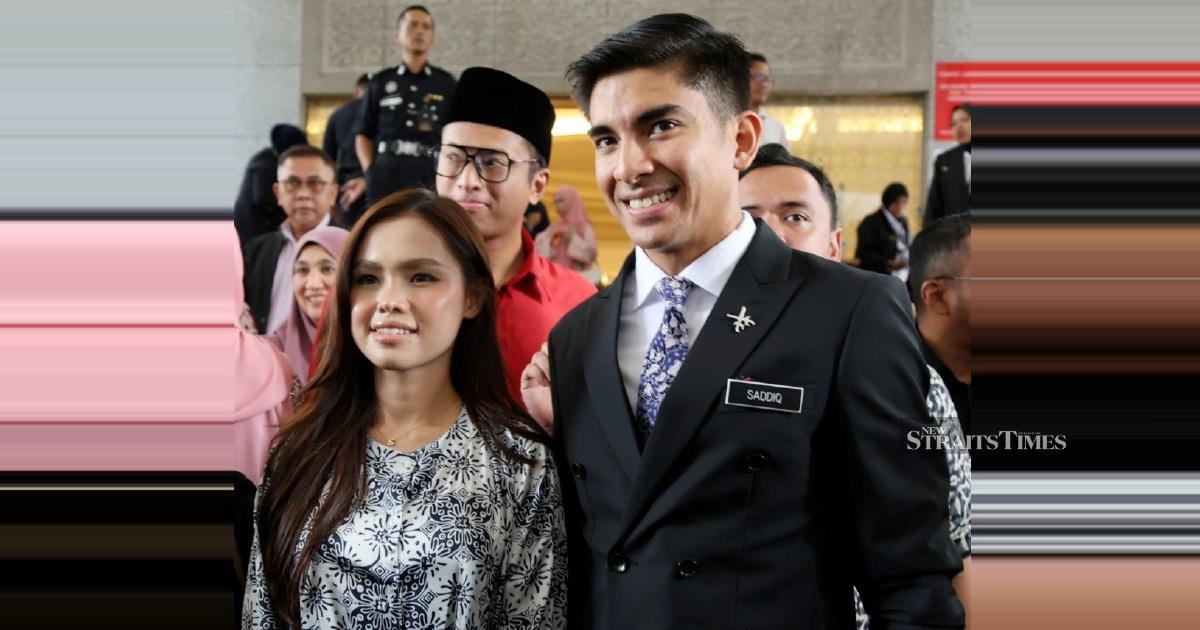
In a touching display of affection amid legal challenges, Muar member of parliament Syed Saddiq Syed Abdul Rahman has been making a quiet but deliberate choice to wear ties gifted by his fiancée, actress and singer Bella Astillah, whenever he appears in court. The discovery of this consistent practice has moved Bella deeply, offering a window into how the young couple maintains their emotional connection during a period marked by courtroom appearances and public scrutiny.
The gesture, while seemingly small in scope, carries considerable symbolic weight for those following the couple's journey. For Bella, learning that Syed Saddiq has made a point of incorporating her gifts into his formal court attire demonstrates a form of quiet solidarity and remembrance of their relationship during moments that might otherwise feel isolating or stressful. Such personal touches in the midst of legal proceedings often go unnoticed by the wider public, yet they form the emotional scaffolding that sustains individuals through difficult periods.
Syed Saddiq, the 32-year-old Muar parliamentarian, has been navigating a complex legal landscape in recent years. His consistent choice of neckwear reflects a deliberate decision to carry forward tangible reminders of his personal life and support system into formal settings. For public figures facing legal proceedings, maintaining these personal connections becomes particularly important, as the compartmentalisation between professional obligation and personal identity can feel acute when under public examination.
Bella Astillah, known for her work in the Malaysian entertainment industry, has built a career spanning both music and acting. Her relationship with Syed Saddiq has been subject to considerable public interest, given his prominence as a political figure. The couple's engagement represents a merging of two distinct public spheres—entertainment and politics—bringing additional layers of attention to their personal milestones and daily decisions.
The practice of wearing meaningful gifts to significant occasions reflects a broader human tendency to seek comfort and connection through material objects. Psychologically, such gestures serve multiple functions: they provide a tangible connection to loved ones during stressful situations, they affirm the strength of relationships during challenging periods, and they serve as private acknowledgments of support that need not be broadcast or explained to the wider public. In Syed Saddiq's case, the ties function as both a personal reminder and, perhaps unknowingly to him at first, a public statement of priority.
For Malaysian audiences observing this narrative, the story offers a humanising perspective on public figures who often appear distant or purely political in nature. The revelation that Syed Saddiq incorporates personal touches into his formal attire suggests someone who values intimate relationships even as he navigates the demands of parliamentary duty and legal proceedings. This dimension adds depth to public perception, moving beyond headlines and into the reality of how individuals sustain themselves through difficult chapters.
The couple's relationship itself carries relevance within Malaysian popular culture and social discourse. The engagement between someone from the political sphere and an entertainment industry figure reflects changing patterns in how Malaysia's elite circles interact and merge. Such unions were once more segregated by professional and social boundaries; today, cross-sector relationships are increasingly common and publicly acknowledged, reflecting broader social evolution.
Bella's emotional response to discovering this practice underscores how such gestures, though internal and personal, eventually surface and resonate. In relationships, especially those under public scrutiny, these quiet affirmations of commitment and remembrance become all the more significant. The fact that Syed Saddiq made this choice without fanfare—simply incorporating the ties into his wardrobe for court appearances—speaks to its authenticity. This was not a gesture designed for public consumption but rather a private practice that subsequently became public knowledge.
The story also reflects the realities faced by public figures navigating legal complexities while maintaining personal relationships. The support of a partner through such periods cannot be underestimated, and the ways individuals acknowledge and carry that support—even through something as mundane as neckwear selection—contribute to their ability to endure and move forward. For Syed Saddiq, the ties represent more than fashion choices; they embody continuity between his personal and public life.
As Malaysian society continues to engage with stories of its public figures, narratives like this one provide texture and humanity. They remind audiences that beyond the political statements and legal proceedings, these individuals maintain personal lives characterised by the same emotional needs and supportive relationships that define human experience more broadly. Bella's delight at discovering her fiancé's consistent practice speaks to how deeply personal gestures can nourish relationships even during periods of external pressure and public attention.

