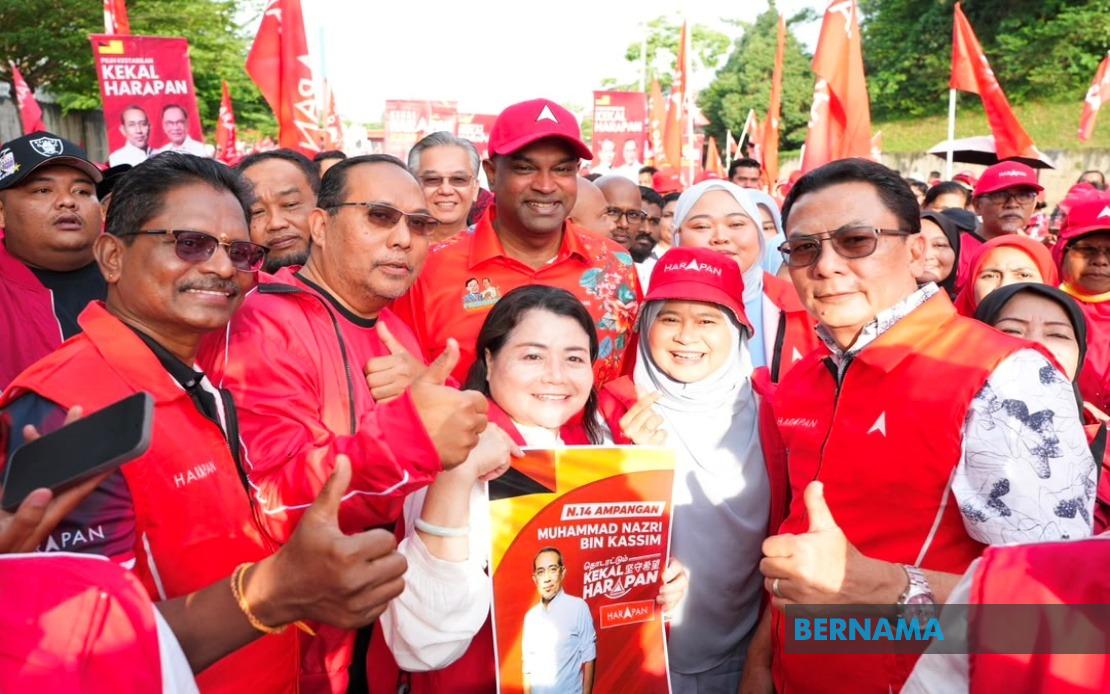
Senior figures from the Pakatan Harapan coalition descended on Seremban today to demonstrate backing for six party candidates contesting the 16th Negeri Sembilan state election, signalling the alliance's determination to consolidate control in the state legislature. The show of solidarity at the Seremban City Council Building—known locally as Wisma MBS—underscored PH's coordinated campaign strategy as the nomination process concluded and formal campaigning commenced across the 36-seat assembly.
Datuk Seri R. Ramanan, who serves as vice-president of Parti Keadilan Rakyat and represents the Sungai Buloh constituency federally, led the contingent of party officials dispatched to validate candidates navigating the nomination machinery. His presence alongside DAP deputy secretary-general Steven Sim and other coalition partners telegraphed to party workers and supporters the importance both parties attach to securing these particular seats. The joint appearance reflected the coordinated nature of PH's approach to state elections, where federal leaders invest personal credibility in supporting candidates aligned with the coalition's broader political objectives.
The six candidates receiving visible backing span constituencies across the state: Nor Azman Mohamad seeks election from Sikamat, whilst Datuk Muhammad Nazri Kassim contests Ampangan. Additional candidates include Zarinna Abu Zarin from Lenggeng, Chew Seh Yong representing Lobak, J. Arul Kumar standing in Nilai, and Ho Weng Wah in Temiang. This geographical spread suggests PH is mounting a comprehensive challenge rather than concentrating resources narrowly, attempting to demonstrate competitive viability across Negeri Sembilan's political landscape.
Ramanan emphasised that the density of supporters and party machinery mobilised at the nomination venue embodied the enthusiasm driving PH's electoral preparations. His statement highlighted the transition from procedural nomination requirements into the substantive campaign phase, where direct voter engagement becomes paramount. The messaging focused on translating organisational strength into electoral success, presenting party mobilisation not merely as procedural competence but as an indicator of genuine grassroots momentum.
The PKR vice-president articulated the coalition's campaign strategy explicitly: continuous engagement with constituencies and systematic utilisation of party structures would underpin efforts to maintain stability and development momentum in Negeri Sembilan. This framing positions the election as a referendum on continuity and governance effectiveness rather than broader ideological contestation, a tactical choice reflecting PH's status as the incumbent coalition seeking re-election. Ramanan's emphasis on "machinery in every constituency" underscores reliance on traditional party organisational advantages rather than insurgent campaign approaches.
The formal campaign period commenced following conclusion of the nomination process and extends through July 31, establishing a focused four-week window for candidates to secure voter support. This compressed timeframe contrasts with extended campaign periods sometimes permitted elsewhere in Malaysia, potentially advantaging incumbents with established organisational infrastructure like PH. The Election Commission's scheduling—with early voting designated for July 28 and general polling on August 1—concentrates the electoral contest into the latter weeks of July, limiting opportunities for campaigning momentum to shift dramatically.
Negeri Sembilan's state assembly was dissolved on June 5, triggering the election cycle and resetting the legislative calendar. The 36-seat legislature provides sufficient size to offer coalition potential outcomes ranging from decisive majorities to finely balanced administrations, making each constituency competitively significant. PH's decision to mount visible leadership campaigns in six constituencies suggests these races are assessed as strategically important either for defending existing strength or capturing territory from opposition control.
The presence of federal leaders like Ramanan at state-level nomination events reflects the integrated nature of Malaysian electoral politics, where federal party hierarchies maintain direct involvement in sub-national contests. This vertical integration can enhance campaign resources and messaging discipline but simultaneously risks submerging local concerns beneath federal political narratives. For Negeri Sembilan voters, senior federal figures appearing to validate state candidates may signal both coalition seriousness and potential for state governments to access resources through federal party connections.
Steven Sim's participation alongside Ramanan underscores DAP's integral role within the PH coalition structure, positioning the Chinese-dominated party as equally invested in Negeri Sembilan outcomes. This visible partnership between PKR and DAP leadership demonstrates the coalition's operational cohesion at this juncture, though past tensions within PH occasionally surface during state elections when intra-coalition seat allocations prove contentious. The absence of any public friction in today's nomination centre visit suggests, at minimum, the coalition is maintaining public unity ahead of campaign intensification.
From a broader Southeast Asian perspective, Malaysia's regular state elections in coalition frameworks like PH demonstrate the region's commitment to competitive democratic processes despite significant political volatility. Negeri Sembilan's election occurs within a broader context of Malaysia's complex federal structure, where state governments exercise considerable authority over development, administration, and resource allocation. The intensity with which federal coalition leaders engage state campaigns reflects the substantive importance voters correctly attribute to state legislative outcomes.
For Malaysian observers, PH's organised nomination centre demonstration illustrates how coalition partners mobilise across multiple electoral tiers simultaneously. The coordination visible today—with PKR, DAP, and other partners fielding candidates and leadership support—requires negotiation over seat allocation, campaign messaging, and resource distribution. Successful execution of this coordinated approach in Negeri Sembilan could strengthen PH's position ahead of potential federal electoral contests, whilst poor performance might intensify internal coalition pressures regarding strategic direction and seat-sharing arrangements.
The election also carries implications for regional stability and governance patterns. Negeri Sembilan's development priorities—ranging from economic diversification beyond traditional sectors to infrastructure modernisation—depend substantially on the competence and coherence of the state government. PH's emphasis on machinery and engagement suggests the coalition is positioning itself as the stability option, appealing to voters prioritising consistent administration over transformational change. This positioning reflects lessons from recent Malaysian electoral cycles, where governance effectiveness increasingly influences voter decision-making alongside ideological considerations.
As campaigning intensifies over the coming weeks, attention will focus on whether PH's leadership endorsements translate into electoral success and whether opposition parties mount competitive challenges in these same constituencies. The nominating candidates' capacity to engage local issues whilst benefiting from federal coalition visibility will prove crucial to determining final outcomes. For Malaysia's political trajectory and PH's future viability as a governing coalition, Negeri Sembilan's August 1 election results could carry significance beyond the state's borders.

