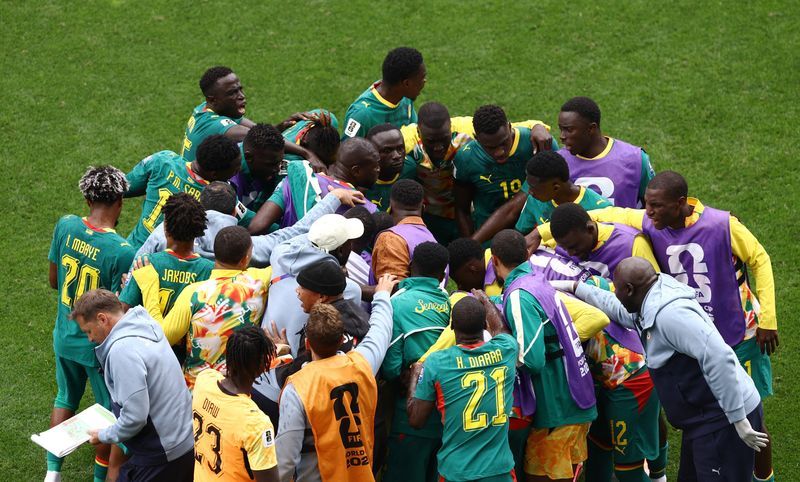
Senegal's football federation has opened a public dispute over the medical support provided to the national team during the recent World Cup in North America, with federation president Abdoulaye Fall claiming the team doctor possessed inadequate specialist qualifications for the role. Speaking at a press conference on Monday, Fall indicated that the discovery of the physician's background, which he characterised as gynaecological rather than sports medicine-oriented, came too late in the tournament preparation and had unsettled the squad.
The revelation of the team doctor's qualification mismatch created friction within the squad, according to Fall's account. Players reportedly lacked confidence in the medical oversight available to them during the demanding tournament schedule, prompting the federation to seek supplementary medical expertise to restore morale and assurance. Fall emphasised that the federation acted decisively once the concern surfaced, recognising that player wellbeing and confidence in medical support were paramount considerations for tournament performance.
However, the Senegalese Association of Sports Medicine has robustly rejected the federation's characterisation as both inaccurate and damaging. In a statement released late Monday, the association defended the credentials of Abderahmane Fediore, the physician in question, asserting that he holds a specialist diploma in sports medicine and sports biology from Cheikh Anta Diop University's faculty of medicine. This direct contradiction between the federation's claims and the medical association's defence has opened a significant institutional rift at a sensitive moment for Senegalese football.
Fediore's professional background appears substantive by conventional measures. He previously served as head of the physiotherapy department at Fann Hospital and has maintained the position of Senegal's team doctor continuously since 2017. His tenure has encompassed participation in three World Cup tournaments and five Africa Cup of Nations competitions, suggesting a sustained track record in elite-level sports medicine administration rather than the peripatetic engagement typical of physicians with primary training outside sports medicine.
The internal recriminations over medical support represent only one dimension of Senegal's broader post-tournament assessment. The federation moved swiftly to terminate coach Pape Bouna Thiaw on Saturday, attributing the decision to inadequate tournament performance. This managerial change reflects the federation's view that systemic failures, whether medical or tactical, contributed to the disappointing campaign.
Senegal's World Cup performance fell steeply below pre-tournament expectations. The squad had entered North America as authentic contenders following their Africa Cup of Nations triumph in January, when they defeated Morocco in the final—a result that suggested the emergence of a genuinely competitive continental force. That January achievement generated considerable optimism about the team's capacity to compete at the global stage.
Yet the tournament unfolded disastrously. Senegal lost its first two group matches to France and Norway, immediately placing themselves in an extremely precarious position. They subsequently squandered a commanding two-goal advantage in their round-of-32 encounter against Belgium, conceding three unanswered goals in extra time to exit 3-2. The trajectory from Africa Cup of Nations champions to early World Cup elimination within six months represents a dramatic reversal that has prompted institutional soul-searching across multiple levels of the federation's operations.
The medical credentials dispute, whilst ostensibly narrow in focus, reflects deeper anxieties within the federation regarding preparedness and professional standards. Whether or not Fediore's qualifications are precisely as Fall characterised them, the episode highlights that significant uncertainty existed during a critical tournament regarding fundamental aspects of player support infrastructure. For a federation attempting to consolidate continental status and project World Cup competence, such uncertainty represents an institutional vulnerability.
The timing of the dispute also carries significance for Southeast Asian football governance contexts. Regional federations routinely grapple with balancing international competition demands against limited specialist expertise availability. Senegal's experience suggests that inadequate communication regarding medical personnel credentials can undermine squad cohesion and confidence regardless of objective qualification levels. The federation's apparent failure to clarify or verify the team doctor's background before or during the tournament indicates process failures that extend beyond the individual practitioner.
Senegal's World Cup collapse and its aftermath illustrate the complex relationship between tactical performance, medical support systems, and institutional credibility in contemporary football. The federation's finger-pointing at medical support, whilst the association defends the physician's credentials, suggests that accountability for the tournament failure may become diffused across multiple parties rather than concentrated on coaching or player performance. This institutional fragmentation could complicate efforts to rebuild squad confidence and federation cohesion before the next competitive cycle.
Looking forward, Senegal faces the challenge of restoring credibility both internationally and domestically following the World Cup disappointment. The appointment of a new coach will attract the immediate focus, yet the unresolved medical credentials dispute and the apparent lack of pre-tournament confidence in medical support systems suggest deeper institutional governance issues. How the federation and sports medicine association resolve their public disagreement may significantly influence whether structural reforms occur that genuinely strengthen future tournament preparation.

