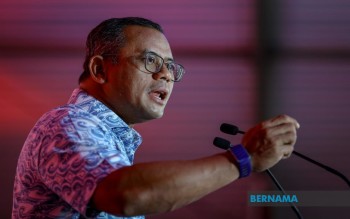
Selangor has cemented its position as Malaysia's economic engine, with its gross domestic product reaching RM460.1 billion in 2025, an increase of RM28 billion year-on-year. The achievement underscores the state's dominance in driving the nation's economic expansion, with Menteri Besar Datuk Seri Amirudin Shari noting that the growth margin is more than double that recorded by any other Malaysian state during the same period. This substantial expansion reflects deepening structural changes within Selangor's economy and its integration into regional and global supply chains, positioning the state ahead of traditional economic centres and competing industrial hubs across Southeast Asia.
Data released by the Department of Statistics Malaysia reveals that Selangor's economic output now accounts for 26.5 percent of Malaysia's total GDP, a marginal increase from 26.2 percent the previous year. The growth trajectory places Selangor's economy at more than 1.7 times the size of Kuala Lumpur's economy, which itself expanded by RM13.2 billion to reach RM265.1 billion, and 2.7 times larger than Johor's, demonstrating the scale gap between Selangor and the nation's second and third largest state economies. This concentration of economic activity in Selangor, while testimony to the state's attractiveness for investment and commerce, also raises questions about regional economic disparities and the sustainability of such uneven development patterns across Malaysia.
The 6.3 percent growth rate achieved by Selangor substantially outpaced Malaysia's national economic expansion of 5.2 percent, demonstrating that the state's performance is not simply riding broader economic currents but generating differential gains through targeted development initiatives. The outperformance suggests that Selangor's policy framework, infrastructure investments, and business environment are delivering measurable competitive advantages. Amirudin highlighted that this expansion exceeded projections made by Universiti Putra Malaysia in collaboration with the Selangor Research Institute, which had anticipated the state's economy reaching approximately RM455.3 billion, indicating that momentum within key sectors has been stronger than anticipated by economic modellers.
Three sectors drove the bulk of Selangor's economic expansion: the services sector contributed RM15.9 billion in incremental output, manufacturing added RM5.3 billion, and construction activity generated RM3.7 billion in additional value. This sectoral composition reflects the state's transition towards higher-value services and advanced manufacturing, though it simultaneously highlights continued reliance on construction, an industry subject to cyclical pressures and external demand shocks. The balance between these three pillars suggests deliberate diversification efforts, with services becoming increasingly dominant in absolute terms while maintaining manufacturing and construction as crucial employment and investment anchors.
Selangor's share of Malaysia's construction sector has swelled to 35.9 percent, an extraordinary concentration that reflects the state's status as the primary destination for urban development, commercial real estate, and infrastructure projects. The manufacturing sector contribution climbed to 32.8 percent of the national total, consolidating Selangor's position as Malaysia's industrial heartland, whilst the services sector contribution reached 27.1 percent. Together, these three sectors account for the bulk of measured economic activity, though they mask deeper complexities within subsectors ranging from semiconductor fabrication and petrochemicals to financial services, logistics, and digital commerce. This sectoral dominance implies that disruptions affecting any of these three pillars could disproportionately impact not only Selangor but the broader Malaysian economy.
The Menteri Besar attributed much of the state's success to the First Selangor Plan (RS-1), the state's five-year socioeconomic development framework spanning 2021 to 2025. During this planning period, Selangor's economy expanded by 33.94 percent, representing an absolute increase of RM116.6 billion as the state's GDP rose from RM343.5 billion at the plan's inception to RM460.1 billion upon conclusion. This trajectory suggests that deliberate policy intervention, infrastructure development, human capital investment, and regulatory reforms within the state administration have yielded tangible economic results. The scale of expansion during the RS-1 period demonstrates how targeted state-level governance initiatives can generate outsized growth relative to broader national trends, though whether such growth rates are sustainable or have peaked remains an open question.
Looking forward, Amirudin has articulated an ambitious target: establishing Selangor as the first Malaysian state to achieve a RM500 billion economy, representing a further RM40 billion in growth from the current baseline. Achieving this milestone would require maintaining growth rates above 5 percent annually whilst navigating potential macroeconomic headwinds, maintaining competitive advantages in key sectors, and sustaining investment inflows. The Menteri Besar's framing of this as a collective challenge requiring cooperation across public and private sectors reflects awareness that future growth cannot be assured but must be consciously pursued through enhanced productivity, skill development, and strategic sectoral focus.
Invest Selangor's parallel statement emphasised the momentum built across successive years, noting that Selangor became the first Malaysian state to surpass the RM400 billion GDP mark for two consecutive years, having recorded RM406.1 billion in 2023. This sequential achievement demonstrates consistency rather than anomalous performance, suggesting that underlying structural changes within the economy are durable. The agency's emphasis on Selangor's role as the country's largest economic contributor frames the state's development not in isolation but as integral to Malaysia's national competitiveness and growth trajectory, particularly relevant given ongoing economic competition within the Association of Southeast Asian Nations and integration into global value chains.
The economic performance carries implications extending beyond Selangor's borders. As Malaysia's primary economic centre, Selangor's growth trajectory influences employment patterns, migration flows, infrastructure demand, and consumer spending across the wider region. The state's ability to generate employment for workers from less developed states and provide services consumed nationwide means its economic health directly translates to living standards improvement across the country. However, the concentration of wealth generation in a single state also underscores the challenges facing peripheral regions attempting to diversify away from primary industries or develop competitive manufacturing bases.
Amirudin's stated commitment to translating economic growth into improved living standards for Selangor's population addresses a fundamental question often overlooked in GDP expansion narratives: whether headline growth metrics translate into broad-based prosperity or concentrate benefits among particular groups. The emphasis on delivering positive quality-of-life improvements suggests recognition that economic performance metrics alone cannot substitute for tangible improvements in housing affordability, healthcare access, education quality, and income security for ordinary residents.
The achievement also positions Selangor competitively within regional economic hierarchies. As Southeast Asian cities and states compete for investment, talent, and economic activity, Selangor's sustained growth and diversifying economic base demonstrate viability as a primary investment destination. The state's integration into Malaysian and regional supply chains, combined with its proximity to Kuala Lumpur's international airport and port facilities, creates enduring locational advantages unlikely to be easily replicated by competitors.
Moving beyond the immediate 2025 results, Selangor's economic trajectory raises questions about optimal growth rates, sustainability of sectoral contributions, and resilience to external shocks affecting manufacturing, construction, or services sectors globally. The state's success must be evaluated not solely in terms of GDP growth but also regarding income distribution, employment quality, environmental sustainability, and social cohesion amongst an increasingly diverse population drawn from across Malaysia and the broader region. These considerations will become increasingly important as Selangor pursues its RM500 billion economy target whilst managing the social and infrastructural pressures accompanying rapid urbanisation and economic concentration.

