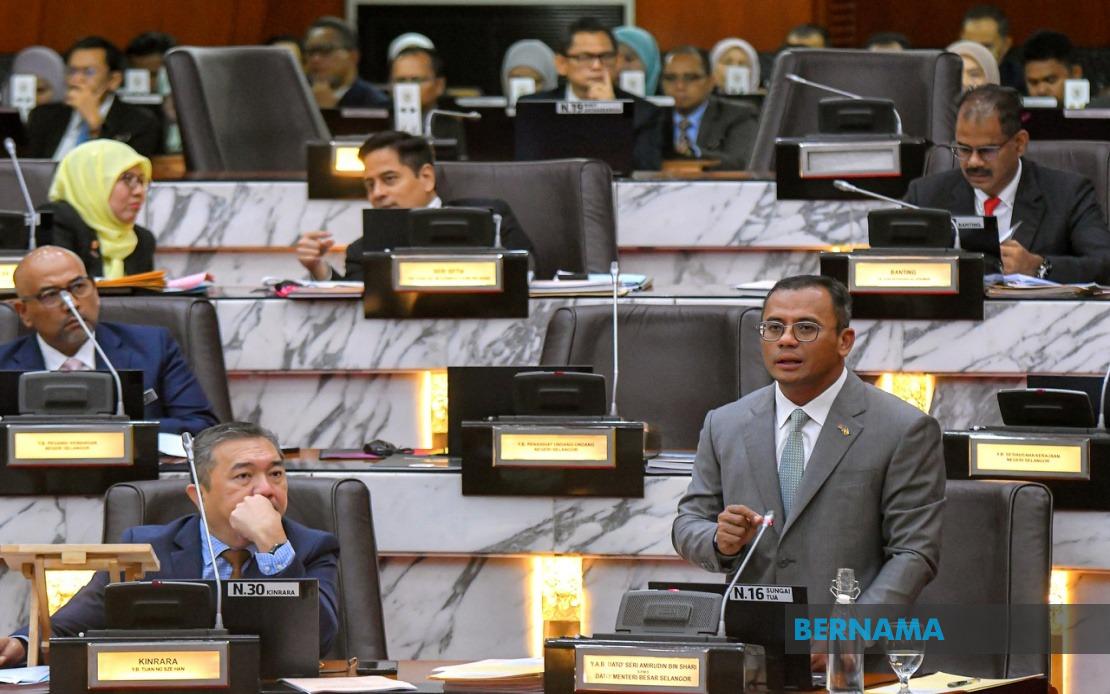
The Selangor government has announced plans to significantly expand its tertiary education support scheme, potentially lifting the number of eligible recipients from the current 3,000 to between 5,000 and 6,000 recipients by next year. Menteri Besar Datuk Seri Amirudin Shari disclosed the expansion roadmap during state assembly proceedings, reflecting mounting pressure on the scheme as student demand continues to outpace available allocations. The decision signals a commitment to addressing a critical gap in educational financing for eligible Selangor residents pursuing higher qualifications.
Demand for the Higher Education Institution Study Incentive (HPIPT) has consistently exceeded the state government's current capacity to fulfil applications. Both 2025 and the current year witnessed over 5,000 applications seeking the RM1,000 financial assistance, nearly double the number of positions available under the existing framework. This persistent imbalance prompted state authorities to reassess the programme's scope and fiscal sustainability, ultimately concluding that expansion remained feasible within Selangor's revenue parameters. Amirudin's reference to restoring recipient numbers to previously administered levels suggests the state once maintained a larger beneficiary pool but had contracted it, indicating that the new target represents a return to earlier programme dimensions rather than entirely uncharted territory.
The HPIPT operates as a targeted intervention to support Selangor students enrolled at recognised public and private higher education institutions. The scheme extends eligibility to learners pursuing Level 4 Skills Certificates, diplomas, and bachelor's degree qualifications, broadening its reach beyond conventional university pathways. By encompassing vocational credentials alongside traditional academic programmes, the initiative acknowledges the diverse educational trajectories through which young Malaysians build professional capabilities. The RM1,000 annual disbursement, while modest by international standards, represents meaningful assistance for households managing tertiary education costs in an increasingly expensive credential landscape.
Beyond expanding recipient numbers, Selangor authorities are contemplating structural modifications to improve programme accessibility and administrative efficiency. Officials are evaluating the application submission window to ensure students receive adequate time after receiving institutional admission confirmations before application deadlines. Currently, the compressed timeline between university acceptance letters and HPIPT application closing dates may disadvantage eligible candidates who miss submission windows through no fault of their own. Extending or staggering these periods could materially improve uptake rates among entitled applicants.
Additionally, the state government is exploring a dual-application-window model, permitting students to submit HPIPT applications twice annually rather than maintaining a single intake cycle. This reform would accommodate students commencing studies at varying times throughout the calendar year, addressing a particular challenge for those entering mid-year or pursuing non-traditional educational schedules. Such scheduling flexibility represents a practical acknowledgment that student cohorts no longer conform to rigid autumn-entry conventions, particularly as Malaysian institutions diversify intake timing to manage enrolment pressures.
The expansion initiative carries implications extending beyond individual beneficiaries to the broader state fiscal framework. Amirudin's emphasis on assessing Selangor's revenue position before finalising recipient increases underscores the budgetary constraints shaping education policy decisions across Malaysian states. The state government must balance competing expenditure priorities—infrastructure development, healthcare services, civil service salaries—against demand for student financial assistance. The fact that Selangor, as the nation's most economically productive state and home to the federal territory, faces budgetary limitations in fully meeting educational support demand illustrates systemic challenges confronting even comparatively wealthy regional governments.
From a policy perspective, the HPIPT expansion reflects growing recognition that student financing mechanisms remain inadequate within Malaysia's higher education ecosystem. Neither the federal student loan scheme nor state-based initiatives currently cover all eligible aspirants seeking tertiary credentials. The private higher education sector's growth, while expanding access, has simultaneously elevated educational costs, placing financial burdens on middle and lower-income households unable to secure scholarship placements. State-level interventions like the HPIPT serve as partial correctives, though their limited scale constrains transformative impact.
The timing of Selangor's expansion plans aligns with broader discussions about education financing in Malaysia. As youth unemployment concerns mount and employers increasingly demand credential-based qualifications, removing financial obstacles to tertiary participation becomes a public policy imperative. States demonstrating commitment to educational accessibility through expanded funding commitments may experience tangible benefits through improved workforce preparedness and reduced inequality in educational attainment. Conversely, states with contracting education support provisions risk widening opportunity gaps along socioeconomic lines.
Implementing the expanded scheme will require careful coordination between the state's education authority, higher education institutions, and programme administrators. Systems must reliably identify eligible Selangor residents, verify enrolment status at qualified institutions, and process increased application volumes without compromising assessment quality. The proposed dual-application-window approach will add administrative complexity, necessitating enhanced capacity within state education bureaucracies. However, such operational challenges represent manageable obstacles compared to the fundamental policy question of whether expansion remains fiscally prudent.
For Malaysian students in Selangor and their families, this initiative signals policymaker responsiveness to financial pressures constraining educational mobility. The RM1,000 assistance, whilst modest, can cover registration fees, course materials, or living expenses for budget-conscious learners. Reaching 5,000 beneficiaries would touch approximately four percent of Selangor's estimated student population pursuing higher education, expanding the scheme's meaningful impact on access pathways. The proposal to implement changes through the 2027 Budget suggests a deliberate, fiscally considered approach rather than hasty programme expansion.
The expansion also reflects demographic and labour market realities driving education demand. As Malaysia transitions toward higher-value economic sectors requiring advanced qualifications, participation in tertiary education intensifies across income groups. State governments increasingly recognise that facilitating universal access to quality higher education represents strategic investment in regional competitiveness and social mobility. Selangor's commitment to expanding HPIPT participation aligns with this emerging consensus that education financing represents not merely welfare provision but economic and social infrastructure worthy of sustained governmental investment.

