The Selangor State Government is pressing ahead with resolving a critical land dispute that stands between current planning and the actual construction of Port Klang's Third Terminal on Carey Island, marking a crucial step in realising one of Malaysia's most strategically important infrastructure projects. Transport Minister Anthony Loke indicated that negotiations between state authorities and the private sector are advancing, with discussions centred on establishing a concession framework that would govern the project's delivery and long-term operation.
The development of Port Klang's third berth represents more than a routine port expansion. Prime Minister Datuk Seri Anwar Ibrahim has personally directed all relevant agencies to accelerate progress, reflecting the government's view that this terminal is essential to enhancing Malaysia's competitive standing in regional and global port and logistics markets. The facility would meaningfully increase container-handling capacity at what is already Southeast Asia's busiest and Malaysia's primary maritime gateway, with implications for trade flows across the region and beyond.
Loke explained that the envisioned structure would follow a Build-Operate-Transfer model, a governance approach common in major infrastructure ventures where a private operator manages the facility for a defined concession period before control reverts to public ownership. The minister stated that while officials have targeted launching construction within the current calendar year, this timeline remains contingent upon successfully navigating the land ownership and rights complications that currently occupy discussions with the Selangor administration.
The land question itself is considerable in scope. Selangor Menteri Besar Datuk Seri Amirudin Shari previously disclosed that approximately 1,699.68 hectares—equivalent to around 4,200 acres—has been earmarked for the port development. Of this, roughly 1,011.71 hectares comprise seabed territory administered by the Selangor State Development Corporation, while the remaining 687.96 hectares consist of coastal land held by Yayasan Selangor, a state-linked foundation. Reconciling the interests of multiple stakeholders controlling different parcels of this substantial landmass requires careful negotiation to ensure all parties reach workable terms.
For Malaysian readers following infrastructure developments, the Third Terminal carries particular relevance given Port Klang's role in the national economy. The port handles roughly 40 percent of Malaysia's total sea trade and operates as a critical node in broader Southeast Asian supply chains. Expanded capacity would benefit manufacturers, traders, and logistics operators across the region by reducing congestion, shortening vessel turnaround times, and containing costs—advantages that reverberate throughout the economy and support Malaysia's positioning as a trading hub.
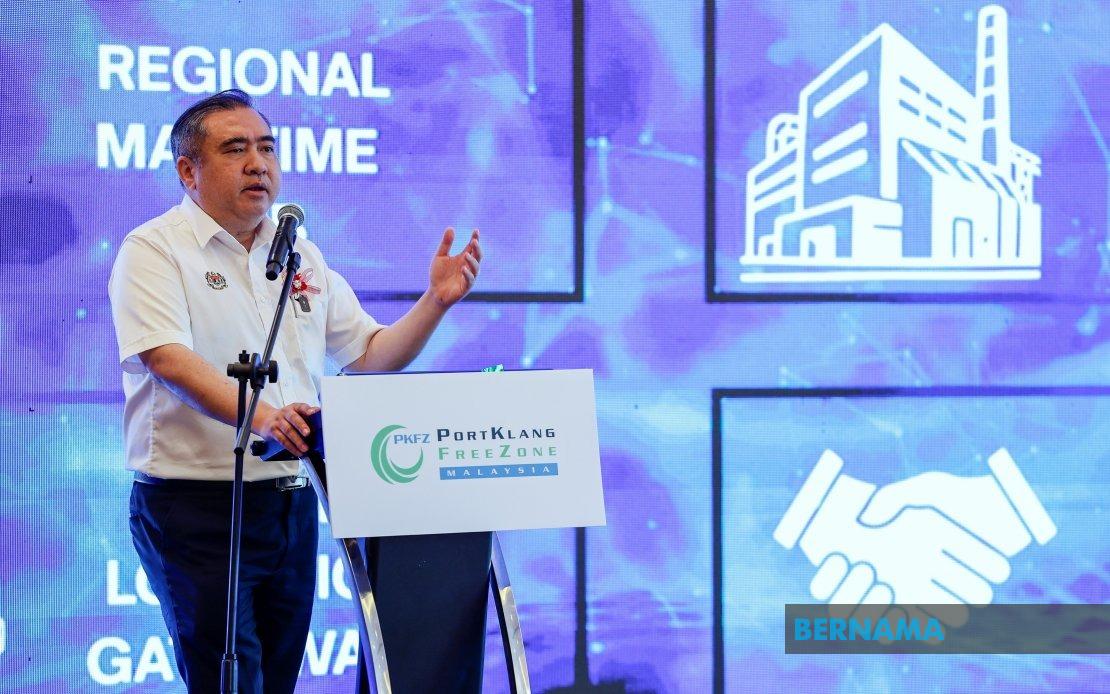
Loke's comments arrived during a broader celebration of industrial progress within the Port Klang Free Zone, where officials inaugurated multiple facilities representing RM566 million in cumulative fresh investment. The occasion underscored the vibrancy of the Port Klang cluster as an economic engine and illustrated the government's commitment to fostering growth in this critical logistics corridor. New establishments included Wisma Golden Horse accommodation for workers, expanded rubber manufacturing operations, and an advanced industrial intelligence platform—each contributing employment and operational capacity within the free zone's ecosystem.
Beyond the terminal itself, authorities are tackling a parallel challenge affecting the maritime and transport sectors: a persistent shortage of skilled heavy vehicle drivers. The Transport Ministry has partnered with the Armed Forces Ex-Servicemen's Affairs Corporation to channel retired military personnel into commercial driving roles, recognising that this workforce possesses discipline, safety consciousness, and the aptitude for demanding responsibilities. A memorandum of understanding signed between Port Klang Free Zone management and Perhebat, witnessed by both Loke and Deputy Prime Minister Datuk Seri Dr Ahmad Zahid Hamidi, formalises this collaboration and reflects a pragmatic strategy for addressing labour market gaps without relying solely on fresh recruitment or foreign workers.
Supportive measures introduced earlier in the year have included a specialised programme enabling military retirees to obtain Class E driving licences for heavy vehicles, a credential essential for operating trucks and articulated rigs in the haulage and logistics sectors. This initiative directly responds to industry feedback that driver scarcity has constrained operations and elevated wage pressures, limiting competitiveness. By channelling retired military personnel—many already possessing mechanical skills and accustomed to structured, safety-conscious work environments—into these positions, the government addresses twin objectives: supporting a valued demographic while strengthening workforce capacity in a strategically vital industry.
The convergence of these policy efforts illustrates how Malaysian authorities are approaching infrastructure and economic growth through multiple complementary angles. Resolving the Port Klang Third Terminal land dispute, securing private investment through transparent concession frameworks, and ensuring adequate skilled labour all constitute interdependent elements of a coherent strategy. Success across each dimension enhances the prospect of timely project completion and operational excellence, with compounding benefits for Malaysia's trade competitiveness and the broader Southeast Asian logistics network.
The timeline remains fluid and contingent on administrative resolution, yet the political commitment from senior figures including the Prime Minister and Transport Minister signals that this project commands serious attention and resource allocation. For Malaysian businesses dependent on port services, regional traders, and logistics operators, the Third Terminal's realisation would provide material relief from existing capacity constraints and position Malaysia more favourably against competing port hubs throughout Asia. The next months will clarify whether land negotiations proceed smoothly enough to permit construction commencement as planned, or whether additional rounds of discussion prove necessary to secure final agreement among all stakeholders.