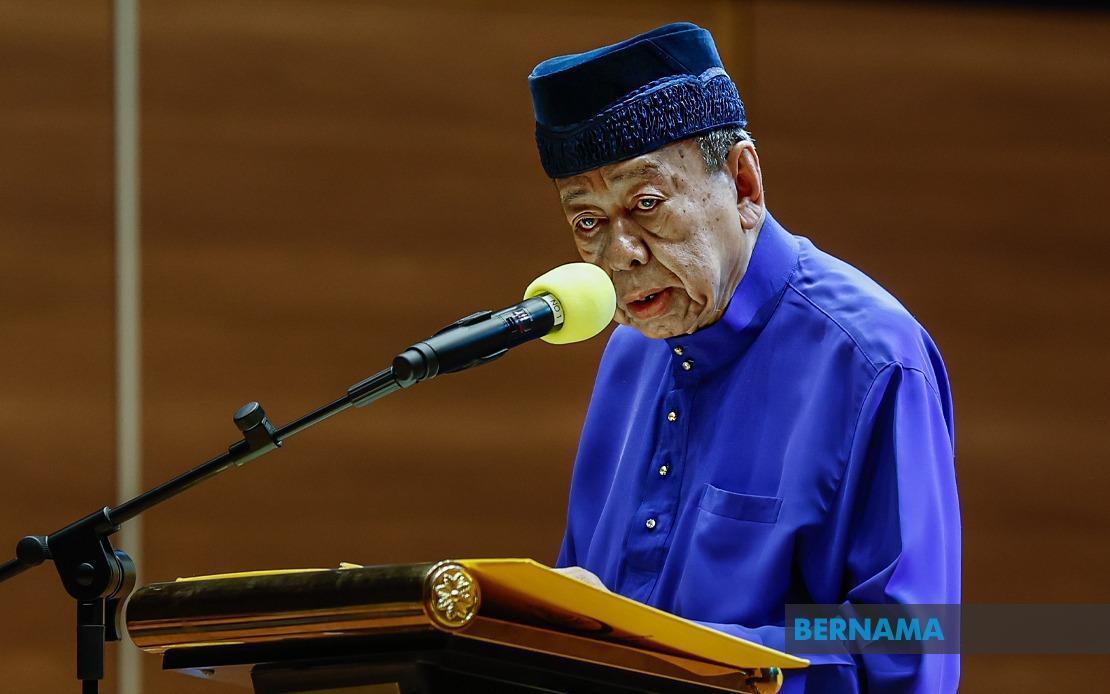
The Sultan of Selangor, Sultan Sharafuddin Idris Shah, has called upon Universiti Teknologi MARA (UiTM) to ensure its academic curricula remain aligned with rapid global developments, highlighting this as critical for producing graduates equipped to thrive in an intensely competitive international employment landscape. Delivering his royal address at UiTM's 2026 convocation ceremony in Shah Alam, the monarch articulated a vision in which institutional excellence and contemporary relevance serve as complementary rather than competing priorities, setting the tone for how Malaysia's largest Bumiputera-focused university should position itself over the coming decade.
The Sultan identified emerging and traditional disciplines alike as central to Malaysia's economic trajectory, specifically naming digital technology, artificial intelligence, engineering, medicine, finance, and the creative industries as fields demanding particular institutional focus. His framing reflects a recognition that while UiTM's traditional strength lies in producing qualified professionals for existing sectors, the institution must proactively anticipate and respond to structural shifts in global labour markets. This directive carries substantial weight given the Sultan's constitutional role and his university's governance responsibilities, signalling that curriculum modernisation is not merely an administrative preference but a strategic imperative endorsed at the highest levels of Selangor's leadership.
Central to the Sultan's message was a subtle but significant reorientation of institutional ambition. He acknowledged UiTM's historic achievement in creating a substantial professional class among Malays and Bumiputera communities, noting this accomplishment now rests on demonstrable evidence rather than aspiration alone. However, he contended that this foundational success should not foster complacency or blind institutional actors to genuine weaknesses. The framing suggests that defending UiTM's constitutional mandate and improving its global standing are reinforcing rather than contradictory objectives—a position that carries import for ongoing debates about access and excellence in Malaysian higher education.
The Sultan articulated an expansion of UiTM's developmental role, moving beyond job-seeker production toward cultivating entrepreneurs, business owners, and economic pioneers capable of generating employment at regional and international scales. This pivot addresses a persistent gap in Malaysia's knowledge economy: while the country has successfully expanded the supply of qualified professionals, it has generated proportionally fewer individuals with the capital, confidence, and networks to establish and scale enterprises. For UiTM, this represents a challenge requiring not only curriculum redesign but also institutional culture shifts, entrepreneurship support infrastructure, and strengthened connections to capital markets and private sector mentorship networks.
Language proficiency emerged as a specific capability concern in the Sultan's remarks. His emphasis on graduates mastering at least two foreign languages reflects practical workforce realities in Southeast Asia, where regional mobility and multilingual communication increasingly determine career trajectories. This recommendation carries particular salience for Malaysian graduates competing with counterparts from Thailand, Vietnam, and Indonesia, many of whom possess greater exposure to international languages and cross-border employment mobility. For UiTM, implementing rigorous foreign language requirements would represent a substantial pedagogical commitment but potentially a decisive competitive advantage for its graduates in regional job markets.
The Sultan stressed the imperative of deepening university-industry partnerships, cautioning against producing credentials unaccompanied by practical capabilities. He specifically highlighted the risk of graduates possessing degrees but lacking sector-specific skills, linguistic competence, analytical capacity, and professional confidence—a concern that resonates across Malaysian higher education but holds particular force for an institution historically focused on credential production for public sector employment. Strengthening these ties would likely require UiTM to adopt more flexible curriculum development processes, greater industry participation in programme design, and potentially modified assessment approaches emphasising competency over theoretical knowledge accumulation.
A substantial portion of the Sultan's address concerned the constitutional and legal foundations undergirding UiTM's mission. He situated the institution within Article 153 of the Federal Constitution and the Universiti Teknologi MARA Act 1976, arguing that UiTM's role in advancing Malay and Bumiputera education possesses firm constitutional moorings rather than resting upon ordinary policy decisions. This framing carries particular significance in contemporary Malaysian discourse, where questions regarding institutional access and affirmative action provisions periodically generate controversy. By anchoring UiTM's mission within constitutional architecture, the Sultan implicitly elevated these debates beyond routine administrative territory, suggesting that fundamental institutional transformation would require constitutional consideration rather than ministerial decree.
Crucially, the Sultan distinguished between defending UiTM's specific institutional identity and denying educational opportunities to other Malaysian communities. He emphasised that Malaysia maintains diverse higher education institutions serving all citizens, positioning UiTM not as exclusionary but as historically justified remedial intervention addressing documented educational and socioeconomic disparities among Malay and Bumiputera populations. This careful articulation matters for Malaysian social cohesion, as it attempts to reconcile particular institutional missions with broader principles of national inclusion—a balance requiring ongoing institutional commitment to excellence and accessibility simultaneously.
The Sultan's assessment that UiTM's founding mandate remains incomplete so long as educational and socioeconomic gaps persist among its constituent communities provides a framework for indefinite institutional continuity while simultaneously justifying performance expectations. This formulation sidesteps temporal limitations—it neither specifies a completion horizon nor constrains institutional evolution. Instead, it establishes performance criteria anchored to measurable socioeconomic outcomes rather than mere credentialing metrics, implicitly calling for expanded institutional assessment frameworks and success measurements extending beyond graduation statistics to career trajectories, enterprise creation, and wealth generation among alumni.
For Malaysian policymakers and educational administrators, the Sultan's remarks effectively recalibrate institutional expectations surrounding UiTM. The address rejects false dichotomies between maintaining constitutional mandates and pursuing global competitiveness, instead positioning both as mutually reinforcing imperatives. This framework requires UiTM leadership to simultaneously advance access and equity while implementing rigorous quality improvements, developing entrepreneurial capabilities alongside professional training, and cultivating regional and international engagement without surrendering institutional identity. The challenge facing UiTM management lies in operationalising these aspirations through concrete curriculum initiatives, faculty development, infrastructure investment, and institutional culture evolution.
Broader implications extend across Malaysian higher education. If UiTM successfully implements the Sultan's vision, it could establish a model demonstrating that institutions serving particular communities can achieve world-class standards in discipline-specific excellence. Conversely, failure to meaningfully modernise academic offerings while maintaining internal processes focused on compliance rather than innovation would validate criticisms regarding equity-focused institutions allegedly sacrificing quality. The coming years will prove decisive in determining whether UiTM emerges as a demonstration of inclusive excellence or reinforces perceptions of tension between access and achievement in Malaysian higher education.

