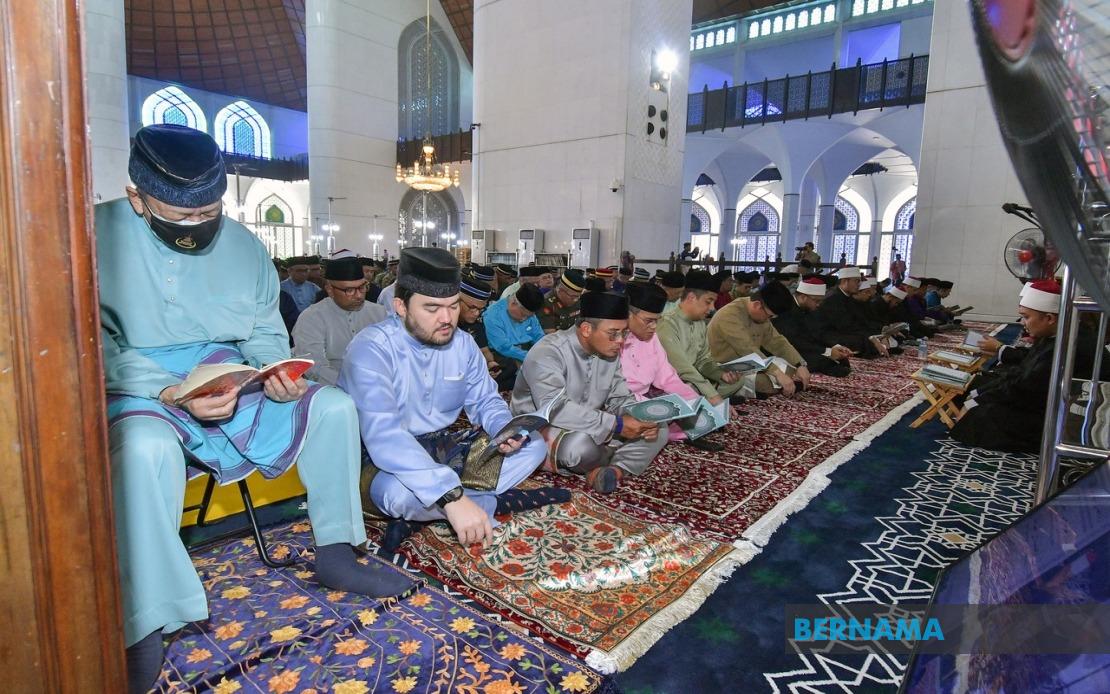
Sultan Sharafuddin Idris Shah, the Sultan of Selangor, participated in a Surah Yassin recitation and Friday prayers at Masjid Sultan Salahuddin Abdul Aziz Shah in Shah Alam on Wednesday, marking a significant spiritual gathering in the state before the forthcoming National Day commemorations. The presence of the reigning monarch underscored the royal family's continued engagement with religious observances and community gatherings across Selangor, one of Malaysia's most populous states and economic powerhouses.
Joining the Sultan in this religious observance was Tengku Amir Shah Sultan Sharafuddin Idris Shah, the Raja Muda of Selangor, signifying the broader royal household's involvement in such state-level events. The attendance of the heir apparent alongside the reigning Sultan demonstrated the continuity of royal participation in spiritual and cultural activities that bind the state's leadership with its diverse population.
Upon arrival at the mosque, the Sultan received a formal welcome from Selangor Menteri Besar Datuk Seri Amirudin Shari, who also holds responsibility for coordinating the state's governance and community initiatives. Present alongside the senior state administrator was Dr Mohammad Fahmi Ngah, the chairman of the State Islamic Affairs and Innovation Culture Committee, reflecting the state government's structured approach to integrating religious and cultural programming within its administrative framework.
The gathering also included prominent officials from Selangor's Islamic institutional apparatus. Datuk Mohd Shahzihan Ahmad, the director of the Selangor Islamic Religious Department (JAIS), and Datuk Salehuddin Saidin, chairman of the Selangor Islamic Religious Council (MAIS), were in attendance. Their presence highlighted the coordinated efforts of multiple state agencies in facilitating religious activities and ensuring their alignment with broader state objectives.
Approximately 1,000 worshippers converged at the mosque to participate in the Surah Yassin recitation, a Quranic devotional practice widely observed across Muslim communities. The participant roster included members of security forces stationed throughout Selangor, demonstrating how religious gatherings serve as inclusive spaces that transcend occupational and hierarchical boundaries. This cross-section of attendees reflected the mosque's role as a unifying institution within the state's social fabric.
Following the recitation of Surah Yassin, Sultan Sharafuddin led the Friday congregational prayers at the mosque. The sermon delivered by Muhammad Farhan Wijaya, the mosque's Grand Imam, carried particular resonance in the pre-Merdeka period. Titled "Merdeka Daripada Belenggu Kerakusan" (Freedom from the Shackles of Greed), the khutbah addressed themes of spiritual liberation and moral rectitude, encouraging worshippers to reflect on values beyond material acquisition as the nation approached its independence commemoration.
The sermon's timing and thematic content connected religious observance with national consciousness, positioning spiritual reflection as integral to national identity. By selecting a khutbah centring on greed and its antidotes, religious leadership emphasized virtues often stressed in independence narratives: selflessness, communal welfare, and values-driven governance. This alignment of pulpit messaging with national commemorative occasions demonstrates how religious institutions amplify broader civic messages during significant calendar moments.
Selangor's state-level National Day celebrations are scheduled to unfold at Kajang Stadium on Sunday, August 30, commencing at 8 pm. The festivities will operate under the thematic framework "Malaysia MADANI: Kesejahteraan Dinikmati" (Malaysia MADANI: Shared Prosperity), which echoes the national theme for the year's independence commemorations. This thematic coherence between state and federal celebrations ensures messaging consistency across administrative tiers.
The Malaysia MADANI framework represents the current administration's articulation of national aspirations centred on inclusive prosperity and societal wellbeing. By adopting this theme at the state level, Selangor's leadership signals alignment with federal priorities while simultaneously demonstrating the state's capacity to deliver prosperity to its constituents. The stadium venue choice reflects the scale and public-facing nature of the celebration, expected to draw significant participation from the state's residents.
The Sultan's attendance at the pre-Merdeka religious gathering serves multiple functions within Selangor's institutional ecosystem. Monarchical presence at spiritual observances reinforces the constitutional role of Malay rulers as custodians of Islam in their respective states, a responsibility embedded in the Malaysian Federal Constitution. Simultaneously, such engagements strengthen the symbolic connection between royalty, religious authority, and national identity, particularly during periods of national reflection and celebration.
For Selangor specifically, these coordinated activities between palace, state administration, and religious institutions demonstrate governance frameworks that integrate ceremonial, administrative, and spiritual dimensions. As Malaysia's most economically significant state after the Federal Territories, Selangor's approach to managing religious and civic programming often sets precedents observed elsewhere in the federation, making such gatherings noteworthy beyond regional boundaries.
The religious observance additionally reflects broader patterns in Malaysian public life where major national occasions receive spiritual anchorings through Quranic recitations, sermons, and prayers. This integration of religious practice with civic commemoration distinguishes Malaysia's national day observances from secular models, reflecting the constitutional status of Islam and the centrality of religious identity in the nation's founding documents and ongoing civic consciousness.

