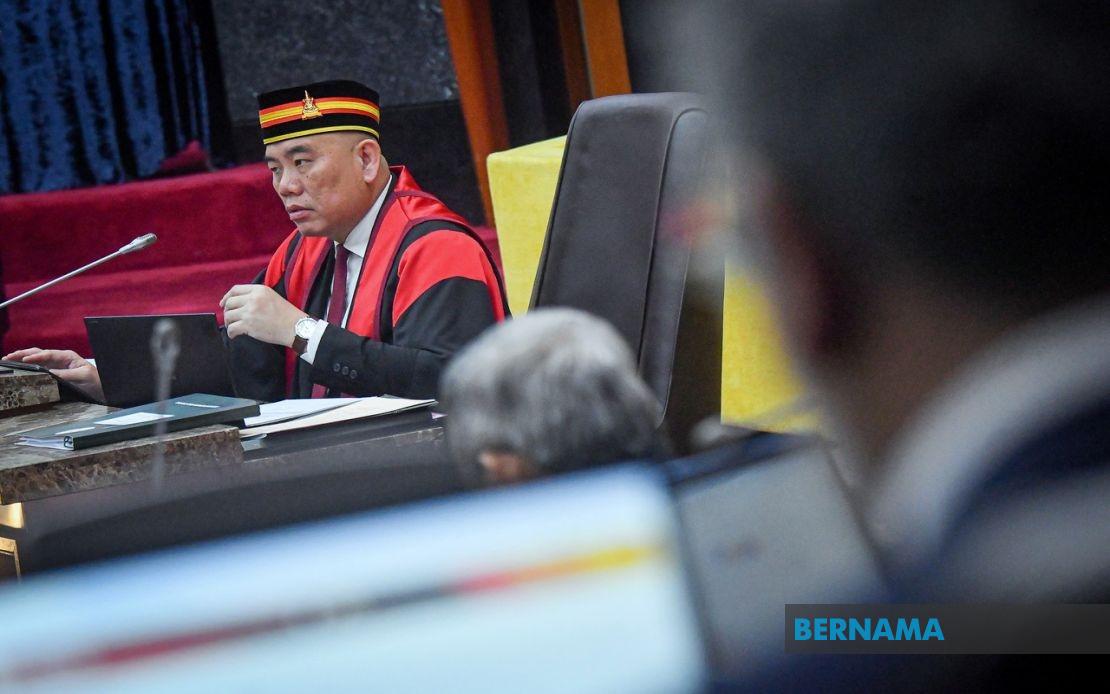
Selangor Speaker Lau Weng San has initiated a comprehensive examination of the standing of all state assemblymen, a process that could potentially reshape the composition of Malaysia's largest and most economically significant state assembly. Speaking at the state assembly building in Shah Alam, Lau explained that the review encompasses members from every political party, underscoring the procedural impartiality of the investigation and his commitment to ensuring decisions rest on constitutional grounds rather than partisan considerations.
The scrutiny represents a significant constitutional undertaking within Selangor's legislative framework. Under the state constitution, an assemblyman faces the prospect of losing his seat if he fails to attend assembly sittings for six consecutive months without valid permission or official notification to the Speaker. This provision exists to maintain accountability and ensure that representatives actively fulfil their legislative duties, though its application inevitably carries political weight in Malaysia's competitive state politics.
Lau's deliberate approach reflects the complexity and sensitivity surrounding the review. He declined to provide a timeline for completion, emphasising instead that thorough investigations must precede any official determinations. His insistence on examining "every party, every corner" suggests the review may extend beyond simple attendance records to encompass broader questions of assemblyman status and eligibility, though specific details remain undisclosed pending the investigation's conclusion.
The Speaker addressed speculation regarding the absence of certain assemblymen during today's sitting, cautioning against premature conclusions. He noted that one or two members were absent but stressed that non-attendance does not automatically signal involvement in the review process. Several assemblymen had previously submitted formal communications explaining their absences, citing health considerations and other legitimate reasons. Each case, Lau indicated, would receive individual assessment before any determination materialised.
Menteri Besar Datuk Seri Amirudin Shari provided additional context to the timeline, suggesting that a final decision on at least one contested seat would emerge this week. This announcement signals that resolution is imminent on matters that have likely generated substantial behind-the-scenes discussion within Selangor's government structures. The state executive is awaiting formal notification from the Speaker before proceeding with subsequent steps, indicating a carefully choreographed constitutional process.
The potential implications for Selangor politics warrant careful consideration. Any declaration of vacant seats would trigger by-election processes overseen by the Election Commission, fundamentally altering the current balance within the state assembly. In Selangor's competitive political environment, where coalitions have shifted and power dynamics remain fluid, such changes could influence legislative voting patterns and the government's capacity to advance its agenda without external support.
The constitutional provision governing seat vacancy reflects a tension inherent in Westminster-style legislative systems: balancing members' legitimate personal circumstances against their representational obligations. While health issues and temporary absences merit understanding, the six-month threshold aims to prevent indefinite vacancies that would undermine constituent representation. Lau's emphasis on examining individual circumstances suggests he recognises this balance, requiring careful case-by-case evaluation rather than mechanical application of rules.
For Malaysian readers, this institutional process illustrates how state constitutions operate independently of federal frameworks, with Selangor exercising considerable autonomy in managing its legislative affairs. The Speaker's role as constitutional arbiter, independent of executive pressure, represents a critical safeguard within Malaysia's federal democracy, though the effectiveness of such safeguards frequently depends on the individual's commitment to impartiality.
The broader context reveals evolving patterns in Selangor politics, where demographic changes, urbanisation pressures, and shifting voter preferences have created unprecedented fluidity in representation. Recent years have witnessed multiple transitions in state government control and composition, creating circumstances where assemblyman status and eligibility questions naturally arise more frequently than during periods of stable, consolidated governance.
The review's comprehensive scope distinguishes it from selective targeting. By explicitly examining all parties and all constituencies, the Speaker seeks to insulate the process from accusations of partisan manipulation, a critical consideration given Malaysia's heightened political sensitivities around institutional decision-making. Nevertheless, the outcomes will inevitably carry political consequences regardless of their procedural fairness.
For Southeast Asian observers monitoring Malaysian institutional development, this episode demonstrates how constitutional mechanisms designed for straightforward circumstances—enforcing attendance and preventing indefinite vacancies—become more complex when applied in genuinely competitive, multi-party environments. The Speaker's methodical approach, while administratively sound, necessarily creates uncertainty that political actors will interpret through partisan lenses.
The state legal adviser's preparation of formal documentation signals that constitutional processes are advancing toward conclusion. This behind-the-scenes work, though procedurally invisible to public view, represents the essential groundwork ensuring that any decisions withstand legal scrutiny and align with Selangor's constitutional requirements. The forthcoming announcement will clarify both the immediate implications for individual assemblymen and the longer-term trajectory of state assembly composition.

