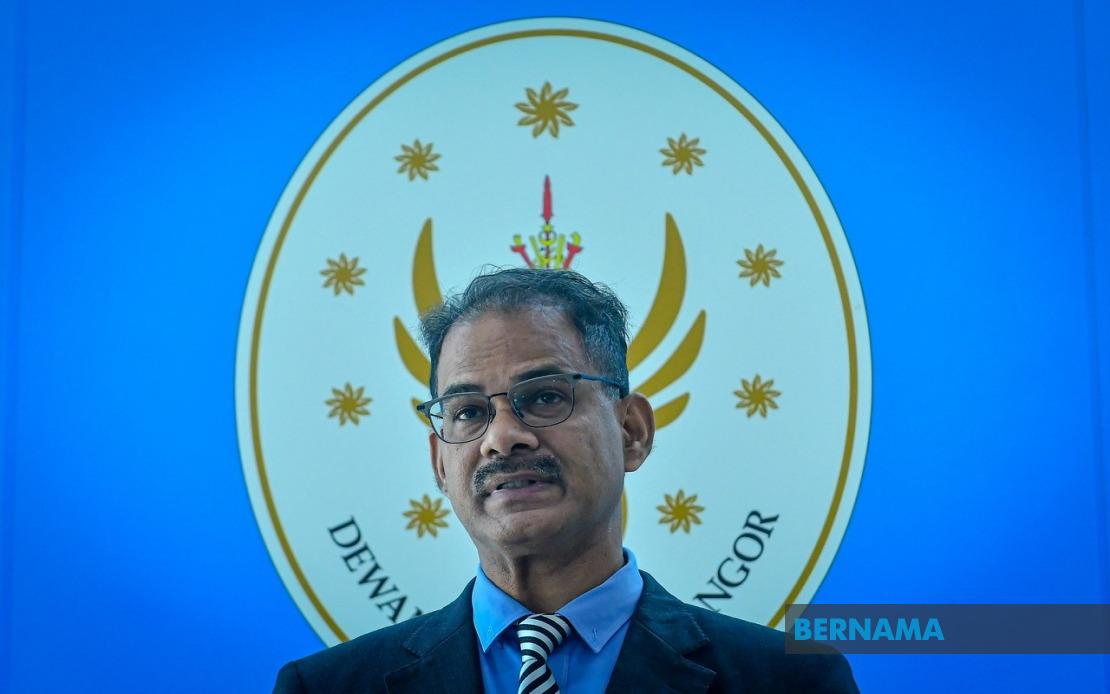
Selangor's state government is making a determined push to ensure that eligible non-pensioned military and police retirees do not forfeit their share of the 2026 Warriors' Day shopping vouchers, which carry a benefit value of RM200 per person and must be claimed by August 31. The initiative, which commenced on July 29, has generated surprisingly modest participation, with only approximately 500 claims submitted from a pool of 8,391 registered veterans who qualify for the benefit.
V. Papparaidu, chairman of the Human Resources and Poverty Eradication Committee, attributes the sluggish uptake to practical challenges in reaching potential beneficiaries. During efforts to contact eligible recipients, state officials discovered that contact information on file had become outdated, with many veterans having relocated or changed their telephone numbers over time. This gap between the eligible population and actual claimants represents a significant opportunity cost, as nearly RM2 million in allocated funds remain unclaimed.
In response to these communication difficulties, Selangor has simplified the claims process by permitting representatives and family members to collect vouchers on behalf of named recipients. This flexibility addresses a genuine administrative barrier, particularly for elderly veterans or those living in remote areas who may find it inconvenient to visit State Legislative Assembly service centres themselves. The relaxation of procedural requirements demonstrates a pragmatic approach to ensuring the intended beneficiaries actually receive their allocation.
The voucher scheme itself operates on a streamlined basis, requiring no formal application process from recipients. Instead, the Selangor government relies upon official registers submitted by the Department of Veterans Affairs and the Royal Malaysia Police as the authoritative source for determining eligibility. These lists undergo scrutiny by the Selangor Economic Planning Unit before final verification through respective State Legislative Assembly service centres, establishing a transparent mechanism that prioritises accuracy and reduces fraudulent claims.
The RM1.7 million total allocation represents a meaningful commitment to supporting non-pensioned veterans, particularly those who did not qualify for regular military pensions but nonetheless served the nation. Each RM200 voucher can be redeemed at participating supermarket chains for essential household items, with restrictions placed on luxury goods such as cigarettes and alcohol. This targeted approach ensures funds are directed toward genuine necessities rather than discretionary consumption.
For Malaysia's broader veteran community, the significance of this initiative extends beyond the immediate financial benefit. Non-pensioned armed forces and police veterans occupy a unique position within the nation's social safety net, often having served their country without securing the pension security afforded to longer-serving personnel. This group frequently faces financial vulnerability in retirement, making state-level assistance schemes crucial for maintaining basic living standards.
Papparaidu framed the voucher programme as both practical economic support and a symbolic acknowledgment of veterans' contributions to national security and stability. The messaging reflects a growing recognition among Malaysian policymakers that state governments should play an active role in honouring those who served in uniform, particularly in circumstances where federal pension schemes may not provide comprehensive coverage. Selangor's initiative thereby sets a precedent that other state governments may consider replicating.
The relatively low claim rate raises questions about information dissemination and awareness campaigns. While the state has established service centres as distribution points, reaching non-pensioned veterans—a dispersed population without the structured communication channels available for active-duty personnel—presents inherent challenges. The fact that only six percent of eligible recipients have claimed their vouchers suggests that additional targeted outreach may be necessary, perhaps through veterans' associations, community leaders, or local government channels.
The August 31 deadline creates urgency, yet the extended timeframe of roughly two months from the launch date should theoretically allow sufficient opportunity for motivated claimants to access their benefits. The availability of proxy claims removes a significant participation barrier, particularly for older veterans who may face mobility constraints or those residing far from state assembly service centres. However, awareness itself remains the critical limiting factor.
For Malaysian readers and policymakers, this Selangor initiative illustrates both the potential and practical difficulties inherent in delivering targeted welfare programmes to specific demographics. The scheme's design—with pre-verified eligibility lists and simplified redemption processes—represents best practice in administrative efficiency. Yet the gap between intended beneficiaries and actual claimants demonstrates that even well-designed programmes require sustained promotion and accessibility modifications.
The broader implications extend to how Malaysia's federal and state governments approach veteran welfare as the country's armed forces and police personnel continue transitioning into retirement. With demographic shifts resulting in growing retiree populations, establishing efficient and dignified support mechanisms becomes increasingly important. Selangor's shopping voucher scheme, despite its modest uptake to date, demonstrates state commitment to this demographic and provides a testable model for future expansion or refinement.
For non-pensioned veterans still unaware of the opportunity, Papparaidu's message is clear: visit the nearest State Legislative Assembly service centre to verify eligibility and claim the vouchers before August 31. The state government's willingness to accommodate proxy claims removes logistical obstacles, leaving awareness and individual initiative as the remaining variables determining whether this allocated RM1.7 million reaches its intended recipients or expires unclaimed.

