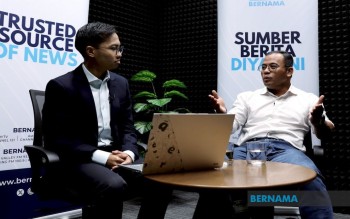
Selangor Menteri Besar Datuk Seri Amirudin Shari has outlined an ambitious vision for transforming Malaysia's central region through deeper economic integration between Selangor and Negeri Sembilan, arguing that the two neighbouring states possess complementary strengths that remain largely untapped. Speaking recently in Seremban, Amirudin described how coordinated strategic development could catalyse investment flows, strengthen industrial networks, and position the region as a magnet for high-value manufacturing and technology enterprises seeking to expand operations in Southeast Asia.
The geographical alignment of Selangor and Negeri Sembilan presents what development specialists might term a natural economic zone waiting for activation. Amirudin emphasized that the states' shared borders and comparable development trajectories create opportunities for seamless coordination that transcends conventional state-level governance constraints. This proximity advantage becomes particularly significant when considering how transportation corridors, supply chains, and labour markets operate across administrative boundaries rather than within them. The Menteri Besar argued that voters in the upcoming 16th Negeri Sembilan state election should recognize this potential and prioritize political alignment between state governments as a practical economic benefit.
A critical focal point in this development strategy involves the southern expansion corridors already underway in Selangor. The Sepang and Kuala Langat areas represent zones of intensive commercial and industrial activity, while Negeri Sembilan's Nilai region has emerged as a technology and innovation hub. Rather than treating these developments as separate entities, Amirudin proposed that deliberate coordination could create synergies where enterprises in one state find immediate complementary services, supply chain partners, and talent pools across the border. The Selangor Aero Park, for instance, sits adjacent to available land in Negeri Sembilan, creating integrated development opportunities that neither state could maximize independently.
Infrastructure connectivity forms the backbone of this proposed economic corridor. Amirudin highlighted how the planned Seremban Bypass represents more than a traffic management solution; it functions as a critical arterial link strengthening supply chain efficiency between industrial zones scattered across both states. By connecting manufacturing clusters in Negeri Sembilan with major port infrastructure in Selangor—specifically Westports and Northport—the bypass would reduce logistics costs and transit times for export-oriented businesses. The Pulau Carey development adds another dimension to this infrastructure network, offering strategic positioning for manufacturing facilities seeking proximity to international shipping routes.
The regional logistics advantage is amplified significantly by the presence of Kuala Lumpur International Airport (KLIA) and its associated cargo facilities. Combined with existing highway networks including major federal routes connecting the two states, the infrastructure ecosystem creates a compelling value proposition for international investors evaluating Southeast Asian locations. Amirudin argued that manufacturing enterprises currently considering alternative destinations across the region—such as Vietnam, Thailand, or Indonesia—should perceive this integrated infrastructure as a competitive differentiator favouring Malaysia's central region.
What distinguishes Amirudin's proposal from conventional regional development rhetoric is the emphasis on informal governance coordination. He suggested that when state administrations share political alignment and development vision, numerous implementation challenges that normally require formal inter-government negotiations can be resolved through routine administrative channels. This reduces bureaucratic friction, accelerates project timelines, and enables faster response to investment opportunities. For multinational corporations evaluating infrastructure readiness and regulatory responsiveness, such operational efficiency translates into tangible cost savings and reduced project development cycles.
The technology sector emerges as a particular beneficiary of this coordinated approach. Negeri Sembilan's positioning as a technology hub, combined with Selangor's existing concentration of IT companies, financial services firms, and digital enterprises, creates natural clustering opportunities. When geographic proximity combines with aligned regulatory frameworks and coordinated workforce development initiatives, the region gains capacity to attract multinational tech companies seeking to establish regional innovation centres or manufacturing hubs for specialized electronics and high-tech components.
Manufacturing competitiveness across multiple sectors would benefit from corridor integration. The services and logistics segments, particularly vulnerable to disruption from regional competitors, gain resilience through improved supply chain architecture. Quality manufacturing in automotive components, electronics, industrial machinery, and specialized materials production all depend on rapid materials movement and proximity to port facilities. Amirudin contended that the Selangor-Negeri Sembilan corridor would enhance Malaysia's standing as a reliable regional manufacturing destination, potentially capturing investment flows currently directed toward competing jurisdictions.
The sustainability dimension reflects evolving international investment preferences. Amirudin framed the corridor concept not merely as growth acceleration but as fundamentally different development model emphasizing inter-state cooperation and long-term economic resilience. This messaging resonates with ESG-conscious institutional investors increasingly scrutinizing regional stability, governance quality, and development planning coherence when making capital allocation decisions. A corridor built on demonstrated inter-state coordination signals governmental competence and sustainable long-term planning horizons.
For Malaysian policymakers navigating economic pressures from competing regional economies, the Selangor-Negeri Sembilan model offers a replicable template. The central region's existing advantages—geographic centrality, established infrastructure, concentration of skilled workforce, and port access—remain underutilized partly through fragmented state-level development planning. Amirudin's vision demonstrates how political will and administrative alignment could unlock significant untapped economic potential without requiring massive new capital investment, relying instead on more efficient utilization of existing assets and improved inter-jurisdictional coordination.

