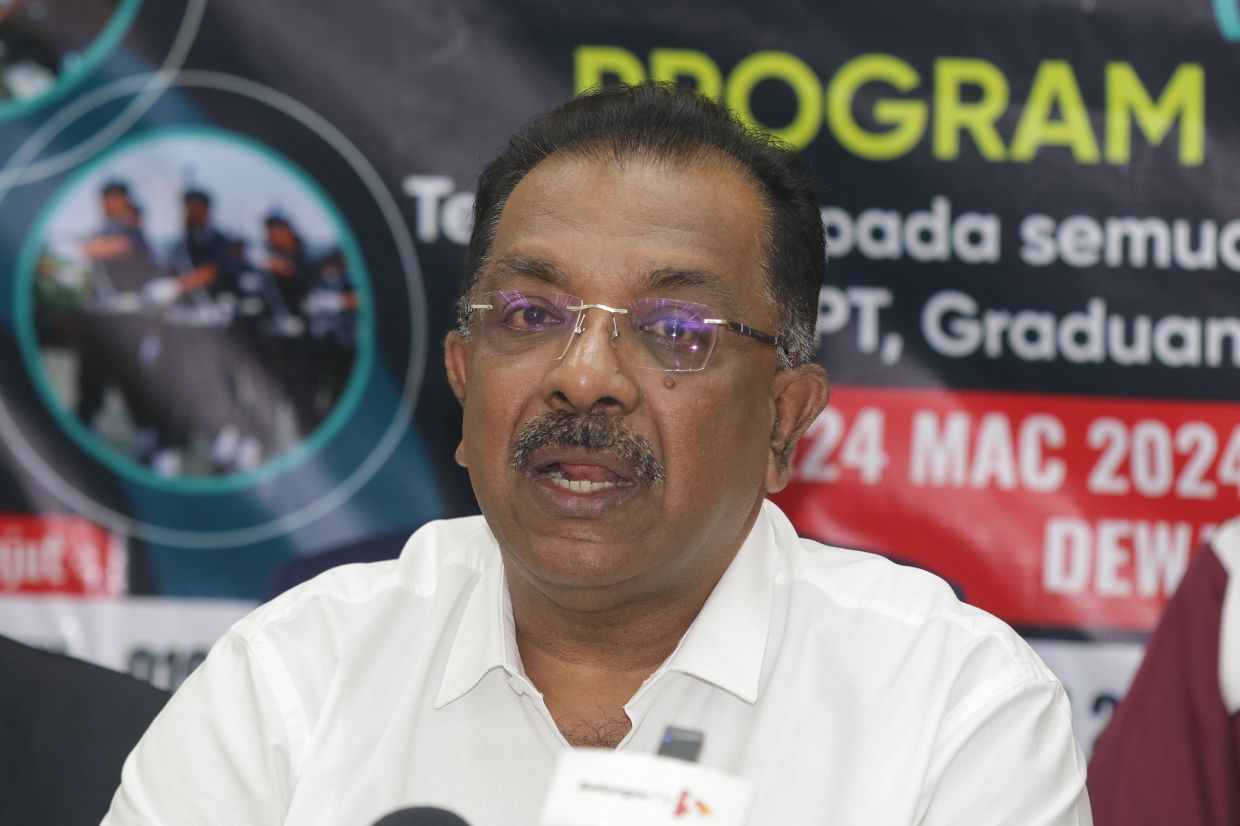
The pressing tension between urban expansion and religious site preservation in Selangor demands a more systematic approach to resolving disputes affecting non-Muslim places of worship, according to Sentosa assemblyman Gunaraj George. Speaking during a debate session at the Selangor state assembly sitting at Bangunan Dewan Negeri Selangor in Shah Alam on Wednesday, August 12, George highlighted the need for collaborative frameworks that protect longstanding religious institutions without impeding necessary development across the state's rapidly urbanising landscape.
The core issue confronting Selangor's authorities involves temples that have operated for decades, often predating modern residential and commercial development in their respective areas. Many of these religious institutions were initially established with explicit landowner consent and functioned openly within their communities for generations. However, as surrounding neighbourhoods undergo transformation into modern townships, these same temples frequently encounter sudden challenges to their legal status, with authorities increasingly designating them as "illegal" structures despite their historical legitimacy and ongoing community use.
George underscored the importance of recognising the historical context within which these places of worship were established. Communities that built temples decades ago did so with full transparency and the knowledge of property owners, creating religious spaces that became integral to local cultural and spiritual life. The retrospective criminalisation of these institutions represents, in his view, a failure to acknowledge the longstanding relationship between religious communities and the land they have occupied. Any policy intervention must account for this historical reality rather than treating all temples as problematic encroachments on valuable development land.
The assemblyman proposed that Selangor establish a formal coordination mechanism involving multiple stakeholders: state government agencies, local municipal authorities, private property owners, property developers, and the management committees of temples themselves. This multi-party approach would enable structured dialogue where different interests can be articulated and negotiated transparently. Rather than imposing unilateral decisions on religious communities, such a framework would create space for genuine problem-solving grounded in specific circumstances rather than blanket policies.
George distinguished between the various categories of challenges affecting non-Muslim places of worship, each requiring distinct solutions. Land ownership disputes demand careful legal examination and negotiation between communities and landholders. Planning and zoning issues call for creative solutions that might include regularising temple structures within existing urban plans or identifying alternative spaces. Structural safety concerns warrant professional engineering assessment and remediation where feasible, rather than immediate demolition. Safety considerations need not automatically result in closure; they often point toward remedial pathways that preserve both community rights and public security.
Critically, George rejected the notion that communities and their religious institutions should face summary judgement without comprehensive evaluation of their actual circumstances. Too often, authorities treat decades-old temples as administrative problems requiring swift removal rather than as valued components of local society warranting thoughtful accommodation. This approach fails to recognise the spiritual and cultural investment these communities have made and the practical impossibility of simply relocating institutions that have become anchored in their locations through decades of use.
The Sentosa assemblyman characterised the challenge as fundamentally about balancing legitimate interests rather than choosing between incompatible alternatives. Economic development and the advancement of new residential and commercial projects do not necessitate the destruction or displacement of every existing religious institution. Strategic urban planning can accommodate both growth and heritage preservation through thoughtful design and negotiation. This requires viewing religious communities not as obstacles to progress but as stakeholders whose concerns deserve serious consideration in development planning.
George positioned Selangor as uniquely positioned to establish a model approach that other Malaysian states might eventually adopt. With its size, economic dynamism, and diverse population, Selangor confronts these religious accommodation challenges more acutely than less urbanised states. How the state government addresses these issues will set precedents and potentially influence how other jurisdictions handle similar tensions between development and religious heritage.
The assemblyman's remarks reflect growing concern within Selangor's political establishment about the social and political costs of appearing insensitive to religious minority concerns. Unresolved disputes over temples can generate community grievances, political friction between different religious groups, and international attention to Malaysia's treatment of non-Muslim populations. Conversely, demonstrating mature, inclusive approaches to balancing development with religious protection enhances Selangor's reputation as a progressive state capable of navigating Malaysia's religious and cultural diversity.
The call for structured mechanisms resonates particularly in Selangor given the state's rapid urbanisation and the proliferation of cases where temples have faced eviction or demolition pressure. Without clear, transparent processes that respect historical context and enable genuine stakeholder participation, such disputes will continue generating acrimony and undermining social cohesion. A formalised framework offers opportunities for early intervention, mediation, and creative problem-solving before disputes escalate to confrontational stages.
George's framing also carries implicit criticism of ad-hoc decision-making that has characterised some previous cases. When local authorities or developers act unilaterally, when communities have limited recourse to appeal processes, and when decisions appear predetermined rather than genuinely open to negotiation, trust erodes. A structured mechanism with clear procedures, defined stakeholder roles, and transparent criteria would mitigate such concerns and enable decisions that local communities perceive as fair even when outcomes disappoint individual parties.
Looking forward, the government would need to specify the composition and powers of any proposed mechanism, establish timelines for dispute resolution, and define the criteria by which competing claims are evaluated. Whether such frameworks would operate at state, district, or local authority levels remains unclear, as does the question of enforcement if parties reject negotiated outcomes. Nonetheless, George's intervention signals growing recognition that ad-hoc approaches are inadequate and that Selangor's development trajectory must accommodate the religious and cultural needs of all communities.

