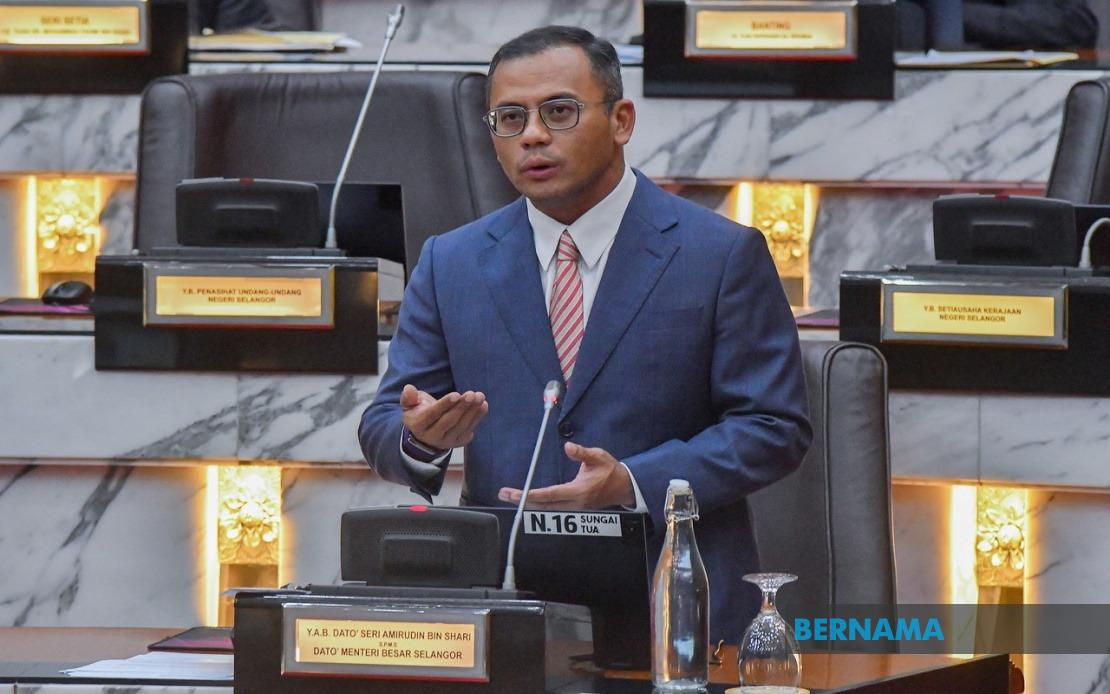
Selangor's Menteri Besar Datuk Seri Amirudin Shari has issued a directive to all local authorities in the state to conduct a comprehensive review of connectivity facilities serving public transportation networks. The instruction comes as the state government seeks to address longstanding concerns about accessibility and safety along transit routes, particularly around stations and transport hubs that have recently drawn public attention through social media discussions.
The state administration has signalled its willingness to commit additional financial resources toward improving transit-related infrastructure, with a specific focus on enhancing pedestrian pathways and ensuring safer passage for commuters. However, Amirudin emphasised that these investments should be made strategically and cost-effectively, rather than through excessive spending. The overarching aim is to support Selangor's broader mobility objectives, which centre on encouraging greater adoption of public transportation systems as an alternative to private vehicles.
Amirudin's remarks carry a subtle but pointed critique of local authority responsiveness. He stressed that councils and municipalities must adopt a proactive stance in identifying and resolving connectivity problems, rather than waiting for issues to surface through viral social media campaigns on platforms such as X and Threads. Instead, he called for a more structured approach where local authorities engage directly with elected council members and key stakeholders to understand ground-level transportation challenges and develop solutions collaboratively.
The connectivity matter gained prominence after Danial Al-Rashid Haron Aminar Rashid, assemblyman for Batu Tiga, raised concerns during the state legislative assembly debate on the Selangor Resilience Strengthening Package. Danial highlighted specific gaps in the connection between the LRT3 line and neighbouring residential and commercial areas, an issue that had previously circulated widely on social platforms. This intervention appears to have prompted the Menteri Besar's directive.
The state government's response involves engaging transport operators at a higher level. Ng Sze Han, who chairs the State Investment, Trade and Mobility Committee, will be tasked with convening all public transport operators across Selangor to develop comprehensive service mapping. This exercise aims to systematically identify geographical areas currently underserved by public transport networks and pinpoint the specific connectivity gaps that discourage commuter usage.
Amirudin acknowledged the role of government subsidies in supporting the public transport sector, but cautioned that financial support alone cannot solve the problem if operators do not align their service delivery with community needs. He illustrated this point by noting that poor connectivity and inflexible operating hours will continue driving commuters toward private vehicles, regardless of subsidies provided. The underlying logic reflects a market-based understanding: subsidies reduce operator costs, but only effective service provision translates that benefit into genuine usage and mobility improvements.
The Menteri Besar's emphasis on first-mile and last-mile connectivity speaks to a well-documented challenge in public transport systems across Southeast Asia. This refers to the critical journey segments before boarding and after alighting from transit vehicles—the gaps that often determine whether people will use public transport at all. Without safe, convenient, and time-efficient access to stations or stops, even well-operated and subsidised transit systems remain underutilised. For Selangor, a state with significant urban sprawl and diverse settlement patterns, addressing these gaps is essential for achieving modal shift goals.
The directive also reflects shifting governance approaches in Selangor, where the state government increasingly monitors and responds to public sentiment expressed through digital channels. While Amirudin discouraged local authorities from being reactive to social media noise, the fact that his own response was prompted by a viral issue suggests that digital feedback mechanisms are becoming part of the formal governance feedback loop in the state. This dynamic creates both opportunities and risks: genuine public concerns can surface quickly, but municipalities must avoid being driven solely by trending topics rather than systematic planning.
For Malaysian commuters more broadly, this initiative carries implications beyond Selangor. As the country's most economically significant state and a bellwether for urban policy, Selangor's approach to public transport connectivity often influences strategies elsewhere. The focus on systematic service mapping and operator coordination represents a data-driven approach that could be replicated in other metropolitan areas facing similar challenges. States like Johor, Pahang, and Perak, which are developing their own rapid transit systems, may look to Selangor's experience in addressing connectivity as a model for their own implementation.
The financial commitment to improving pedestrian infrastructure also addresses a broader sustainability agenda. Better walking conditions to and from transit points can support the state's environmental goals while improving public health outcomes. Safer, more comfortable walkways encourage particularly vulnerable groups—elderly persons, children, and people with mobility challenges—to access public transport more confidently.
Moving forward, the success of this initiative will depend on several factors: the willingness of local authorities to genuinely consult stakeholders rather than perfunctorily conducting reviews, the responsiveness of transport operators to identified gaps, and the state government's follow-through on promised funding. The appointment of Ng Sze Han to coordinate with operators suggests that the Menteri Besar is treating this matter with sufficient priority to involve a senior political figure, lending weight to implementation efforts.
The broader context matters here as well. Selangor's public transport network has expanded significantly in recent years with the LRT3 and other initiatives, yet user satisfaction remains uneven. Commuters frequently report frustration over the final segments of their journeys—walking to stations in challenging weather or unsafe conditions, or finding no convenient transit options from their final destinations. This review process offers an opportunity to shift focus from system expansion toward system optimisation and user experience, a pragmatic recognition that infrastructure alone does not ensure ridership.