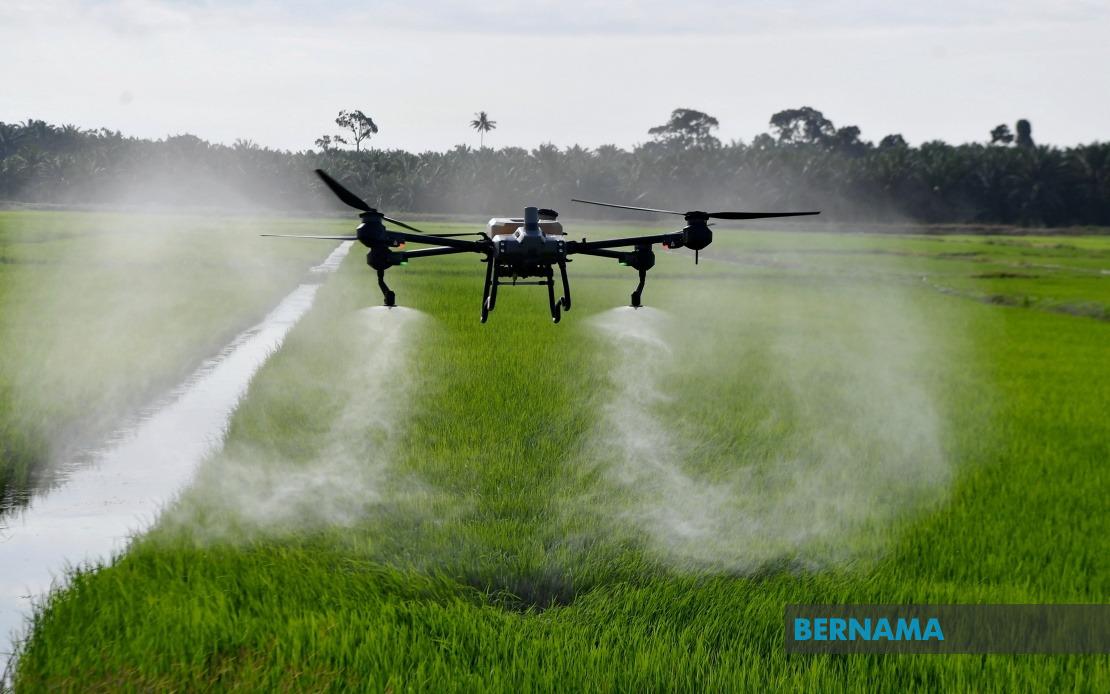
Selangor is positioning itself as a regional hub for unmanned aerial vehicle technology with a substantial state investment designed to catalyse growth across the burgeoning drone sector. The state government's allocation of RM500,000 signals ambitious plans to develop infrastructure, support research commercialisation, and create conditions that will attract both established multinational operators and emerging local enterprises to establish operations within its boundaries. The funding commitment comes as Malaysia increasingly recognises autonomous systems and airspace technology as critical components of its broader digital economy strategy.
Dr Mohammad Fahmi Ngah, the state's Islamic Affairs and Innovation Culture Committee chairman, emphasised that this financial injection represents a meaningful increase from previous budgets and reflects Selangor's determination to capture opportunities in what government planners describe as a high-impact sector with potential for substantial growth through 2027. The allocation will address infrastructure modernisation at Universiti Selangor's campus in Bestari Jaya, where the Droneport-1000 facility is being developed as the centrepiece of the state's drone ecosystem strategy. Beyond physical upgrades, the funding will support collaborative programmes designed to strengthen connections between academic institutions, technology companies, and potential investors in the regional and international markets.
The flagship Droneport-1000 project represents one of Malaysia's most ambitious dedicated airspace developments, encompassing a designated corridor spanning 24 square kilometres with operational altitudes reaching up to 1,000 metres. The facility currently awaits full certification from the Civil Aviation Authority of Malaysia, a crucial step that will formally legitimise commercial and research operations within the designated airspace zone. Selangor's strategic investment in this infrastructure reflects understanding that drone technology deployment requires not merely regulatory approval but also physical facilities, technical support systems, and coordinated industry development that extends well beyond basic licensing frameworks.
Government planners envision the drone sector extending far beyond the production of airframes and rotors. The sector encompasses a sophisticated value chain including software development, artificial intelligence systems that process drone-collected data, and semiconductor manufacturing capabilities currently being developed in the Puchong region. This vertical integration approach means that attracting drone operators simultaneously creates demand for local technology services, manufacturing expertise, and talent development—effects that ripple through multiple industries and generate employment opportunities across skill levels. The vision reflects a modern understanding that technological sectors operate as interconnected ecosystems rather than isolated industries.
Selangor's proposition to potential drone industry participants includes matching grant schemes and other incentive structures designed to reduce initial investment barriers and encourage both domestic and foreign enterprises to establish regional operations within the state. These incentive mechanisms acknowledge that competing for high-value technology sectors requires more than infrastructure alone; jurisdictions must demonstrate willingness to share financial risk and demonstrate genuine commitment to supporting industry development. The matching grant approach creates alignment between government ambitions and private sector capital deployment, theoretically ensuring that public resources complement rather than substitute for commercial investment.
Dr Mohammad Fahmi articulated the economic potential of drone technology with reference to specific environmental and infrastructure challenges that jurisdictions throughout Southeast Asia regularly confront. Forest reserve encroachment, coastal erosion, and water management infrastructure failures represent ongoing governance challenges that traditional monitoring methods struggle to address comprehensively. Drone-based surveillance coupled with artificial intelligence analysis enables more frequent monitoring, faster problem detection, and reduced reliance on manual field inspections that consume significant government resources. In Selangor's case, the aerial monitoring area potentially reaches ten times the geographical extent of Singapore, creating enormous scope for technology application across environmental protection, urban planning, and infrastructure management.
Universiti Selangor's involvement as the physical and intellectual host for Droneport-1000 reflects growing recognition that universities serve essential roles in technology sector development beyond traditional teaching functions. The institution provides facilities, research capacity, student talent pipelines, and credibility that attract industry partnerships. Through Selangor Aviation & Technology Innovation, a state-backed entity leading the initiative, the university becomes a catalyst for translating academic research into commercial applications—the critical translation step that frequently determines whether theoretical innovation ultimately generates economic value and employment.
Zannifa Azura Ahmad, the chief executive of the aviation and technology initiative, articulated an explicit strategy to bridge the persistent gap between academic research and industrial commercialisation. Universities globally produce substantial technological innovation that remains trapped within institutional boundaries, never reaching markets or creating tangible economic impact. By establishing Droneport-1000 as a deliberate connection point between academic researchers, student entrepreneurs, and established industry actors, Selangor's framework attempts to overcome structural barriers that impede technology transfer. This approach recognises that innovation failure often stems not from poor science but from institutional structures that fail to facilitate productive collaboration between knowledge creators and commercial implementers.
The timing of Selangor's drone sector investment positions the state strategically within a broader Malaysian technology development agenda. As the nation pursues higher-value manufacturing and knowledge-intensive sectors, drone technology represents a relatively accessible entry point where Malaysia possesses genuine advantages—geographic location, technical talent pools, established aerospace and defence industries, and regulatory frameworks that, while still developing, benefit from maritime and aviation experience accumulated through decades of port and airline operations. Selangor's regional location and existing technology ecosystem provide advantages that competing jurisdictions cannot easily replicate.
The initiative also reflects emerging patterns in Southeast Asian regional development where state governments invest heavily in niche technology sectors with potential for exponential growth. Rather than competing primarily on cost—a contest where developing economies perpetually face disadvantages against low-wage nations—advanced regional economies emphasise innovation, technical specialisation, and ecosystem development as competition vectors. Selangor's drone investment aligns with this strategic orientation, positioning the state as innovation-focused rather than cost-focused, a positioning that attracts different corporate partners, creates more resilient employment, and generates knowledge assets that accumulate over time.
The regulatory environment surrounding drone operations in Malaysia has gradually matured, with CAAM developing frameworks that balance innovation encouragement with safety and security requirements. Selangor's Droneport-1000 project benefits from this regulatory evolution, operating within formal approved structures rather than regulatory grey zones that plagued earlier technology deployments. The civil aviation authority's involvement in facility certification represents institutional recognition that drone technology requires specialised governance expertise, not merely general innovation encouragement. This regulatory clarity reduces investment risk for commercial operators, making Selangor a more attractive location for industry concentration compared to jurisdictions where regulatory environments remain uncertain.
Success in attracting drone sector growth depends substantially on factors extending beyond financial allocation. Talent pipeline development, through both university partnerships and technical training programmes, will determine whether facilities attract genuinely innovative enterprises or merely become physical installations. International perceptions of Malaysia's drone-related regulation, intellectual property protection, and technology workforce quality will influence whether multinational operators establish regional operations in Selangor rather than Singapore, Bangkok, or other competing Southeast Asian centres. The RM500,000 allocation represents initial commitment, but sustained growth requires continued reinvestment, talent development, and strategic partnerships that extend well beyond the initial funding announcement.
Selangor's drone sector investment ultimately reflects deliberate state strategy to position the region for post-pandemic economic competitiveness. Rather than pursuing low-margin manufacturing or commodity-dependent sectors, the state is deliberately building capacity in technology domains where Malaysia can compete globally. The Droneport-1000 facility, supported by targeted public investment and structured to facilitate collaboration between academia and industry, represents precisely the type of infrastructure-plus-ecosystem approach that modern technology development requires. Whether this investment ultimately generates the anticipated economic returns depends on execution quality, sustained commitment, and ability to attract the multinational and domestic private investment necessary to transform infrastructure and public funding into self-sustaining commercial activity.

