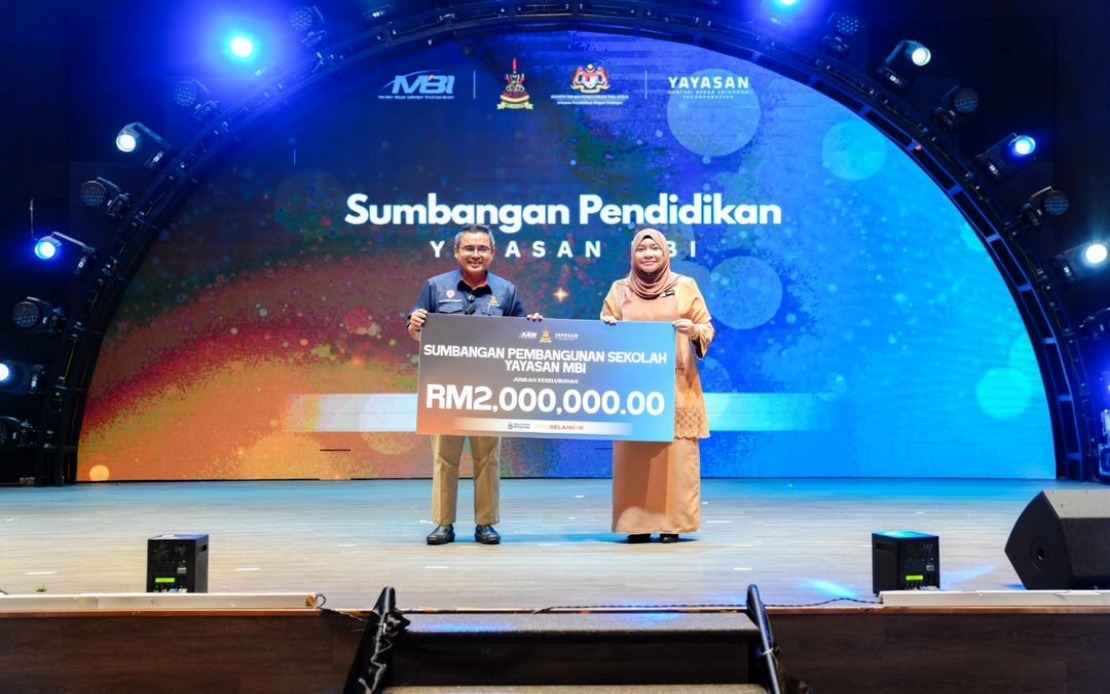
Yayasan Menteri Besar Selangor (Incorporated), the philanthropic arm of the Selangor state government, has channelled RM2 million into its School Development Contribution programme, underscoring a deliberate strategy to elevate educational standards throughout the region. The disbursement represents a tangible commitment to modernising school infrastructure and fostering environments where both educators and learners can thrive, demonstrating that Selangor views educational advancement as foundational to the state's broader development trajectory.
According to Ahmad Azri Zainal Nor, the foundation's head, education sits at the core of the organisation's strategic mandate, with approximately two-thirds of all its funded initiatives directed towards the sector. This concentration of resources reveals a carefully calibrated approach that prioritises human capital development over short-term welfare measures. By investing heavily in schools and pedagogical support systems, Yayasan MBI positions itself as a deliberate architect of long-term social mobility rather than a dispenser of conventional social assistance.
The philosophical underpinning of this initiative extends beyond mere infrastructure improvement. Ahmad Azri articulated that the foundation conceptualises education as an investment vehicle—one that generates returns measured not in immediate financial terms but through enhanced human capabilities and economic competitiveness. This framing aligns with broader regional conversations about how Southeast Asian economies must compete through knowledge-intensive sectors, making educational quality a matter of strategic urgency.
The RM2 million allocation was formally unveiled during the Yayasan MBI Education Aspiration 2026 event, a convening designed to crystallise partnerships amongst educators, administrators, parents, and government bodies. Such occasions serve a dual purpose: they acknowledge the intellectual and emotional labour that teachers contribute to society whilst simultaneously creating spaces where coordinated policy implementation can be negotiated. By honouring educator contributions during the same event where funding commitments are announced, Yayasan MBI signals that resource allocation and recognition are inseparable dimensions of educational development.
The foundation's existing educational portfolio reveals a multi-pronged strategy addressing different segments of the school ecosystem. The Back to School Tour Programme provides direct logistical and material support to students preparing for the academic year, whilst the Selangor People's Tuition Programme offers supplementary academic coaching to learners who might otherwise lack access to private tutorials. The Didik Kasih Programme extends this logic by providing structured learning support grounded in community engagement, whilst Parent-Teacher Association collaborations recognise that schools function most effectively when families participate actively in governance and programme design.
What distinguishes Yayasan MBI's approach is its emphasis on comprehensive ecosystem strengthening rather than categorical interventions targeting narrow populations. By operating across multiple fronts—infrastructure, teacher morale, student tutoring, and parental engagement—the foundation addresses the interconnected nature of educational challenges. A student's ability to learn depends not solely on facility quality but on teacher motivation, family support, and peer environments. By acknowledging these interdependencies, Yayasan MBI demonstrates sophisticated understanding of how schools actually function as social institutions.
The foundation has also prioritised strategic alignment with the Selangor State Education Department, ensuring that philanthropic initiatives complement rather than duplicate governmental efforts. This institutional coordination proves vital in a context where multiple stakeholders—state bureaucracies, charitable organisations, private sector partners—operate within educational domains. Without careful synchronisation, well-intentioned programmes can fragment into disconnected initiatives that confuse beneficiaries and waste resources. By anchoring its activities to departmental priorities and assessments of actual need, Yayasan MBI increases the likelihood that resources reach schools and communities where challenges are most acute.
For Malaysian policymakers and educators observing developments in Selangor, this initiative offers instructive lessons about how state-level foundations can amplify public education investments. The RM2 million injection represents a meaningful but not transformative sum in absolute terms, yet its strategic deployment reveals how targeted philanthropy can catalyse systemic improvements when coordinated with governmental structures and grounded in empirical understanding of school conditions. Selangor's relative economic strength allows such investments; replicating this model in less-resourced states would require different mechanisms and partnerships.
The commitment to 2026 framing within the Education Aspiration initiative suggests that Yayasan MBI is operating according to a multi-year development calendar rather than responding opportunistically to discrete requests. This temporal orientation permits cumulative impact—the Back to School support provided this year compounds with next year's tutoring interventions and subsequent infrastructure improvements. Students who benefit from multiple programmes over several years experience qualitatively different educational trajectories than those receiving one-off assistance. By publicly committing to a 2026 horizon, the foundation signals long-term consistency that can influence school planning and community expectations.
The broader context for Yayasan MBI's activities includes Malaysia's ongoing tension between aspirational educational outcomes and resource constraints in some jurisdictions. Whilst Kuala Lumpur and Selangor possess relative advantages in funding, many schools in rural and economically marginalised areas face severe infrastructure and staffing challenges. Yayasan MBI's concentration on Selangor reflects geographical realities, yet raises questions about how similar models might be extended regionally. Federal coordination mechanisms that facilitated comparable philanthropic engagement across all states could potentially amplify educational improvements nationally.
The emphasis on free learning support through multiple programmes responds to recognisable equity challenges within Malaysian education. Private tutoring has become nearly universal amongst families with disposable income, creating achievement gaps correlated with family wealth. By providing Selangor People's Tuition support and Didik Kasih learning programmes at no cost, Yayasan MBI directly counteracts this stratification mechanism. Students from modest economic backgrounds gain access to supplementary instruction previously available primarily to children of affluent families, thereby reducing one mechanism through which socioeconomic advantage perpetuates across generations.
Moving forward, the foundation's success will be measurable through concrete indicators—school infrastructure quality assessments, student learning outcome trajectories, teacher retention and satisfaction metrics, and parent engagement levels. Beyond financial accountability, stakeholders will scrutinise whether Yayasan MBI's programmes produce sustainable improvements or whether schools regress once initial support concludes. This tension between short-term injections and long-term systemic change defines the fundamental challenge facing philanthropic education initiatives globally, and Selangor's approach will offer valuable evidence about whether well-coordinated state-foundation partnerships can achieve durable improvements in educational quality.

