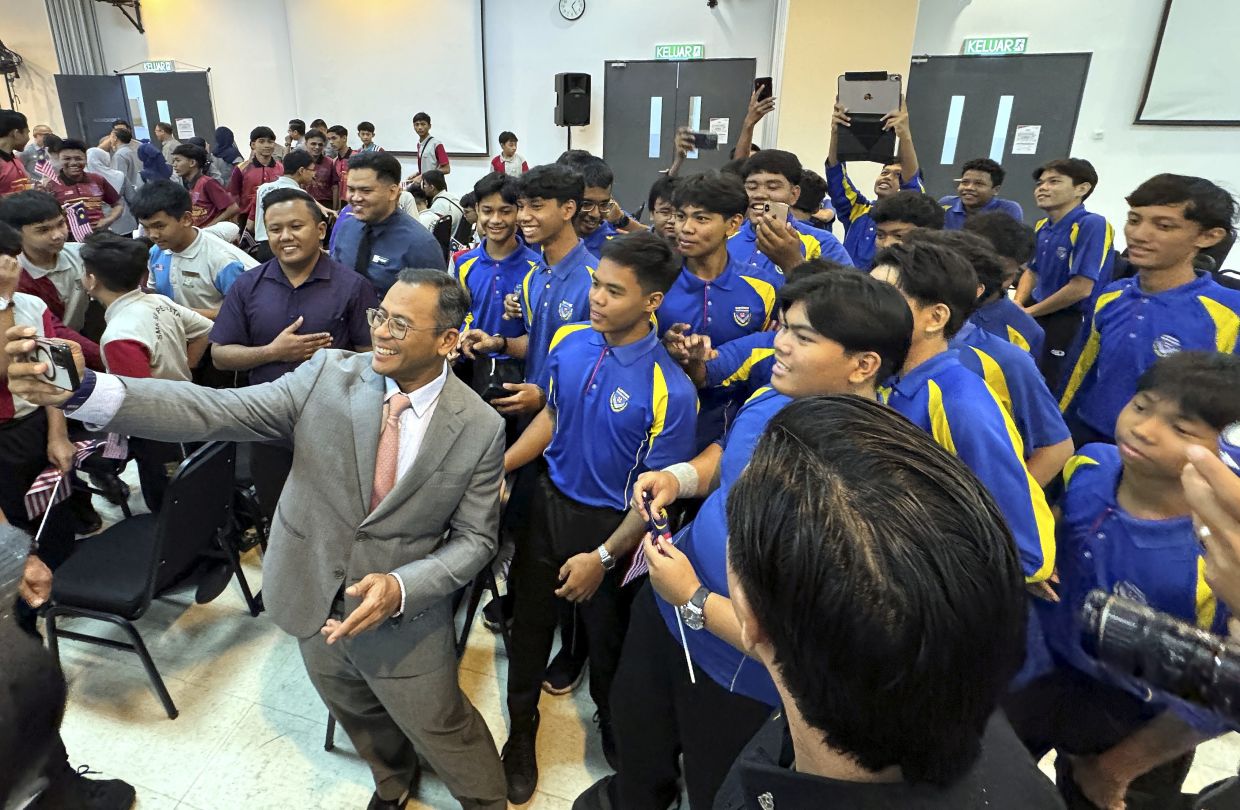
Selangor's position as the operational and administrative hub of Malaysia's rail network has prompted state leadership to formally designate the sector as a flagship industry for future economic development. With between 63 and 67 percent of the country's rail transport operations and corporate headquarters concentrated within the state's boundaries, Selangor Mentri Besar Datuk Seri Amirudin Shari outlined an ambitious framework to cultivate domestic talent and position the sector as a driver of long-term employment and economic growth.
The strategic emphasis on rail transport reflects a broader recognition that Malaysia's expanding public transport infrastructure—including the LRT3, East Coast Rail Link, and MRT network—will require a substantially larger cadre of skilled professionals across multiple disciplines. Rather than relying on imported expertise or external contractors, state officials have concluded that investing in homegrown training and education represents both a cost-effective and sovereignty-enhancing approach to workforce development.
At a launch event held at Universiti Tun Hussein Onn Malaysia in Sungai Buloh on August 19, Amirudin inaugurated the rebranding of Metro System Academy to RailX, signalling a shift toward a more comprehensive, sector-wide training ecosystem. This transformation extends beyond mere nomenclature; it represents an institutional recalibration aimed at producing professionals capable of managing modern rail systems, public transport coordination, and integrated mobility solutions rather than focusing narrowly on metro operations alone.
Central to Selangor's strategy is the newly established Selangor State Rail Council, a multi-stakeholder body designed to map the industry's structural requirements, identify skills gaps, and coordinate responses across government, academia, and private operators. By formalising this institutional architecture, state planners aim to ensure that workforce development remains responsive to industry demands rather than driven by academic assumptions disconnected from operational realities.
RailX operates through a partnership between UTHM and Mass Rapid Transit Corporation, combining academic rigour with practical industry experience. The academy's curriculum addresses the full spectrum of modern rail systems management, from technical maintenance and safety protocols to passenger services and integrated transport planning. This breadth is essential given that Malaysia's expanding rail network encompasses multiple operators with varying technical standards and operational philosophies.
To build awareness and interest among younger demographics, RailX launched an interactive treasure hunt involving secondary students from ten districts across Selangor. The initiative connects students with active MRT stations spanning Gombak, Petaling, Hulu Langat, Sepang, Klang, Sabak Bernam, and Kuala Selangor, allowing direct engagement with the infrastructure and personnel they might eventually join professionally. By introducing the industry to high school students, planners hope to cultivate career interest among cohorts who may otherwise view rail work as routine or unrewarding.
Amirudin framed these initiatives within the broader context of Malaysia Education Plan 2026–2035, emphasising that workforce development for emerging infrastructure sectors represents a strategic national priority. Rail transport, he argued, exemplifies the type of high-value technical field that can absorb growing numbers of Malaysian workers while contributing meaningfully to the nation's competitive positioning in regional and global supply chains.
The state's approach integrates multiple educational pathways to accommodate diverse learner profiles and career trajectories. The Selangor Technical Skill Development Centre functions as an entry point for workers seeking basic and intermediate technical training, while RailX and UTHM provide pathways to diploma and bachelor-level qualifications. This articulated structure allows progression from foundational vocational training through to advanced technical studies, creating what officials describe as a complete technical education ecosystem specifically tailored to rail sector requirements.
Participation from established operators including Rapid Rail and MRT Corp underscores that this is not merely a state-level initiative but reflects genuine industry recognition of skills shortages. Private operators have committed to supporting curriculum development, providing workplace experience opportunities, and potentially recruiting graduates, thereby validating the relevance and quality of training programmes.
For Malaysia's broader economic development agenda, Selangor's investment carries implications extending well beyond state boundaries. As the country pursues infrastructure megaprojects and expanded public transport networks, other states face similar pressures to develop adequate workforces. Selangor's model—combining formal institutional coordination through a state rail council, multi-level educational pathways, and direct industry partnerships—offers a replicable template for neighbouring regions seeking to build capacity in technical sectors.
The emphasis on local expertise also addresses lingering concerns about contractor dependency and skill leakage in Malaysia's infrastructure development. By building sustained domestic capability, the state reduces long-term operational costs while strengthening local retention of technical knowledge and professional networks. This resonates with broader Southeast Asian trends toward self-sufficiency in critical infrastructure management, particularly as regional economies transition toward higher-value manufacturing and service provision.
Amirudin's announcement signals that state governments across Malaysia are increasingly adopting proactive roles in workforce planning rather than passively accepting labour market outcomes. By formally designating rail transport as a strategic industry and investing in dedicated training infrastructure, Selangor is essentially signalling to students, educators, and investors alike that the sector represents a legitimate, high-status career pathway with genuine long-term prospects.

