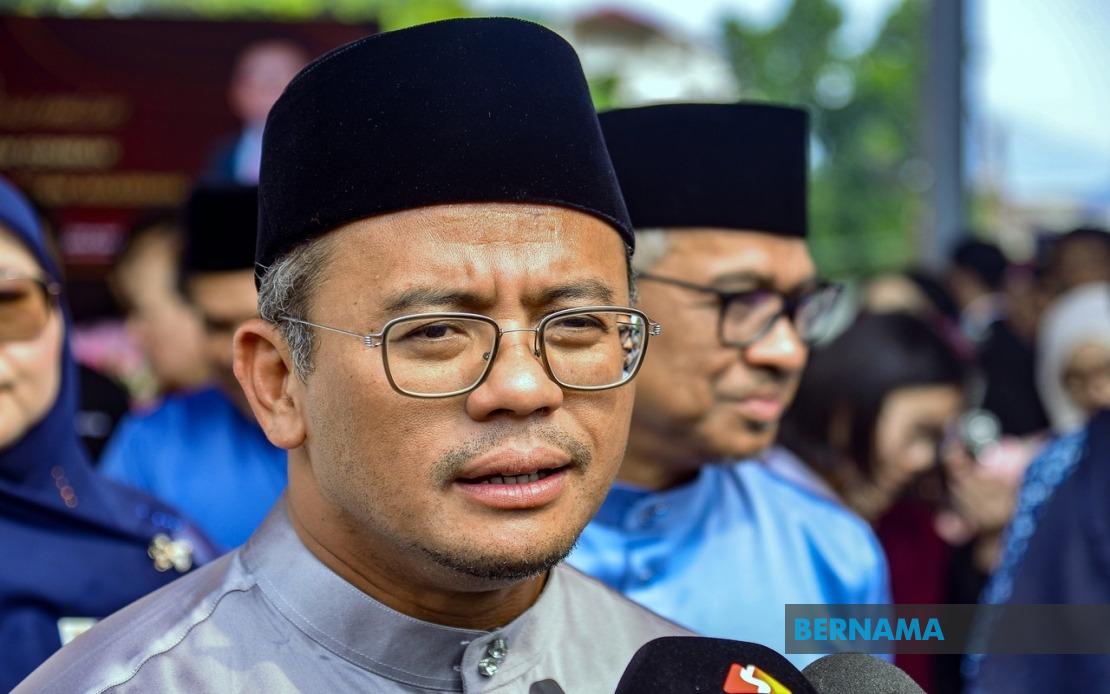
Selangor will dedicate substantial resources to revamping its education landscape in the 2027 state budget, with particular emphasis on bolstering Science, Technology, Engineering and Mathematics programmes and comprehensive student support systems. Menteri Besar Datuk Seri Amirudin Shari outlined the strategic direction during remarks following the opening of Gombak Form Six College and the 2026 Academic Excellence Awards ceremony, underscoring the state government's commitment to nurturing academic excellence whilst broadening opportunities for students to engage with STEM disciplines.
The announcement reflects recognition that Selangor's educational outcomes carry outsized significance given the state's substantial student population of approximately one million, making any improvements in academic performance potentially transformative for both the state and the nation's human capital development. Amirudin articulated that elevating examination results and expanding STEM participation would enable students to make meaningful contributions to their communities and broader society. The connectivity between quality education and tangible societal benefits underpins the budget's philosophical approach, positioning educational investment as foundational to economic and social progress.
Beyond examination outcomes, the state government is pursuing a multipronged strategy encompassing curriculum enhancement, student engagement initiatives, and physical infrastructure development. Amirudin acknowledged that detailed planning for school infrastructure upgrades remains ongoing, with comprehensive requirements still being compiled from educational institutions across the state. Finalisation of specific allocations is anticipated by September or October, suggesting a methodical approach to resource allocation that incorporates ground-level feedback from schools regarding their facilities and capabilities.
A flagship component of this educational push is the Himpunan Pelajar Tingkatan Enam Selangor (HIPSTERS) programme, a support platform specifically engineered to prepare Form Six students for tertiary education transitions. The initiative represents a significant evolution in state-level student support, moving beyond purely university-focused interventions to encompass pre-university cohorts. Recognising that Form Six is a critical juncture where students make consequential decisions about their academic futures, the programme provisions tangible material support through book vouchers and complimentary internet data access.
The scaling of HIPSTERS demonstrates Selangor's intention to democratise educational support across broader student demographics. In 2026, the programme distributed book vouchers to 10,000 Form Six students, marking an expansion from earlier iterations that primarily benefited university-level participants. This shift acknowledges that critical interventions during secondary and pre-university phases can significantly influence students' academic trajectories and university readiness. By providing equitable access to learning materials and digital connectivity, the state reduces barriers that might otherwise constrain participation from economically disadvantaged backgrounds.
For Malaysian policymakers observing education development across states, Selangor's approach offers insights into how regional governments can leverage devolved education responsibilities to create targeted, responsive programmes. The focus on STEM aligns with national economic imperatives around digital transformation, advanced manufacturing, and knowledge economy development—sectors increasingly critical to Malaysia's competitive positioning within Southeast Asia. By cultivating STEM competency at secondary and pre-university levels, Selangor positions its workforce pipeline to meet emerging labour market demands.
The internet data provision component of HIPSTERS carries particular relevance in Malaysia's contemporary digital landscape, where online learning resources, research databases, and collaborative platforms increasingly underpin academic success. Eliminating connectivity barriers for Form Six students—a cohort from varied socioeconomic backgrounds—addresses a structural inequity that persists despite Malaysia's advancing infrastructure. This targeted intervention acknowledges that device ownership does not automatically translate to meaningful digital engagement without reliable, affordable data access.
Amirudin's indication that HIPSTERS could expand to additional Form Six schools underscores responsiveness to evolving needs and demonstrated demand, suggesting the programme's design permits scalability without proportional administrative expansion. This flexibility is significant for state education systems managing complex, multi-institution landscapes with diverse resource contexts. As demand becomes quantifiable through pilot implementation, expansion decisions can be evidence-informed rather than speculative.
The confluence of infrastructure investment, STEM emphasis, and student support platforms reflects an integrated educational philosophy rather than disconnected interventions. Quality facilities provide environments conducive to effective STEM instruction; robust support systems remove extraacademic obstacles to engagement; and targeted programme design addresses specific developmental phases. For Southeast Asian observers, Selangor's approach demonstrates how state-level governments can construct coherent educational ecosystems that address multiple dimensions of student success simultaneously rather than pursuing isolated initiatives.
Looking beyond the immediate budget cycle, Selangor's educational trajectory suggests recognition that long-term competitive advantage increasingly derives from human capital quality rather than merely accumulating physical assets. The investment philosophy implicitly acknowledges that the state's one million students represent an enormous human development opportunity with multiplicative effects for regional economic dynamism. By concentrating resources on educational fundamentals—infrastructure, STEM capacity, student support—during foundational educational phases, Selangor potentially influences outcomes across subsequent decades of professional productivity.

