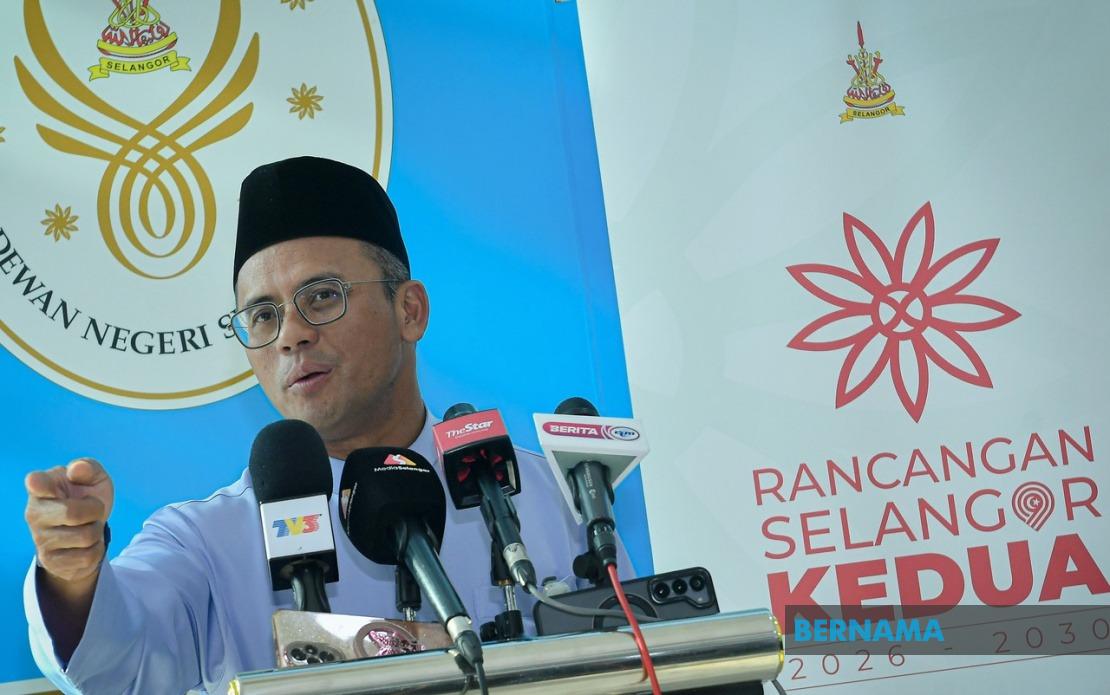
The Selangor government has set an ambitious target of constructing 200,000 affordable housing units as part of its broader strategy to tackle the state's persistent housing shortage. Menteri Besar Datuk Seri Amirudin Shari announced the initiative during the recent Selangor State Legislative Assembly sitting, framing the massive undertaking as essential to helping more residents achieve homeownership in an increasingly expensive property market.
Progress on the scheme has been substantial, though significant work remains ahead. The state government has already completed 64,188 units, while another 69,014 are actively under construction. This combined figure of 133,202 units represents roughly two-thirds of the overall target, suggesting the government is on track to meet its goal within a reasonable timeframe. The implementation demonstrates Selangor's recognition that affordable housing remains one of the most pressing policy challenges facing the state, particularly for young professionals, families, and middle-income earners priced out of the conventional property market.
Beyond mere construction numbers, the Selangor government has introduced innovative mechanisms to bridge the gap between renters and homeowners. A distinctive feature of the initiative allows tenants to have 30 per cent of their monthly rental payments channelled into a dedicated savings pool managed by the Selangor Housing and Property Board (LPHS). When households accumulate sufficient savings and are ready to transition to homeownership, these accumulated funds serve as a deposit for purchasing a property. This mechanism addresses a critical barrier to homeownership for lower-income groups: the difficulty of accumulating a down payment while simultaneously managing rental obligations.
The state government is also developing a comprehensive assessment framework to evaluate the effectiveness and long-term impact of its household assistance programmes. This new statistical unit will track beneficiaries' progress through periodic evaluations conducted at 12-month and 24-month intervals. Such systematic monitoring enables policymakers to identify which support measures produce tangible improvements in residents' housing security and financial stability, allowing for targeted adjustments and optimisation of resources. For Southeast Asian policy observers, this represents a shift toward data-driven governance in housing initiatives, a practice increasingly recognised as essential for maximising the impact of government spending.
Transport connectivity has emerged as a critical consideration in the government's housing strategy, reflecting growing understanding that affordable homes must be accessible to employment centres. The state plans to substantially increase the frequency of public transport services, particularly connections to LRT and MRT stations, recognising that poor transit access effectively isolates residents from job opportunities regardless of how affordable their housing may be. Every new Rumah Selangorku Harapan and Rumah Selangorku Idaman development will be required to include a dedicated bus stop, ensuring residents have immediate access to the broader public transport network.
Innovative urban design principles underpin this connectivity vision. The government is pursuing a comprehensive strategy of constructing covered walkways at every transit station, working toward its declared objective of creating genuinely walkable cities. This approach acknowledges that housing affordability cannot be separated from neighbourhood liveability; residents must be able to access services, employment, and amenities safely and conveniently. Covered walkways address Malaysia's tropical climate challenges, removing a significant barrier to pedestrian movement during monsoon seasons and extreme heat.
Implementing this transport-integrated approach requires sophisticated planning tools that many municipal governments in the region still lack. The state government plans to leverage technology to map traffic patterns, identify public congregation points, and assess the distribution of residential estates across Selangor to determine optimal locations for additional bus stops. This data-driven site selection ensures resources are directed toward areas with genuine transport demand rather than distributed arbitrarily. The approach reflects international best practices in transit-oriented development and represents a notable advancement in how Malaysian state governments approach integrated urban planning.
The broader implications of Selangor's housing initiative extend beyond the state's borders. As Malaysia's most developed state economically and as a bellwether for policy innovation, Selangor's approach to affordable housing increasingly influences similar initiatives elsewhere in Malaysia and potentially throughout Southeast Asia. The combination of supply-side interventions (building homes), demand-side support (rental-to-ownership mechanisms), and infrastructure planning (transit integration) provides a more comprehensive model than purely construction-focused approaches undertaken by other jurisdictions.
For residents and investors watching Selangor's development trajectory, the housing initiative carries significant implications. The availability of affordable units should theoretically moderate property price appreciation and expand homeownership opportunities for Malaysia's expanding middle class. However, the scheme's success will ultimately depend on implementation quality, cost control, and ensuring homes are built in locations with adequate infrastructure and employment proximity. The state government's emphasis on planning and technological assessment suggests awareness of these critical success factors.
Selangor's housing ambition must be understood within the context of Malaysia's broader urbanisation trends and regional patterns. The Klang Valley's continued attractiveness as an economic centre continues driving migration from other states and international workers seeking opportunities. This inflow pressure means that even aggressive housing construction must keep pace with demand growth to prevent further affordability deterioration. By targeting 200,000 units, the Selangor government is effectively betting that substantial new supply, combined with smart connectivity and tenant support mechanisms, can measurably improve housing access across income levels.

