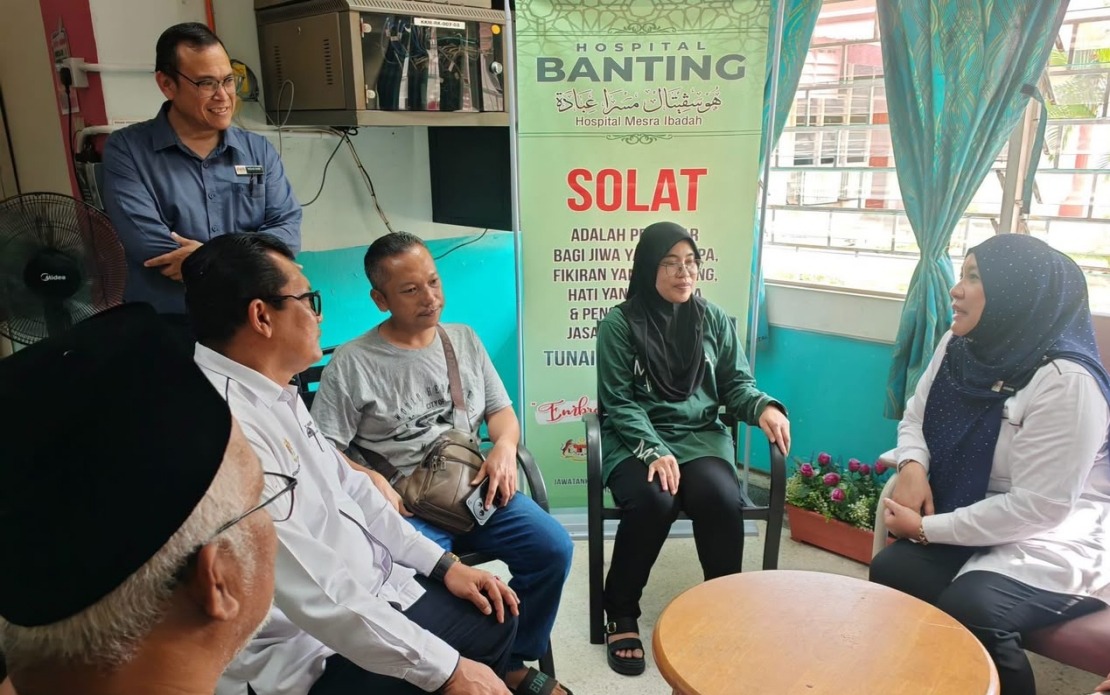
The Selangor State Education Department demonstrated its commitment to student welfare on Sunday by making an official hospital visit to a female pupil recovering from a serious stabbing attack at a Kuala Langat secondary school. Wan Nor Ashikin Abu Kassim, the department's director, led the delegation to Banting Hospital to personally check on the teenager's condition and meet with her family members, signalling institutional support during what authorities and school officials have described as a shocking incident of campus violence.
According to the victim's father, the 15-year-old Form Three student sustained multiple injuries including a punctured lung and a total of 16 stab wounds. The severity of the assault has raised serious questions about school safety protocols and the psychological state of the suspected perpetrator, who remains in police custody. Hospital authorities have not yet released detailed medical updates on the student's prognosis or expected recovery timeline, though the education department's visit suggests she is in stable enough condition to receive visitors.
The Selangor JPN's social media statement confirmed that officials expressed their solidarity with both the injured student and her parents, offering reassurance and practical support as the family navigates a deeply traumatic period. The department emphasised its commitment to maintaining close coordination with the hospital, relevant law enforcement agencies, and the student's household throughout the recovery process. Such institutional backing carries symbolic weight in Malaysia's education sector, where violent incidents remain uncommon but have prompted ongoing debates about mental health support in schools.
Meanwhile, the investigation has progressed swiftly through the court system. The suspect, whose identity and schooling status have not been made public by authorities, secured a four-day remand order effective immediately. This legal holding period allows investigators to gather evidence, conduct interviews, and build a prosecutorial case before determining whether additional charges or extensions will be warranted. Police have not yet disclosed a clear motive for the alleged attack or whether there were prior conflicts between the suspect and victim.
The incident has rekindled concerns within Malaysian educational circles about bullying, mental health crises, and the potential for violence in school environments. Unlike mass shooting incidents that periodically dominate global headlines, school stabbings in Malaysia remain relatively isolated events, yet each occurrence generates significant anxiety among parents and education policymakers. The Banting case will likely fuel discussions about enhanced counselling services, threat assessment protocols, and better early intervention for students showing behavioural warning signs.
School administrators and state education officials face mounting pressure to demonstrate that they take such emergencies seriously and possess adequate crisis response frameworks. The JPN director's personal visit underscores that senior leadership recognises the gravity of the situation and wishes to send a public message that institutional systems are mobilised in support of affected families. This approach contrasts with historical cases where schools or departments faced accusations of minimising incidents or failing to acknowledge victims adequately.
For Malaysian parents and students, particularly those in Selangor, the stabbing raises uncomfortable questions about the safety of secondary school campuses. While petty fights and bullying have always existed in schools, weaponised violence represents a distinctly different category of threat. Many families will be reviewing their children's schools' emergency procedures, staff training, and access control measures, creating potential pressure for policy upgrades across both public and private institutions.
The victim's recovery will now become a focal point for how effectively Malaysia's healthcare and support systems respond to adolescent trauma. Beyond physical healing from 16 stab wounds and internal injuries, the psychological impact of being attacked by a peer demands sustained professional counselling. The education department's involvement signals that once the student returns to schooling, whether at her original school or elsewhere, she will require accommodations and monitoring to ensure her wellbeing is protected.
Authorities have remained largely silent on whether the suspected attacker had any documented history of violent behaviour, mental health treatment, or disciplinary issues. Releasing such information will require careful balance between transparency and protecting the suspect's privacy rights, particularly given that juveniles in Malaysia typically receive special legal consideration. Nevertheless, public appetite for understanding how such an escalation occurred remains high, and investigators will eventually need to provide some framework for comprehending what triggered the assault.
The broader implications extend beyond Kuala Langat and into regional education policy discussions. Southeast Asian countries occasionally face similar school safety challenges, and Malaysia's response to this incident may influence how neighbouring nations structure their own preventive approaches. International best practices for school violence prevention increasingly emphasise threat assessment teams, mental health screening, peer reporting systems, and trauma-informed support rather than purely punitive measures.
Government officials will likely use this incident to justify investments in school counsellor positions, mental health awareness programmes, and staff training initiatives during upcoming budget cycles. The Selangor JPN's proactive stance in visiting the victim may also encourage other state education departments to establish clearer protocols for responding to such emergencies, creating a cascade effect across Malaysian states in terms of institutional preparedness and compassionate engagement with affected families and communities.

