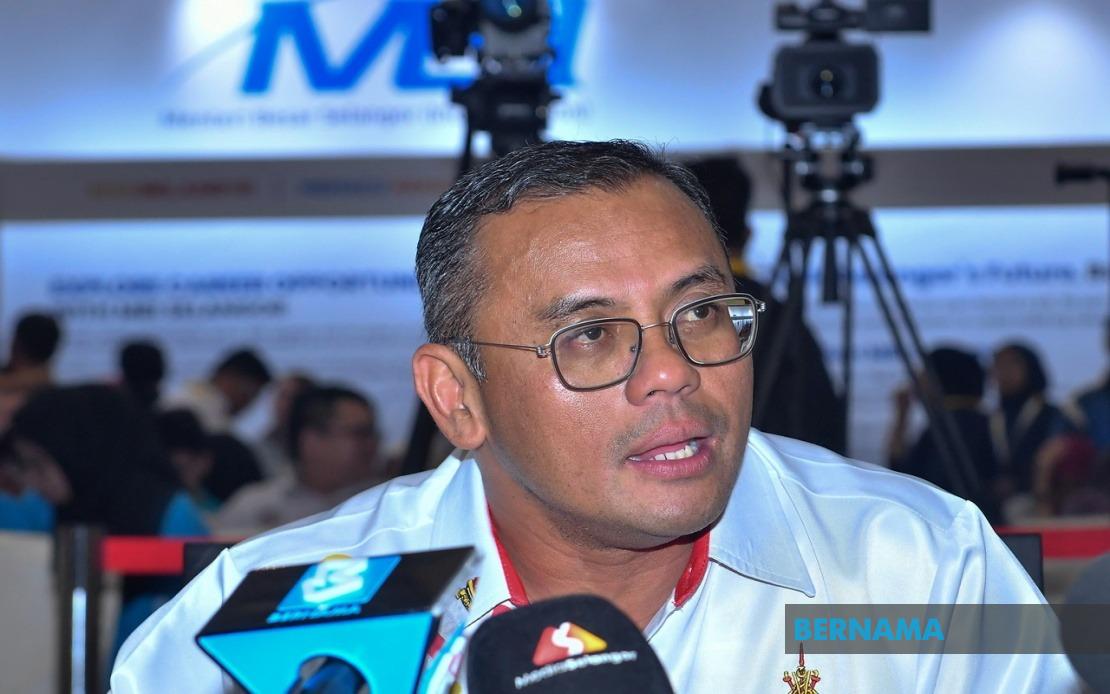
The Selangor state government has moved quickly to address the impending layoffs at Panasonic AVC Networks Kuala Lumpur Malaysia Sdn Bhd, scheduling a meeting with affected workers for next week to chart a path forward. Menteri Besar Datuk Seri Amirudin Shari disclosed the proactive approach during an event in Shah Alam on Thursday, signalling that state authorities recognise the social and economic consequences of the plant's partial shutdown. The announcement underscores growing anxiety in Malaysia's manufacturing sector, where foreign multinational operations remain vulnerable to relocation pressures and production consolidations.
Panasonic Malaysia revealed yesterday that it will terminate television production at two separate lines, resulting in approximately 400 job losses effective March 31 next year. The closure reflects broader headwinds facing Malaysia's electronics and consumer goods manufacturing landscape, as companies reassess regional production footprints amid shifting cost structures and global supply chain reconfiguration. For Selangor, the state's prime industrial hub, such developments carry particular weight given the concentration of manufacturing employment and the ripple effects on local economies dependent on factory wages.
The state government's intervention strategy centres on V. Papparaidu, chairman of the State Human Resources, Poverty Alleviation, Indigenous & Minority Affairs Committee, who will lead negotiations alongside representatives from the Social Security Organisation (PERKESO). This coordinated approach reflects a shift toward institutional partnership in managing industrial transitions, moving beyond ad-hoc crisis responses. The involvement of PERKESO signals that Selangor is leveraging existing social insurance mechanisms to cushion worker displacement, rather than relying solely on state budgetary measures.
Amirudin outlined a multi-layered assistance programme that begins with immediate relief. Food baskets will be distributed as an emergency intervention, addressing the most pressing needs of workers facing sudden income disruption. Beyond such palliative measures, the state aims to facilitate job transitions through active placement services, recognising that displaced manufacturing workers often possess valuable technical skills transferable to other industrial employers. This emphasis on employment continuity rather than mere cash transfers reflects international best practice in managing plant closures, though its success will depend on the availability of comparable opportunities in Selangor's labour market.
A critical component of the assistance framework involves PERKESO's unemployment insurance scheme, which provides wage replacement at declining rates over a defined period. Workers retrenched through no fault of their own become eligible for staged payments commencing at 80 per cent of their final salary in the opening month, declining to 50 per cent in month two and 30 per cent thereafter. This mechanism essentially functions as a job-seeking allowance, buying workers time to secure alternative employment without immediate financial catastrophe. For a 400-person workforce earning industrial wages, the cumulative cost to PERKESO could be substantial, yet Papparaidu positioned the scheme as testimony to progressive social protection architecture.
The timing of the Panasonic intervention occurs within days of Selangor's launch of the Mega Jobcare 2026 programme, a career fair attracting 147 participating employers offering more than 11,000 vacancies. This coincidence presents an immediate opportunity for displaced Panasonic workers to access alternative positions without prolonged unemployment. Notably, 62.2 per cent of the advertised roles pay monthly salaries exceeding RM3,000, suggesting that redeployed workers might sustain comparable earnings to their previous positions. The fair, organised in collaboration with MYFutureJobs at Shah Alam Convention Centre, targets job seekers aged 18 to 60, encompassing the majority of Panasonic's workforce.
For Malaysian observers monitoring manufacturing resilience, the Panasonic case illustrates both vulnerabilities and institutional responses. Multinational electronics producers increasingly consolidate operations to fewer regional hubs, and Malaysia's position as a manufacturing centre faces competition from lower-cost jurisdictions and automation. Selangor's decision to intervene decisively reflects political awareness that factory closures carry electoral consequences and that social cohesion depends on visible government action during economic disruptions. The state has not attempted to prevent the closure through incentives or pressure, a pragmatic acknowledgment that such interventions rarely succeed against corporate strategic decisions.
The broader implications for Southeast Asian manufacturing are significant. Indonesia, Thailand, and Vietnam have similarly experienced multinational consolidations, yet institutional responses vary considerably. Selangor's coordination of PERKESO benefits with active job placement and emergency relief represents a relatively comprehensive approach compared to passive acceptance of market outcomes. This model could inform other Malaysian states facing comparable situations, and potentially provide lessons for regional governments managing deindustrialisation in specific sectors.
Worker perspective remains largely unvoiced in official statements, a gap that may obscure the lived reality of impending redundancy. For many of the 400 affected employees, alternative employment at comparable wages may not materialise within Selangor's labour market, necessitating either wage compromises, relocation, or exit from formal manufacturing. The psychological and social dimensions of displacement extend beyond wage replacement, involving status disruption and identity repositioning for workers whose careers have centred on specific employers. Effective worker support therefore requires not merely financial transfers and job listings, but also retraining, counselling, and acknowledgment of non-material losses.
Looking ahead, the Selangor government's handling of the Panasonic closure will establish precedent for future industrial disruptions. If the intervention achieves rapid reemployment and minimal wage loss, it may serve as a template for managing manufactured sector transitions in other Malaysian jurisdictions. Conversely, if large numbers of displaced workers encounter protracted joblessness or significant wage reductions, scrutiny will intensify regarding the adequacy of existing social safety nets and the state's capacity to influence labour market outcomes. The coming months will thus provide empirical evidence on whether institutional coordination and social insurance can meaningfully buffer workers against the consequences of multinational relocation decisions.

