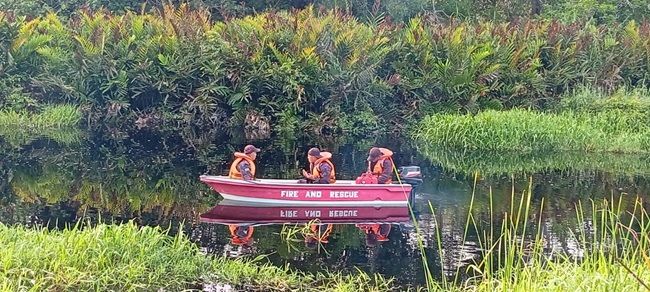
Rescue operations in Brunei's Sungai Bera have entered their third consecutive day as authorities intensify efforts to locate a missing fisherman feared to have been attacked by a crocodile, with search teams deployed across water and land showing no signs of the victim.
When the Fire and Rescue Department (FRD) received the initial distress call on Wednesday, June 24, emergency responders acted swiftly, dispatching two fire engines with nine personnel led by Acting Station Officer Mohd Zulkifli Md Tahir to the site in Kampong Baru Sungai Bera. Investigators determined through interviews with the victim's family that the man had been fishing in the river when the alleged crocodile encounter occurred, providing crucial details that shaped the subsequent rescue strategy.
The scope of the operation reflects the severity of the situation and the complexity of searching a river environment where a large predator may be involved. The FRD established a Tactical Command Post at the location to coordinate the multi-pronged response, enabling real-time communication between different units and agencies involved in the search. This centralized approach has become standard practice for major incidents in Brunei that require sustained inter-agency coordination.
The search methodology combines traditional and modern techniques to maximize coverage of the river system. FRD boats have maintained continuous patrols along Sungai Bera, systematically covering stretches of water where the victim might be found or where evidence could surface. Simultaneously, ground teams have conducted thorough searches of the riverbanks, examining both the immediate vicinity of the incident location and areas downstream where currents might carry any remains. This two-pronged approach reflects the unpredictable nature of such incidents in tropical river environments.
Drone surveillance has emerged as a critical tool in modern rescue operations, and the FRD has deployed its aerial assets to provide overhead observation of areas that would be difficult or dangerous to access from the ground or water. The drones can cover large expanses quickly and provide real-time video feeds to the command post, allowing operators to spot anything unusual or suspicious in the water or along the banks. This technological capability represents a significant advancement in search and rescue capabilities for Brunei's emergency services.
The operation is jointly led by multiple agencies, reflecting the inter-agency cooperation that characterizes emergency response in the sultanate. The commanding officer overseeing operations is Senior Superintendent Amirul Hadi Junaidi from the Operations Branch, who holds overall responsibility for the search strategy and resource allocation. This unified command structure ensures clear decision-making and prevents duplication of efforts among the various teams involved.
The Royal Brunei Police Force has committed significant resources to the operation, including personnel from Seria Police Station and the specialist Royal Brunei Police Force Marine Police (POLMAR) unit. POLMAR's expertise in water-based operations and rescue techniques makes their involvement particularly valuable in a river search scenario. Their familiarity with water currents, underwater hazards, and the challenges of operating in tropical river environments brings essential specialized knowledge to the coordination efforts.
The Wildlife Division's participation underscores the ecological dimension of the incident and the need for expertise beyond conventional emergency response. Crocodiles in Brunei are protected fauna, and wildlife experts can provide insights into crocodile behavior patterns, preferred habitat, and the likelihood of the animal remaining in the area. This information helps guide search teams toward zones where the victim might be most likely to be found and informs decisions about containment or management of the crocodile if it is still in the vicinity.
Crocodile attacks in Southeast Asian waterways, though relatively rare given the size of populations living near rivers, carry profound implications for both victim families and local communities. The incident in Sungai Bera highlights the risks that fishermen and riverside residents accept as part of their livelihoods, and underscores the importance of public awareness campaigns regarding crocodile safety in regions where the species is present. For Malaysia and Brunei, where crocodiles inhabit various river systems, such incidents serve as reminders of the delicate balance between human activity and wildlife conservation.
The extended search operation demonstrates the commitment of Brunei's emergency services to pursue every possible avenue in locating missing persons, even when circumstances suggest a tragic outcome. The sustained effort across three days, involving multiple agencies and advanced equipment, reflects institutional values prioritizing thorough investigation and closure for affected families. As the search continues, authorities maintain vigilance and coordination, adapting tactics based on new information while respecting the dangerous nature of the environment in which they are operating.

