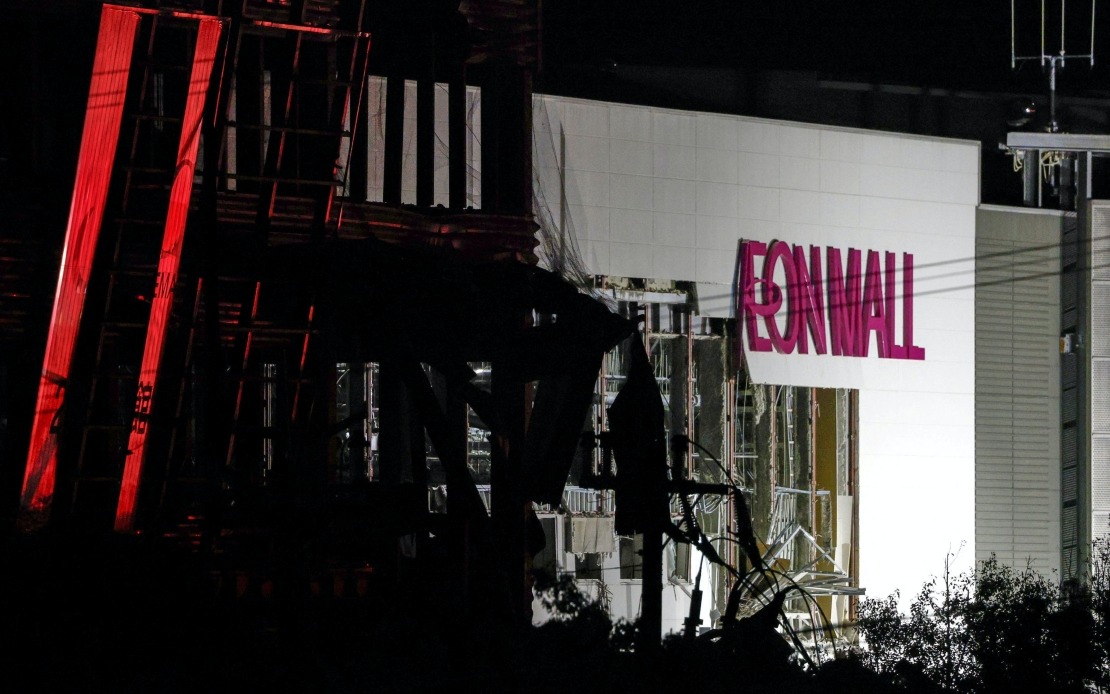
A major search and rescue operation is unfolding in southwestern Japan following an explosion at one of the region's largest shopping complexes, with authorities struggling to account for dozens of workers in the aftermath of a natural disaster that has left the prefecture reeling from multiple emergencies. Between 20 and 30 employees of Aeon Mall Kumamoto remain uncontactable after the blast tore through the Kashima Town facility on Tuesday, according to information released by Japan's National Police Agency and confirmed by state broadcaster NHK.
The explosion occurred at approximately 6 pm local time, just hours after a magnitude-7.1 earthquake shook Kumamoto Prefecture at 4:27 pm the same afternoon. The timing of the two events has compounded the disaster management challenge, as authorities struggle to determine whether the blast was triggered by the seismic activity or resulted from a separate mechanical failure at the shopping complex. Initial reports suggest the explosion may have been caused by gas-related issues, though investigators have not yet confirmed the precise cause.
Police and firefighting units have mobilised extensively to search the damaged building's interior, attempting to establish whether the missing workers are trapped beneath rubble or debris. The complexity of locating personnel has been heightened by communication difficulties following the explosion, which severed many communication channels within the complex. Authorities have established that most shoppers had been safely evacuated to outdoor areas following the blast, reducing concerns about massive civilian casualties in public spaces, though officials remain uncertain whether any customers are among those currently unaccounted for.
The National Police Agency's inability to contact these workers has raised serious concerns about their fate. Police officials have already acknowledged expectations of significant loss of life, with one officer stating that authorities anticipate "many fatalities" once searches are completed. However, confirmation of exact casualty figures remains pending as rescue teams continue systematic sweeps through affected sections of the enormous mall structure.
Compounding the crisis in Kumamoto Prefecture, fewer than 10 additional people remain unaccounted for in other locations across the region as a result of the earthquake itself. The dual disasters have stretched prefectural emergency services to their limits, requiring coordination between multiple agencies working simultaneously to address earthquake damage and explosion-related emergencies. The earthquake, which registered 7.1 on the magnitude scale, caused widespread infrastructure damage throughout the prefecture and triggered numerous aftershocks that complicated initial rescue efforts.
For Malaysian and Southeast Asian observers, this incident underscores the vulnerability of major commercial centres in seismically active regions. Japan's earthquake preparedness is considered world-leading, yet the combination of seismic activity and secondary disasters demonstrates how natural hazards can overwhelm even sophisticated emergency systems. The incident raises pertinent questions about how shopping malls and large commercial facilities across the region—including Malaysian complexes—maintain gas safety infrastructure and execute evacuation procedures during compound emergencies.
Aeon, which operates the affected facility, is a Japanese retail giant with significant presence throughout Southeast Asia, including substantial operations in Malaysia. The company's response to this disaster and subsequent safety audits of similar facilities across its regional network may influence how retail operators throughout the region approach building safety and emergency preparedness. Aeon Mall locations throughout Malaysia will likely review their own gas detection systems and emergency protocols in light of this incident.
The explosion's severity has shocked Japan, where such catastrophic incidents at major commercial centres are comparatively rare due to stringent building codes and regular safety inspections. The fact that it occurred in a large, modern shopping complex rather than an older or less-regulated facility suggests that even well-maintained structures can experience critical failures when natural disasters disrupt normal operations. This reality has implications for how regional authorities evaluate risk at critical infrastructure points.
Emergency response coordination between police, fire services, and disaster management agencies in Kumamoto Prefecture will likely become a case study in managing cascading disasters. The sequential nature of the earthquake followed by the explosion meant rescue teams could not focus exclusively on either event, instead requiring parallel operations across multiple sites and hazard types. This divided attention and resource allocation challenge mirrors scenarios that disaster planners across Southeast Asia must consider when preparing for compound natural and human-caused emergencies.
The psychological and logistical burden on families of the missing workers is considerable. Uncertainty about loved ones' fates in the immediate aftermath of major disasters creates acute stress, and Japanese authorities will face pressure to provide regular updates and support to families as search operations continue. The pattern of communication and transparency established during these early hours will shape public confidence in official crisis management throughout the recovery period.

