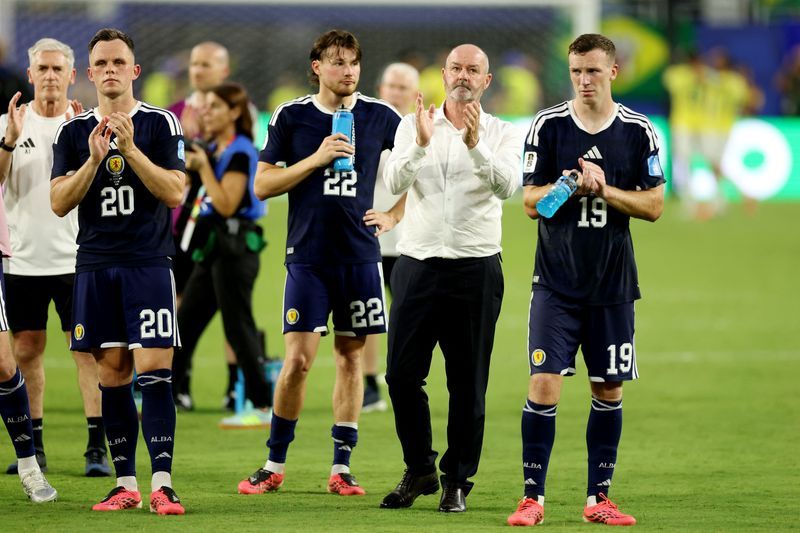
Scotland's long-awaited return to the World Cup stage is heading toward an early conclusion. Following their 3-0 defeat to Brazil in Miami on Wednesday, coach Steve Clarke has essentially conceded that his side will not progress from Group C, despite technically retaining mathematical hope as one of eight potential third-placed qualifiers from the tournament's 12 groups.
Clark's candid assessment reflects the harsh reality facing the Scots, who claimed three points from their group campaign but hold only the sixth-best record among third-placed teams with 20 matches still to be played across the tournament. The coach believes at least two other teams will surpass Scotland's tally, effectively eliminating them from consideration. This represents a sobering conclusion for a nation that had not qualified for a World Cup since France in 1998, ending a quarter-century of absence from football's premier competition.
The loss to Brazil was particularly galling for Clarke because he viewed the damage as largely self-inflicted. The Scotland manager did not attempt to deflect responsibility onto his opponents, instead focusing on his team's defensive frailties. "Fair result," Clarke stated, acknowledging that when a team grants Brazil the quality of chances Scotland presented, punishment is inevitable. The Selecao's clinical finishing in converting those opportunities demonstrated why they remain among the tournament's most dangerous attacking forces.
Clark's frustration centred on Scotland's inability to limit Brazil's dominance in the offensive third of the pitch. He attributed the first two goals, and likely the third, to errors committed by his own defence rather than exceptional Brazilian play. While goalkeeper Angus Gunn made several important saves and Scotland managed to create one or two attacking opportunities, Clarke noted these chances lacked the precision and quality needed to trouble a World Cup favourite. The overall performance represented a significant step backward from what Scotland's players are capable of delivering.
What distinguishes Clarke's response is his measured tone despite clear disappointment. Rather than venting anger at his squad, the former Chelsea defender expressed regret that they had failed to reach the standards they have demonstrated in recent qualifying campaigns. Clarke's familiarity with this group through their successful qualification journey meant he understood their potential. The gap between what the players showed against Brazil and what they can achieve reflected poorly on their preparation and mentality during this particular match.
Beyond the immediate consequences of elimination, Clarke used the Brazil defeat as a lens to examine deeper problems within Scottish football's development structure. The physical intensity, power, and technical quality displayed by both Morocco and Brazil highlighted a significant gap that Scotland must bridge if they hope to compete consistently at this level. Clarke's criticism was not merely about this tournament; it represented a call for fundamental change in how Scottish football develops young talent capable of performing on the world stage.
The coach's comments struck at the heart of Scottish football's long-standing challenges. While the nation has produced individual players of quality, the system has struggled to manufacture the depth and consistency seen in nations that regularly challenge for major tournaments. Clarke's recognition that Scotland must improve young player development suggests he views this World Cup campaign as a wake-up call for the sport's administrators and academies.
Clark's relationship with Scotland's travelling supporters, the famous Tartan Army, remained warm despite the tournament disappointment. He acknowledged their contribution to the tournament atmosphere and their role as country ambassadors. However, Clarke offered an important reminder to fans: the players themselves had made this American adventure possible through their qualifying achievements. Without the on-field success that secured passage to the World Cup, Scotland would have remained in familiar territory watching from home.
This distinction matters because it reflects the genuine progress Scotland has made in recent years. Reaching this World Cup represented a significant milestone for a nation accustomed to knockout stage participation in major tournaments. The players' qualifying performances, which brought supporters to America, should be remembered alongside the disappointing group stage results. Clarke's insistence on this balance suggests he believes the narrative should not reduce a successful qualification campaign to a hastily concluded tournament.
For Malaysian and Southeast Asian readers, Scotland's predicament mirrors challenges faced by football nations outside Europe's traditional powerhouses. The gap between occasional World Cup qualification and sustained competitive performance remains wide. Clarke's acknowledgement of structural weaknesses in player development systems resonates across regions where national teams aspire to reach football's highest stages but struggle to maintain consistency once there. Scotland's experience demonstrates that qualification alone, while significant, does not guarantee the infrastructure necessary for deep tournament runs.
As Scotland faces elimination after just three group matches, the focus will inevitably shift toward rebuilding and restructuring. Clarke's tenure, already a success based on ending the 25-year qualification drought, now enters a new phase where strategic development becomes paramount. The coach's willingness to identify systemic problems rather than blame external factors suggests Scottish football possesses the self-awareness necessary for meaningful improvement, even if the immediate World Cup campaign has ended in disappointment.
The Tartan Army's presence in America represents more than fan enthusiasm; it symbolises a nation's ongoing commitment to football development and international competition. While this particular tournament has concluded prematurely for Scotland, the infrastructure supporting their qualification success remains intact. Clarke's message to supporters and administrators alike appears clear: the work necessary to transform qualification into knockout stage participation requires commitment extending far beyond any single World Cup cycle.

