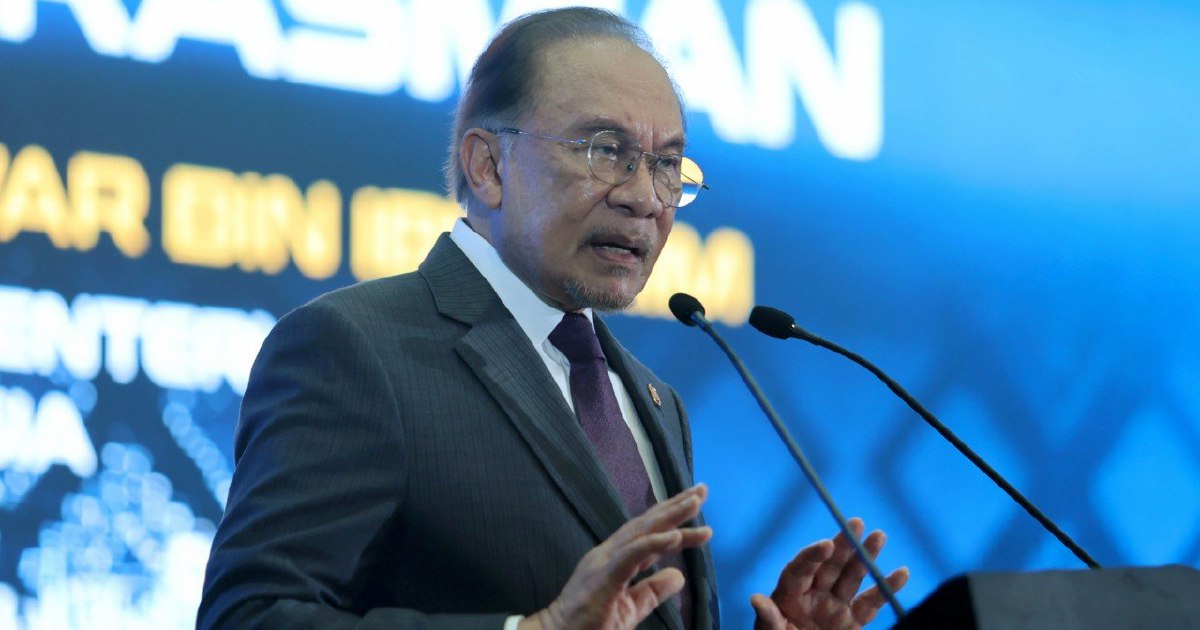
Prime Minister Datuk Seri Anwar Ibrahim has delivered a stark message to Malaysia's education sector: institutional reputation must never take precedence over the safety and wellbeing of bullied students. Speaking in Nilai, Anwar emphasised that schools concealing harassment and violence cases to maintain their standing represent a fundamental breach of duty towards the young people in their care.
The warning reflects mounting concern about a troubling pattern within some educational institutions across the country. Rather than facilitating transparent investigations and support for victims, certain schools have allegedly prioritised damage control, suppressing reports of bullying to avoid negative publicity that might deter prospective enrolments or tarnish historical prestige. This institutional self-protection mentality, Anwar made clear, cannot continue unchecked.
Anwar's intervention underscores how bullying remains a persistent challenge within Malaysia's school environment, often exacerbated by insufficient reporting mechanisms and inadequate accountability structures. When schools treat incidents as reputational liabilities rather than welfare crises requiring immediate remedial action, victims remain isolated and perpetrators face minimal consequences. The cumulative effect transforms schools into environments where abuse flourishes unchecked, psychologically damaging affected students while normalising harmful behaviour among their peers.
The Prime Minister stressed that swift, transparent action represents not a liability but a moral imperative. Schools that respond decisively to bullying allegations—conducting thorough investigations, protecting victims from further harassment, and implementing restorative measures—actually strengthen their standing by demonstrating institutional integrity and commitment to pastoral care. Conversely, the cover-up approach eventually collapses under scrutiny, generating far greater reputational damage when concealed incidents inevitably surface.
Malaysia's education system operates within a complex ecosystem where school reputation significantly influences parental choice and government resource allocation. This dynamic, while understandable, should never create incentives for institutional dishonesty. Anwar's statement implicitly challenges the assumption that transparency regarding bullying cases harms schools; experience suggests that proactive, ethical responses to such incidents actually earn greater trust from parents and communities.
The warning carries particular significance given Malaysia's multicultural and multi-religious student population. Schools serving diverse communities face heightened responsibilities to ensure bullying rooted in religious, ethnic, or socioeconomic prejudice receives serious intervention rather than dismissal as youthful mischief. When such cases are suppressed, the message conveyed to vulnerable minority students is deeply damaging—that their safety matters less than maintaining institutional comfort.
Educational psychology research consistently demonstrates that rapid intervention in bullying cases yields better outcomes for both victims and perpetrators. Victims benefit from immediate support structures, separation from abusers when necessary, and psychological counselling. Perpetrators, approached with accountability rather than concealment, have greater opportunity to understand consequences and modify behaviour through properly supervised intervention programmes. Delayed or hidden responses, by contrast, allow trauma to compound and harmful patterns to entrench.
Implementing transparent bullying protocols requires investment in training teachers and administrators to recognise harassment, creating accessible reporting channels for students, and establishing clear consequences applied consistently regardless of family background or school standing. Many Malaysian schools lack adequate counselling staff and have unclear procedures for handling sensitive cases, creating institutional confusion that sometimes facilitates cover-ups by default rather than deliberate policy.
Anwar's public statement carries implicit pressure on the Education Ministry and state education departments to strengthen oversight mechanisms and enforce transparency requirements. Schools should be incentivised, through ministry policies and parental expectations, to view bullying resolution as a core competency rather than a reputational threat. This shift requires cultural change within educational leadership and parent communities alike.
The broader context of Anwar's warning reflects global recognition that student safety represents a non-negotiable educational value. Countries implementing mandatory reporting requirements and transparent bullying registries have observed improvements in school safety despite initial concerns about reputational impact. Malaysia, positioning itself as a developing nation with advancing educational standards, cannot afford to lag in this essential domain.
Parents increasingly seek schools demonstrating accountability and transparency rather than those projecting flawless images. A school that openly addresses bullying incidents, involves parents in resolution processes, and implements preventative measures actually becomes more attractive to quality-conscious families than one maintaining silence on these issues. Anwar's intervention helps reframe transparency as a competitive advantage rather than a liability.
Government oversight bodies should establish clear metrics requiring schools to report bullying incidents, investigate complaints within defined timeframes, and demonstrate implementation of follow-up measures. Without such enforcement mechanisms, well-intentioned warnings may produce limited change. Schools need structural support, training resources, and clear policies, not merely exhortations to behave ethically.
As Malaysia continues refining its education system, embedding bullying prevention and transparent response into school culture represents crucial progress. Anwar's statement provides political cover for educational administrators wanting to strengthen these protocols and signals that concealment will face official scrutiny. For affected students and their families, this represents a modest but meaningful step toward the safety and support they deserve.

