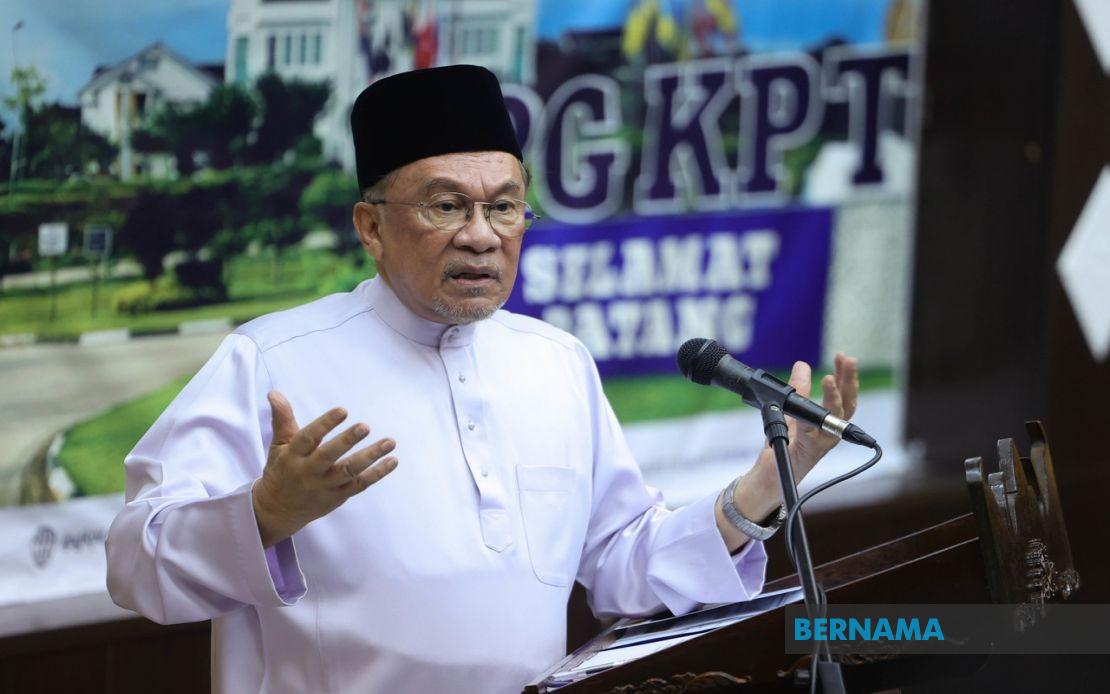
Prime Minister Datuk Seri Anwar Ibrahim has issued a stern warning to Malaysia's educational institutions that concealing bullying incidents to protect school reputation is unacceptable, demanding instead that administrators prioritise victim welfare and take swift corrective action. Speaking in Nilai on July 17, Anwar stressed that the damage inflicted on bullying victims extends far beyond surface-level harm, making transparency and prompt intervention non-negotiable institutional responsibilities rather than optional measures that might compromise a school's standing in the community.
The Prime Minister's intervention reflects growing public concern over how Malaysian schools have historically handled disciplinary matters affecting student welfare. Anwar framed the issue in stark terms, arguing that school leadership should not face censure for acknowledging bullying cases within their premises. Instead, he contended that principals and headteachers deserve criticism only when they remain passive in response to documented misconduct or attempt to sweep such matters under institutional rugs. The distinction he drew is significant: reporting problems demonstrates institutional integrity, while concealment constitutes a far more serious breach of duty toward vulnerable students and their families.
Anwar's remarks underscored a philosophical conviction that overshadows much of his educational agenda—that schools serve purposes extending well beyond credential production. He critiqued the tendency within some quarters of Malaysian education to prioritise academic rankings and technical competencies while marginalising the development of moral character and interpersonal respect. This framing positions bullying not merely as a disciplinary issue but as symptomatic of deeper failures in values transmission across educational settings.
The Prime Minister observed that despite unprecedented access to religious education and moral instruction in Malaysian schools, bullying persists, suggesting that current pedagogical approaches remain insufficient. He questioned whether institutions have truly embedded ethical frameworks into daily school culture or whether such instruction remains compartmentalised and disconnected from how students actually conduct themselves toward peers. This analysis carries particular weight given Malaysia's emphasis on Islam-based moral education across its public school system, implying that curriculum content alone cannot substitute for lived cultural transformation.
Anwar articulated a vision of educational purpose that resonates with concerns across Southeast Asia regarding student welfare and institutional accountability. His critique of credential-focused education systems reflects anxieties that proliferate among parents and policymakers throughout the region—that schools increasingly function as sorting mechanisms for academic talent while neglecting their formative role in shaping compassionate, ethical citizens. By elevating this discussion within his official capacity, Anwar signalled that addressing bullying represents a central educational priority rather than a peripheral welfare concern.
The intervention carries implicit criticism of existing reporting mechanisms and institutional cultures within Malaysian schools. When Anwar suggested that school leaders reporting two bullying incidents among a thousand students should face no opprobrium, he acknowledged an uncomfortable reality: some administrators may perceive transparency as professional liability rather than responsibility. This perception likely reflects performance metrics, parental expectations, and competitive school rankings that inadvertently incentivise suppression of problematic incidents.
Education Minister Fadhlina Sidek's presence alongside the Prime Minister suggested governmental alignment on this matter, though the minister made no recorded statements. Her attendance nonetheless signalled that the ministry endorses the Prime Minister's framework and will likely develop or reinforce policies directing schools toward mandatory reporting and victim-centred responses. Such alignment between the highest levels of political and ministerial authority on this issue may prove crucial in shifting institutional behaviour.
Anwar's questioning of educational outcomes divorced from ethical foundations addresses a philosophical tension within contemporary Malaysian schooling. He posed a rhetorical challenge: what value does a doctorate holder possess if they lack understanding of human dignity and mutual respect? This framing rejects the implicit hierarchy that privileges technical excellence over moral development, arguing instead for integrated educational outcomes encompassing both dimensions. For Malaysian educators and policymakers, this positioning offers philosophical justification for allocating resources and attention to character development initiatives that might otherwise be deprioritised in favour of STEM advancement or examination performance.
The Prime Minister's comments also implicitly acknowledge that Malaysian teachers themselves remain committed to high professional standards despite systemic pressures. By commending the teaching profession's performance while critiquing certain institutional responses to bullying, Anwar distinguished between individual educator competence and organisational cultures that may incentivise problematic behaviour. This calibrated approach avoids demoralising the teaching workforce while maintaining pressure on school administrations to reform their response protocols.
For Malaysian parents and student advocates, Anwar's intervention provides official legitimacy for demanding institutional transparency regarding bullying incidents. His statement that concealment represents a serious institutional failure establishes a benchmark against which communities can evaluate their schools' conduct. The messaging also creates political space for teachers and administrators genuinely committed to student welfare to resist institutional pressure toward cover-ups, as they can now reference the Prime Minister's direct pronouncement.
The broader implications for Southeast Asian education systems are noteworthy, as bullying and institutional accountability concerns transcend Malaysian borders. Anwar's framing—that transparent handling of disciplinary matters reflects professional competence rather than institutional failure—offers a potential model for regional approaches to school safety and welfare. As educational institutions across the region grapple with balancing competitive excellence with student wellbeing, his argument for integrated rather than competing priorities may prove influential.
Moving forward, the effectiveness of Anwar's intervention will depend substantially on whether policies and performance metrics translate his principles into practical guidance that schools can implement without fear of reputational or regulatory consequences. Without such systematic support, even strong political rhetoric may fail to overcome institutional cultures built around reputation protection. The challenge for Malaysian education authorities involves creating accountability frameworks that reward transparency and effective intervention while genuinely protecting schools from unfair stigmatisation when they correctly identify and address bullying incidents.

