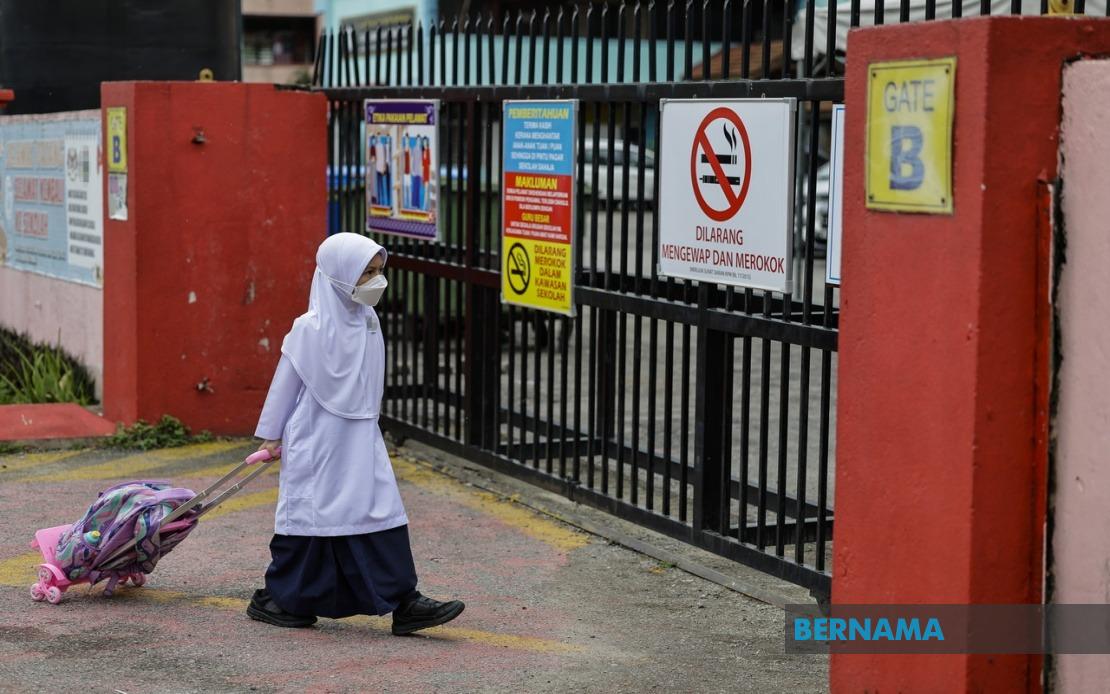
Deputy Education Minister Wong Kah Woh has confirmed that Malaysian school principals possess the discretionary authority to close their institutions when Air Pollutant Index (API) readings exceed the 200 threshold, providing clarity on longstanding protocols that have guided the education sector through recurring episodes of poor air quality. Speaking in Taiping after witnessing the signing of a Memorandum of Understanding between Toyo Tyre Malaysia and UniMAP, Wong outlined the existing framework that empowers school administrators while positioning State Education Departments and District Education Offices as coordinating bodies in haze-related decision-making.
The Ministry of Education operates under a series of standing Circulars specifically addressing haze management, with versions issued across three separate occasions—2016, 2019, and 2023—reflecting the cyclical nature of air quality challenges that have periodically disrupted the Malaysian education calendar. These directives establish a tiered response system that begins well before the API reaches closure thresholds, demonstrating a graduated approach to protecting student welfare. The existence of multiple updated Circulars indicates that the ministry has refined its protocols based on accumulated experience with transboundary haze events, which have become increasingly frequent across Southeast Asia due to biomass burning in neighbouring regions during dry seasons.
When API levels climb to between 100 and 200, schools must implement intermediate protective measures rather than immediately shuttering their doors. These mandatory restrictions include suspending all outdoor activities and gatherings, acknowledging that even elevated pollution levels pose health risks during physical exertion when respiratory intake increases. Wong explicitly stated that outdoor sports events must be postponed during such periods, a significant consideration for schools that rely on athletic programmes for student development and inter-school competition. This middle ground allows educational continuity while reducing exposure to hazardous air, particularly benefiting younger children whose respiratory systems remain developing and more vulnerable to airborne contaminants.
The threshold of API 200 represents a critical inflection point where the environmental conditions deteriorate sufficiently that maintaining normal school operations becomes untenable. At this level, the air quality enters the hazardous category, and extended exposure poses genuine health risks even for healthy individuals, with particular concern for students with asthma, respiratory conditions, or other vulnerabilities. By granting principals discretionary authority rather than issuing blanket closures, the ministry acknowledges that API readings vary geographically across Malaysia, and conditions in coastal areas, industrial zones, or regions downwind of pollution sources may differ significantly from national figures. This localized decision-making framework allows school administrators to respond to their specific environmental circumstances rather than following distant bureaucratic directives detached from ground reality.
The role assigned to State Education Departments and District Education Offices involves continuous monitoring of haze conditions and API data, positioning these regional bodies as information providers and advisory resources for school leaders. Rather than removing discretion from educators, this structure creates a support system wherein principals can consult technical data and expert guidance while maintaining responsibility for final decisions affecting their students and staff. The distinction reflects an understanding that principals, as those directly responsible for school operations and student welfare, are best positioned to weigh API readings against other factors including school proximity to pollution sources, the health profiles of their student population, and the feasibility of rapid transition to alternative learning arrangements.
Recent episodes of unhealthy API readings across multiple Malaysian areas prompted Wong's reaffirmation of these protocols, suggesting that some confusion may persist regarding school closure procedures despite the existence of established Circulars. The persistence of haze events means that many schools in affected regions experience seasonal disruptions to normal operations, requiring robust communication channels to ensure parents, students, and educators understand the decision-making criteria and timelines. When API readings spike suddenly, as occurred in the areas Wong referenced, schools must be positioned to respond quickly without bureaucratic delays that might keep students exposed to hazardous air while awaiting official authorization to close.
The protection of student health and safety emerges as the explicit priority guiding these policies, a consideration that supersedes educational continuity when air quality reaches dangerous thresholds. Malaysia's tropical geography and proximity to major biomass burning regions means that haze events remain periodic realities affecting educational calendars, particularly during the dry months spanning July through September. Schools in states like Selangor, Kuala Lumpur, and areas in the Klang Valley have experienced multiple closures during recent years, disrupting academic schedules and necessitating make-up sessions to preserve instructional hours.
The distributed decision-making model also accounts for varying levels of preparedness among schools regarding remote or online learning alternatives. Larger urban institutions may rapidly transition to distance education platforms, while smaller rural schools might face greater logistical challenges in sustaining learning remotely. By allowing principals flexibility rather than imposing uniform closure timelines, the framework accommodates these operational realities while prioritizing the immediate health imperative when pollution reaches hazardous concentrations.
Wong's statement serves as a reminder to school administrators, parents, and students that established protocols exist for navigating haze-related disruptions, yet the responsibility for implementing these measures rests substantially with local educational leadership. Going forward, clarity regarding API threshold responses should be reinforced through regular communication and training for school administrators, ensuring that when hazardous air quality returns—as regional meteorological patterns suggest it inevitably will—schools can respond swiftly and confidently in protecting student welfare.

