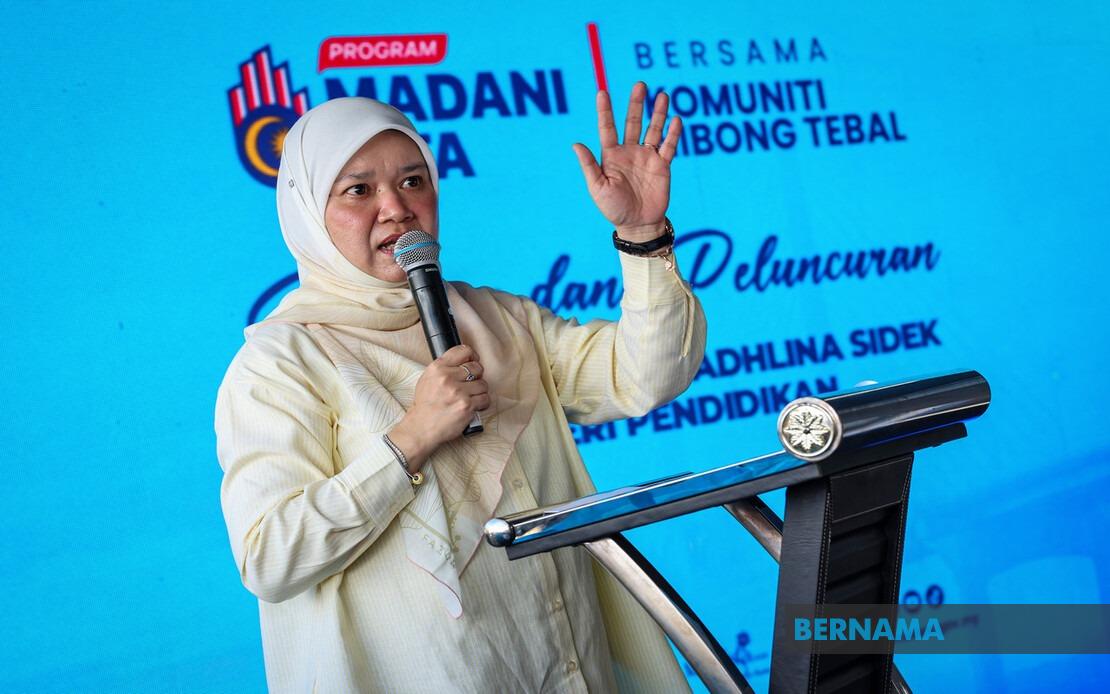
Education Minister Fadhlina Sidek has commended the National Information Dissemination Centre's Mahir school uniform initiative as an effective intervention addressing the persistent financial pressures facing Malaysian households with school-age children. Speaking in Nibong Tebal on August 8, Fadhlina highlighted how the programme's instalment payment model removes a significant barrier that has long complicated parents' ability to acquire essential school supplies at the start of the academic year. The scheme represents a pragmatic policy response to a recurring household budgeting challenge that disproportionately affects middle and lower-income families, particularly in states where cost of living has risen sharply.
Beyond its immediate consumer benefit, the Mahir initiative demonstrates how government programmes can simultaneously address multiple policy objectives through integrated design. By enabling instalment purchasing, the scheme not only alleviates parental financial stress but also creates sustainable income pathways for local entrepreneurs, particularly women who have completed vocational training. This dual-benefit approach reflects a broader NADI strategy of embedding social support within economic empowerment frameworks, creating value chains that keep spending within communities rather than leaking outward to large retail operations.
The supply side of the programme is built on the foundation of 120 alumni from NADI Mahir Jahit, a sewing skills training programme that has equipped participants with practical vocational qualifications. These entrepreneurs have progressed from foundational training through NADI's Pintar Services to operating as independent or semi-independent uniform producers. The model effectively transforms government training investment into tangible employment, with participants moving from trainees to income-generating entrepreneurs within what appears to be a relatively compact timeframe. For policymakers observing Malaysia's ongoing skills transition challenges, this represents a concrete example of vocational training successfully converting into sustainable livelihoods.
The Nibong Tebal announcement forms part of a broader institutional portfolio of NADI initiatives that have been deployed across the country's education and youth sectors. Fadhlina's reference to multiple complementary programmes suggests a coordinated ecosystem approach rather than isolated interventions. The NADI Tuisyen Rakyat tutoring scheme has reportedly engaged over 42,000 students nationwide, with Nibong Tebal alone participating with more than 73 students. Performance metrics indicate the programme's academic relevance, with participating students producing 65 outstanding results in the 2025 Sijil Pelajaran Malaysia examinations. For Malaysian parents navigating increasingly competitive tertiary education entry requirements, accessible quality tutoring addresses a genuine systemic gap, particularly in areas where private tuition markets remain expensive and geographically patchy.
Youth engagement through competitive gaming represents another dimension of NADI's portfolio that reflects evolving perceptions of how young people learn and develop soft skills. The NADI E-Sukan initiative, framed explicitly as a platform for talent identification and confidence-building, positions gaming within an educational outcomes framework rather than dismissing it as pure entertainment. Nibong Tebal's achievements in national Mobile Legends competition and state-level Cooking Star competition demonstrate that competitive gaming structures can produce measurable results and regional recognition. This approach may offer particular relevance for Malaysian educators and parents seeking to channel young people's demonstrated engagement with digital platforms toward structured skill development.
The mention of NADI's AI literacy initiatives, specifically the 1 NADI 1 Prompt Engineer programme that has attracted 11 Nibong Tebal participants, signals an institutional effort to distribute foundational artificial intelligence competency beyond urban technology hubs. As Malaysian policymakers and businesses grapple with workforce implications of advancing AI capabilities, programmes introducing basic AI literacy to geographically dispersed youth populations represent an early hedge against widening skills divides. While 11 participants in a single parliamentary constituency remains modest, the existence of such infrastructure in smaller towns suggests systemic thinking about equitable access to emerging technology competencies.
Fadhlina's positioning of these initiatives as directly benefiting the Nibong Tebal constituency reflects standard political communication practices, yet also demonstrates how national programmes are being evaluated and articulated through local impact narratives. Politicians and administrators increasingly face constituent expectations that government initiatives produce tangible, documented outcomes in their specific communities. The invocation of specific numbers—120 seamstresses, 42,000 tuition students, 73 local participants, 65 examination successes—suggests institutional capacity to track programme reach and outcomes, though questions about cost-effectiveness and long-term sustainability remain unaddressed in public statements.
The participation of Ministry of Communications officials, including the deputy secretary-general and Malaysian Communications and Multimedia Commission representatives, at a school uniform initiative event underscores the cross-agency coordination required for comprehensive community programmes. This administrative structure implies that NADI operates within a broader government ecosystem encompassing communications, education, and enterprise development portfolios. Such integration may facilitate programme promotion through official channels, though it also raises governance questions about programme autonomy and accountability mechanisms.
For Malaysian readers evaluating household financial strategies, the availability of instalment payment options for school uniforms represents a genuine incremental improvement in household financial flexibility, particularly given that uniform replacement occurs annually and often coincides with other significant education expenses including books, fees, and transport costs. The scheme's effectiveness likely varies by community based on familiarity with such programmes and accessibility of participating vendors. In more developed parliamentary constituencies with stronger information dissemination infrastructure, parents would presumably have better access to scheme details compared to rural or more underserved areas, potentially reproducing existing geographic inequalities in programme reach.
The broader policy question implicit in NADI's portfolio expansion concerns the sustainability and scalability of specialist government programmes operating across multiple unrelated domains simultaneously. While the initiative demonstrates institutional responsiveness to diverse community needs—from vocational training to competitive gaming to AI literacy—the coordination requirements and funding implications of maintaining such breadth warrant closer examination. Malaysian policymakers evaluating the NADI model must assess whether this comprehensive approach optimally deploys limited public resources or whether specialisation and partnership with private and non-governmental actors might achieve similar community outcomes more efficiently.

