Education Minister Fadhlina Sidek has moved to allay growing concerns among teachers about the School Pupil Protection Policy, insisting that the framework is designed to distribute responsibility for child safety across multiple institutions rather than concentrate it on classroom educators. Speaking on August 14, Fadhlina clarified that the policy's purpose is to establish transparent protocols defining what each actor in the education system should do when pupil welfare becomes a concern, challenging perceptions that teachers alone bear accountability for safeguarding vulnerable children.
The minister's reassurance comes amid sensitivity within Malaysia's teaching profession about new accountability measures. Fadhlina emphasized that the policy creates clearer demarcation of duties, ensuring that when educators encounter troubling situations involving a pupil's safety or wellbeing, they understand their precise obligation: to escalate concerns immediately to school administrators rather than attempting to investigate or gather evidence independently. This distinction is crucial because it reframes the teacher's role from detective or protector to concerned reporter, reducing the legal and professional exposure educators faced previously when navigating ambiguous situations.
In articulating the policy's mechanics, Fadhlina stressed that teachers need not accumulate comprehensive proof before filing a report. The threshold for action is substantially lower—reasonable suspicion or receipt of a complaint triggers the obligation to notify administrators without delay. This lower barrier to reporting reflects international best practices in child protection, where delayed disclosure due to insufficient evidence can allow harm to continue unchecked. By explicitly removing the evidentiary burden from teachers, the ministry aims to encourage prompt escalation of concerns through proper institutional channels.
The coordinated ecosystem Fadhlina described extends well beyond schoolyard boundaries. The framework incorporates the Ministry of Education, State Education Departments, and District Education Offices as core components, but deliberately pulls in external agencies including the Royal Malaysia Police and the Social Welfare Department. This multi-agency approach acknowledges that pupil protection often requires specialized intervention beyond teachers' professional scope—police investigations into abuse allegations, social workers assessing family conditions, or welfare officers coordinating protective measures. By embedding these agencies into the policy framework from the outset, the system aims to prevent the fragmented, poorly coordinated responses that have historically allowed cases to slip through institutional gaps.
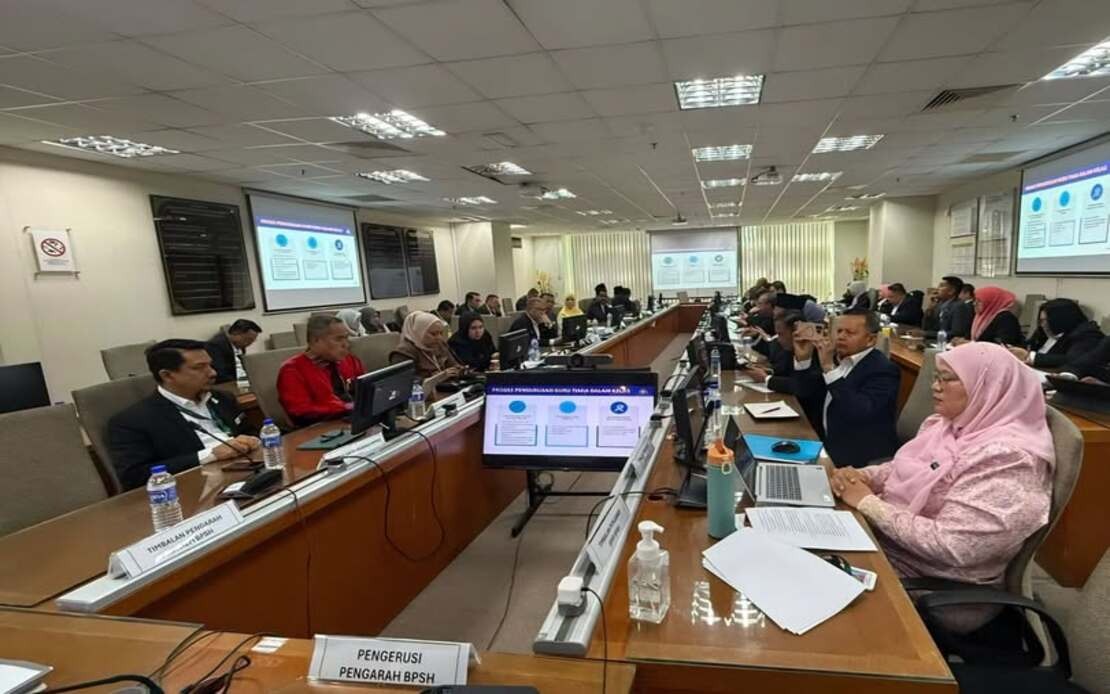
Fadhlina recognized that the Ministry has a work in progress on its hands and committed to intensive engagement sessions designed to demystify the policy for educators. The ministry has already conducted briefings with the National Union of the Teaching Profession, signaling responsiveness to union concerns that the policy might inadvertently penalize teachers for institutional failures. Parallel discussions with the Human Rights Commission of Malaysia, the United Nations Children's Fund, and various non-governmental organizations underscore recognition that child protection demands input from advocacy groups and international expertise. These engagements serve a dual purpose: they refine the policy based on feedback from those implementing it, while simultaneously building confidence among stakeholders that their concerns have been heard.
Critically, Fadhlina addressed the anxiety that teachers might become scapegoats should cases deteriorate or fail to protect a child adequately. She pledged that the Ministry of Education would provide legal assistance where appropriate and necessary, signaling that the government will stand behind educators who act in good faith under the policy's framework. This commitment is essential for enlisting teacher cooperation; without assurance of institutional backing, educators might revert to the silence that historically allowed abuse to persist unchecked within schools. The promise of legal support transforms the policy from a potential liability into a protective mechanism for conscientious educators.
The minister acknowledged candidly that no single policy document can anticipate every scenario educators encounter. Recognizing the limits of bureaucratic comprehensiveness, she emphasized that sustained dialogue must continue until teachers genuinely internalize their roles, understand where their responsibilities end, and feel assured about the appropriate steps when confronting specific incidents. This emphasis on ongoing professional development contrasts with the traditional Malaysian approach of issuing directives and expecting compliance. Instead, Fadhlina's model treats policy implementation as a continuing conversation between central authorities and frontline practitioners, adjusting understanding as real-world complexities emerge.
For Malaysian readers and Southeast Asian observers, the policy represents an important evolution in how the region's most populous country approaches institutional child protection. Traditional deference to authority and reluctance to challenge superiors—deeply embedded in Malaysian culture—can inhibit the upward reporting that effective child protection requires. By establishing explicit, formalized channels and removing the burden of proof, the policy attempts to overcome these cultural barriers. Teachers are not being asked to exercise judgment about whether concerns warrant investigation; they are instructed to report and let administrators and specialized agencies make those determinations.
The implications for school administrators are equally significant. Under this framework, principals and district education officers become the first filter in the protection system, responsible for triaging incoming reports and determining whether cases warrant police involvement, social welfare intervention, or internal institutional responses. This concentration of decision-making authority at administrative level creates accountability—these officials can no longer hide behind claims that they were unaware of problems. Simultaneously, it relieves teachers of the impossible burden of deciding whether a matter is "serious enough" for official action, a determination teachers are neither trained nor positioned to make.
The policy also reflects global recognition that institutional failures in child protection often stem from poor communication and coordination between agencies. When schools, police, and social welfare operate in isolation, a child slipping through one institution's grasp might not trigger attention elsewhere. By embedding cross-agency collaboration into the policy framework itself, Malaysia is attempting to create what child protection specialists call "systems thinking"—recognition that safety emerges from how institutions interact, not merely from individual institutional competence.
Fadhlina's emphasis on reassurance also addresses a practical implementation risk: teacher resistance. If educators interpret the policy as punishment or blame allocation, they may engage in defensive non-compliance, making themselves unavailable for briefings or finding reasons to doubt whether situations warrant reporting. By positioning the government as providing support rather than surveillance, she attempts to reframe the policy from threat to resource. However, this framing will only succeed if the promised legal assistance materializes in actual cases and if educators consistently experience administrative backing rather than secondary blame when cases proceed to external agencies.
Looking ahead, the policy's success will depend less on its written provisions than on implementation fidelity. Teachers must actually receive the promised training, administrators must consistently process reports in accordance with protocols, and external agencies must demonstrate reliable follow-through. In Malaysia's decentralized education system, where State Education Departments wield considerable autonomy, ensuring consistent application across states and districts remains a substantial challenge. Variations in how the policy is implemented across Peninsular Malaysia, Sabah, and Sarawak could create gaps where vulnerable pupils fall through.
The School Pupil Protection Policy ultimately represents the Malaysian education system's attempt to move from informal, relationship-based protection toward formalized, systematic safeguarding. Whether it succeeds will depend on sustained commitment from Ministry leadership, genuine resource allocation for implementation, and the cultural shift required to make Malaysians comfortable reporting concerns through institutional channels. For teachers, the policy's promise is that doing the right thing—reporting worrisome situations promptly—will be supported rather than penalized by the system they serve.

