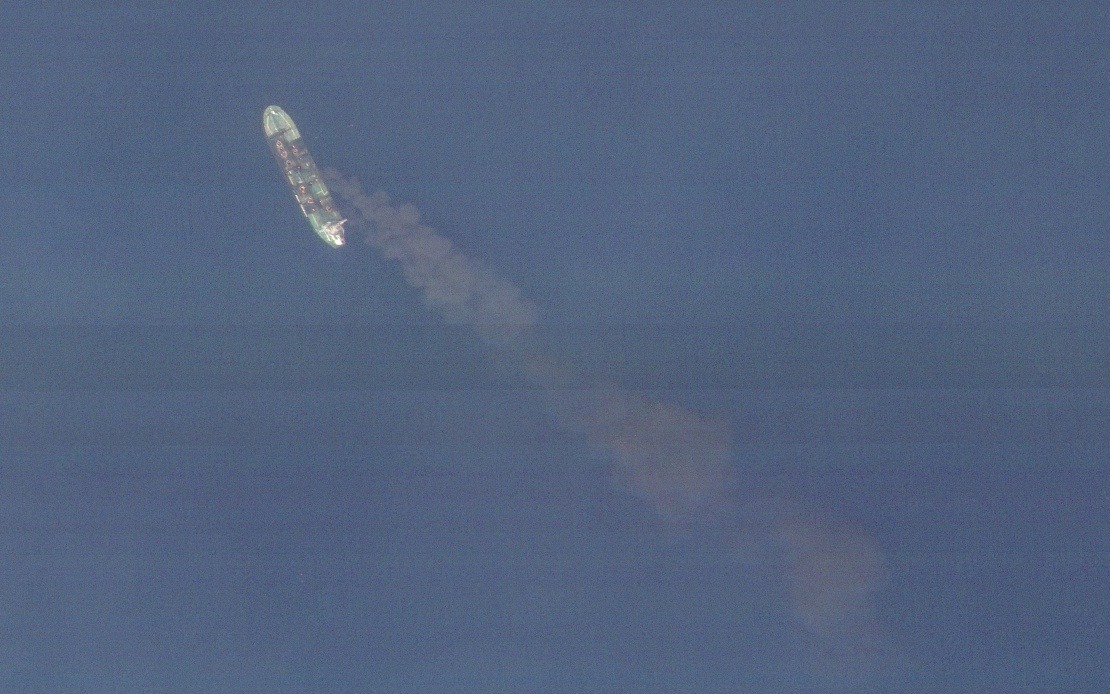
The Saudi-led military coalition operating in Yemen has vowed to take decisive action to ensure safe passage for commercial traffic through the strategic Bab al-Mandab Strait, responding swiftly to the Houthi group's announcement of a maritime embargo targeting Saudi shipping. Coalition spokesperson Turki Al-Malki issued a statement through social media declaring that the Joint Forces Command would implement all necessary operational measures consistent with international law to protect coalition vessels navigating the waterway, signalling a firm stance against what officials characterize as an escalatory move by the Iran-backed militants.
The Houthi declaration, issued earlier on Monday, frames the shipping restrictions as a reciprocal response to what the group describes as a nearly twelve-year Saudi blockade of Yemen. The maritime ban reflects deepening frustration among Houthi leadership over the humanitarian toll they attribute to the coalition's actions, part of a broader pattern of tit-for-tat measures between the warring parties. This escalation threatens to destabilize a region where millions of dollars in global commerce transit daily, with the Bab al-Mandab Strait serving as one of the world's most crucial maritime chokepoints connecting the Red Sea to the Indian Ocean.
In his response, Al-Malki dismissed the Houthi ban as baseless rhetoric and inflammatory posturing, pointing to data showing that over three hundred commercial vessels had accessed ports controlled by the Houthi-run administration during the first six months of the year. These vessels carried essential supplies including food and fuel, statistics the coalition marshals as evidence against allegations that it maintains a strangling blockade. The argument reflects the competing narratives both sides deploy to legitimize their respective positions to international audiences and domestic populations.
Simultaneously, Saudi Arabia's Foreign Ministry released its own statement repudiating Houthi claims of a blockade, asserting instead that the kingdom has consistently worked to alleviate Yemeni suffering through development initiatives and financial support to the Saudi-backed Yemeni government. This diplomatic response underscores Riyadh's concern that Houthi messaging could sway international opinion and complicate its own positioning within regional and global geopolitical circles. The ministry's emphasis on humanitarian assistance aims to counter narratives that portray Saudi actions as exclusively punitive.
The immediate trigger for this latest escalation traces to the Saudi-backed Yemeni government's strike on Sanaa International Airport just days earlier, undertaken specifically to prevent an Iranian aircraft carrying senior Houthi officials from landing. This interception demonstrated the coalition's determination to limit Iranian influence and high-level diplomatic engagement by the Houthi leadership, a priority that has long characterized coalition strategy. However, the move backfired strategically, galvanizing the Houthi response and prompting retaliatory missile and drone attacks directed toward Saudi Arabian territory, thereby ratcheting up military tensions.
For Malaysian and Southeast Asian observers, this development carries significant implications for regional maritime security and trading patterns. The Bab al-Mandab Strait sits at the confluence of global supply chains, and any prolonged disruption would ripple through Asian economies dependent on rapid, predictable sea routes. Malaysia, as a major trading nation with substantial shipping interests, faces potential consequences if shipping insurance premiums rise or if merchants reroute vessels around the Cape of Good Hope, adding weeks to journey times and costs to regional commerce.
Yemen's prolonged internal conflict, which erupted when the Houthis seized the capital Sanaa and dominated much of northern Yemen in late 2014, has resisted resolution despite numerous international mediation attempts. The Saudi-led coalition's military intervention beginning in 2015 transformed the conflict into a regional proxy struggle with deep Saudi-Iranian competition at its core. Nearly a decade of warfare has created conditions of state collapse, famine risk, and humanitarian catastrophe that complicate any pathway toward durable peace.
The 2022 United Nations-brokered truce represented a fragile diplomatic achievement that momentarily reduced active hostilities and created space for humanitarian access. However, that arrangement always remained precarious, lacking the structural incentives necessary for sustainable de-escalation. The current maritime confrontation signals that underlying tensions remain unresolved and that tactical agreements cannot substitute for addressing the fundamental political and security concerns driving the conflict. Each party interprets ambiguous situations through the lens of threat, making miscalculation a perpetual danger.
The Houthi maritime ban, if enforced with any consistency, would constitute a significant assertion of power projection and a direct challenge to coalition efforts to maintain freedom of navigation through international waters. Should the group attempt to interdict Saudi vessels or those perceived as supporting Saudi interests, the probability of escalated military exchanges increases substantially. Coalition responses, in turn, could trigger further Houthi attacks, establishing a dangerous cycle difficult to interrupt without external mediation or fundamental shifts in the underlying political dynamics.
For Malaysian policymakers and business leaders, this situation underscores the vulnerabilities inherent in relying on regions affected by unresolved armed conflict for critical trade routes. While Malaysia maintains relatively neutral diplomatic positioning toward the Saudi-Iranian competition, the practical impact of Red Sea instability remains neutral to no nation. Commercial shipping companies may begin routing vessels differently, increasing costs and transit times that ultimately affect consumer prices and business competitiveness throughout Southeast Asia.
The international community, including ASEAN nations, faces a dilemma: how to encourage de-escalation and resolution of the underlying Yemen conflict while protecting legitimate maritime commerce and humanitarian shipping. Malaysia's role as a maritime nation and its diplomatic experience in mediation efforts could contribute constructively to multilateral initiatives aimed at stabilizing this critical waterway and supporting broader peace efforts. The stakes extend beyond Yemen's borders to regional stability and the health of global supply chains upon which Southeast Asian economies depend.

