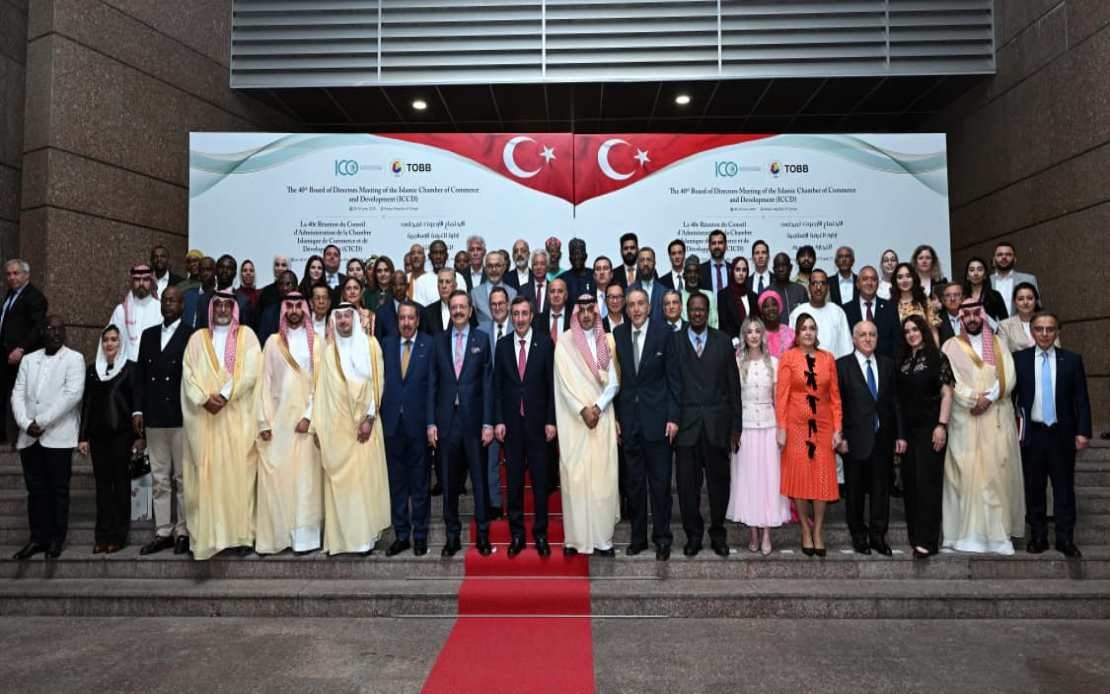
Saudi Arabia has renewed its commitment to deepening economic partnerships across the Islamic world, with particular emphasis on strengthening ties with major Muslim-majority economies like Malaysia and Indonesia. The appeal came from Abdullah Saleh Kamel, who chairs both the Federation of Saudi Chambers and the Islamic Chamber of Commerce and Development, during high-level meetings held in Ankara, Turkiye this week.
The Federation of Saudi Chambers' participation in the 40th ICCD Board of Directors Meeting underscores the Kingdom's strategic positioning within regional commerce. By sending its delegation, Saudi Arabia demonstrated continuity in what has become a defining pillar of its economic diplomacy—active engagement in multilateral forums that connect Islamic business communities. This representation signals that Riyadh views institutional frameworks for intra-Islamic cooperation not as ceremonial structures, but as practical vehicles for achieving tangible commercial objectives across borders.
For Malaysia, the explicit mention in Saudi Arabia's statement carries significance beyond diplomatic courtesy. The Kingdom identified both Malaysia and Indonesia as exemplars of the kind of dynamic, diversified economies that should anchor a broader strategy of Islamic world trade integration. By naming these nations, Riyadh is essentially endorsing their economic models and suggesting they serve as blueprints for how Islamic economies can modernise while maintaining their own governance systems and values.
The focus on youth entrepreneurship and private-sector growth reflects a shared concern among major Islamic economies about demographic transitions and labour market pressures. Both Malaysia and Saudi Arabia have invested heavily in initiatives targeting young business founders and tech entrepreneurs. The ICCD's emphasis on creating quality opportunities for the next generation suggests that member states recognise structural unemployment and underemployment in the Islamic world as constraints on shared prosperity that require coordinated responses.
Food security and sustainable agriculture have become increasingly pressing issues across Southeast Asia and the Middle East, driven by climate variability, supply chain disruptions, and population growth. By highlighting these sectors as central to long-term economic development, the Saudi leadership implicitly endorses a collaborative approach to these challenges—one where countries leverage each other's expertise, resources, and markets. Malaysia's advanced agro-technology sector and Saudi Arabia's capital resources could be complementary in addressing regional food concerns.
The Kingdom's stated objective to expand intra-Islamic trade and investment distinguishes itself from broader globalisation rhetoric by emphasising bonds of faith and shared institutional identity as facilitating factors. This positioning offers an alternative to purely bilateral trade agreements, framing commerce within a framework that highlights civilisational continuity and mutual responsibility. For Malaysian policymakers, this framing creates opportunities to deepen engagement with the Gulf while situating such relationships within broader strategic narratives about Islamic cooperation.
The ICCD, established decades ago as a multilateral institution, now serves as a platform where Saudi Arabia and other major Islamic economies coordinate positions on development priorities. The Board of Directors meeting examined implementation of existing programmes aimed at strengthening economic cooperation, suggesting that these are not aspirational statements but working initiatives with measurable outputs. The breadth of issues under review—from chamber operations to project oversight—indicates that the ICCD functions as a sophisticated institutional apparatus, not merely a talking shop.
Looking ahead, the ICCD's plans for a golden jubilee celebration in 2027 will represent fifty years of institutional effort to knit together the economies of the Islamic world. This milestone offers Malaysia and other member states an opportunity to assess progress, reset priorities, and potentially announce new joint initiatives. The leadup to this celebration will likely generate momentum for deepening integration across sectors where Islamic economies have complementary strengths.
Regional trade connectivity, singled out as essential to development, addresses a recognised bottleneck in Southeast Asian and Middle Eastern commerce. Despite geographical proximity in some cases and shared religious identity across regions, intra-Islamic trade remains proportionally modest. Initiatives to improve logistics, harmonise standards, and reduce non-tariff barriers could unlock significant economic gains. Saudi Arabia's advocacy for addressing this dimension suggests that the Kingdom views infrastructure investment and regulatory cooperation as key levers for change.
For Malaysia specifically, Saudi Arabia's positioning carries implications across multiple domains. Beyond immediate commercial benefits from expanded trade and investment flows, alignment with Riyadh on development priorities strengthens Malaysia's voice in multilateral forums and positions the country as a bridge between Southeast Asia and the broader Islamic world. This diplomatic positioning has historically delivered tangible benefits in terms of market access, investment inflows, and soft power influence.
The emphasis on economic integration rather than political union reflects realism about the constraints on deeper cooperation among states with distinct national interests. By anchoring the agenda in commerce, investment, and development rather than geopolitical alignment, the ICCD offers a framework within which countries with varying foreign policies can still cooperate productively. This pragmatic approach has allowed the institution to survive and function despite broader tensions in the Islamic world.
Saudi Arabia's sustained leadership role within the ICCD, evident from its consistent financial support since the organisation's establishment, positions the Kingdom as a beneficiary of institutional legitimacy while also obligating it to contribute materially to shared objectives. For Malaysia and other Muslim-majority economies, this Saudi commitment provides assurance that declarations of cooperation translate into sustained institutional investment and resource allocation.

