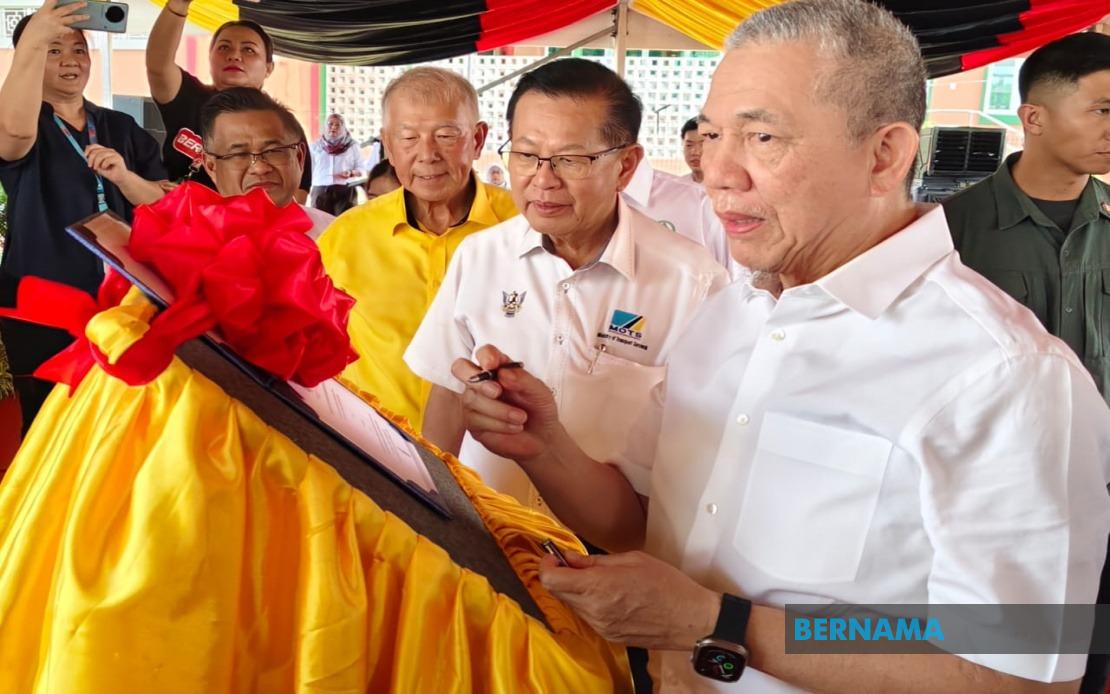
Deputy Prime Minister Datuk Seri Fadillah Yusof has unveiled an ambitious portfolio of 52 infrastructure initiatives across Sarawak designed to mitigate the escalating threats posed by coastal erosion, riverbank degradation, and seasonal flooding. The projects, collectively funded at RM9.46 million for the current fiscal year, represent a comprehensive approach to environmental stabilisation across the state's vulnerable waterfront and riverside communities.
The scale of implementation is staggered across multiple phases. Of the approved slate, twelve projects have already reached completion, demonstrating tangible progress in the intervention programme. An additional thirteen ventures are currently in active construction phases, while the remaining twenty-seven remain in preliminary planning and preparation stages. This phased rollout ensures manageable resource allocation whilst maintaining momentum across the portfolio.
During a site inspection in Miri, Fadillah highlighted a specific initiative that exemplifies the programme's focus. The Riverbank Stabilisation Project at Tab Cinaq Cemetery in Miri District, budgeted at RM134,682, addresses a critical vulnerability in the locality. The undertaking commenced in May and targets completion by November, centring on erecting a fifty-metre retaining wall designed to arrest riverbank erosion whilst safeguarding both the cemetery grounds and the surrounding infrastructure from further degradation.
Beyond the immediate Cakna MADANI allocation, the state has secured substantially larger commitments for long-term flood management strategies. A total of twenty-nine comprehensive flood mitigation initiatives have received approval, commanding aggregate expenditure of RM3.834 billion. This distinction between shorter-term erosion management projects and extended flood prevention schemes reflects a dual-track approach to managing Sarawak's water-related challenges.
The composition of this wider portfolio reveals the balance between maintaining existing infrastructure and developing new capacity. Eighteen of the twenty-nine projects classified as continuation efforts collectively represent RM3.567 billion in investment, suggesting substantial prior commitments to established mitigation frameworks. The remaining eleven new initiatives, costing RM267 million, indicate the government's willingness to expand its flood-defence infrastructure beyond existing schemes.
Fadillah, who concurrently holds the Energy Transition and Water Transformation portfolio, situated these investments within Sarawak's broader developmental context. The initiatives encompass diverse intervention types, including formal Flood Mitigation Plan (RTB) projects, High Priority Flood Mitigation (TBBT) schemes, dedicated coastal erosion countermeasures, and river conservation undertakings. This taxonomic diversity acknowledges that waterborne hazards manifest in varied forms across different geographies and require correspondingly tailored solutions.
The RTB Sungai Miri exemplifies the longer-cycle projects now underway. Initiated in October 2023, the scheme has achieved fifty-eight point eleven percent physical progress and remains scheduled for completion in November 2026. With a total allocation of RM31 million, it represents the substantial commitments being channelled into individual river systems, particularly those traversing populated or economically significant areas.
For Malaysian readers in other regions contending with similar environmental pressures, Sarawak's experience offers instructive lessons. The state's integrated approach—combining localised, low-cost interventions with major infrastructure outlays—demonstrates how multiple tiers of governmental investment can complement one another. Smaller projects like the Tab Cinaq stabilisation work address immediate community vulnerabilities, whilst the larger RTB initiatives establish systemic protection spanning entire river networks. This framework proves especially relevant as climate variability increases rainfall intensity and sea-level pressures across Southeast Asia.
The economic implications are likewise significant. Beyond direct employment during project implementation, these investments enhance property security, reduce insurance-related costs for riverside residents and businesses, and protect productive assets from destruction. In Sarawak's case, where agriculture and resource extraction remain economically important, flood protection translates into more predictable operating conditions for primary industries. Reduced erosion simultaneously addresses aesthetic and safety concerns in heritage sites like cemeteries, acknowledging that environmental management encompasses cultural and social dimensions beyond technical hydrology.
The deployment of RM3.834 billion across flood mitigation underscores federal and state commitment to climate adaptation, positioning Sarawak as a test case for managing water-related hazards in Malaysia's tropical climate. As other states increasingly confront erosion and inundation challenges—whether in Pahang, Terengganu, or Johor—the Sarawak template may provide operational benchmarks for scaling similar programmes nationally.
The phased advancement of these projects also suggests evolving technical understanding. Early completions enable evaluation of interventions' efficacy, informing design modifications for subsequent phases. This adaptive capacity proves crucial in addressing environmental challenges that climate science indicates will intensify. The RTB Sungai Miri's extended timeline to November 2026 reflects realistic expectations about implementation complexity, avoiding the optimistic scheduling that often undermines infrastructure programmes in the region.
Looking forward, Fadillah's announcement positions water security as a governmental priority meriting sustained fiscal allocation and political attention. As Sarawak moves through the implementation phases of these fifty-two projects and the broader twenty-nine-scheme portfolio, the state provides the region with practical evidence of how systematic, adequately-funded environmental management can begin redressing the water-related risks intensifying across tropical Malaysia and broader Southeast Asia.

