Sarawak's education system ground to a halt on August 20 as state authorities ordered the temporary closure of 591 schools spanning two consecutive days in response to intensifying hot and dry weather patterns gripping multiple regions. The decision, affecting a student population exceeding 197,000 across primary and secondary institutions, underscores the growing vulnerability of Southeast Asian states to climate-driven disruptions to essential services.
The Sarawak Education Department detailed that the suspension encompassed 509 primary schools educating 107,590 pupils alongside 82 secondary schools serving 89,733 students. These facilities operate under the administrative purview of 10 District Education Offices distributed across the state's most affected zones. The geographical spread of closures—spanning Kuching, Padawan, Bau, Lundu, Samarahan, Simunjan, Serian, Sri Aman, Lubok Antu and Betong—demonstrates how comprehensively the dry weather system has blanketed the region, disrupting normal educational rhythms for hundreds of thousands of families.
Beyond the immediate classroom impact, Sarawak's State Disaster Management Committee activated heightened surveillance protocols across critical environmental and resource indicators. Their monitoring framework encompasses real-time tracking of atmospheric moisture, air pollutant concentrations, active fire sources, and the state's freshwater reserves—a multidimensional approach reflecting the interconnected nature of climate-related hazards. The committee's explicit concern centres on how sustained heat and moisture depletion create cascading risks: wildfire proliferation across forests and peatlands can rapidly spiral once conditions breach critical thresholds, simultaneously exacerbating air pollution whilst straining water distribution networks already stressed by elevated evaporation rates.
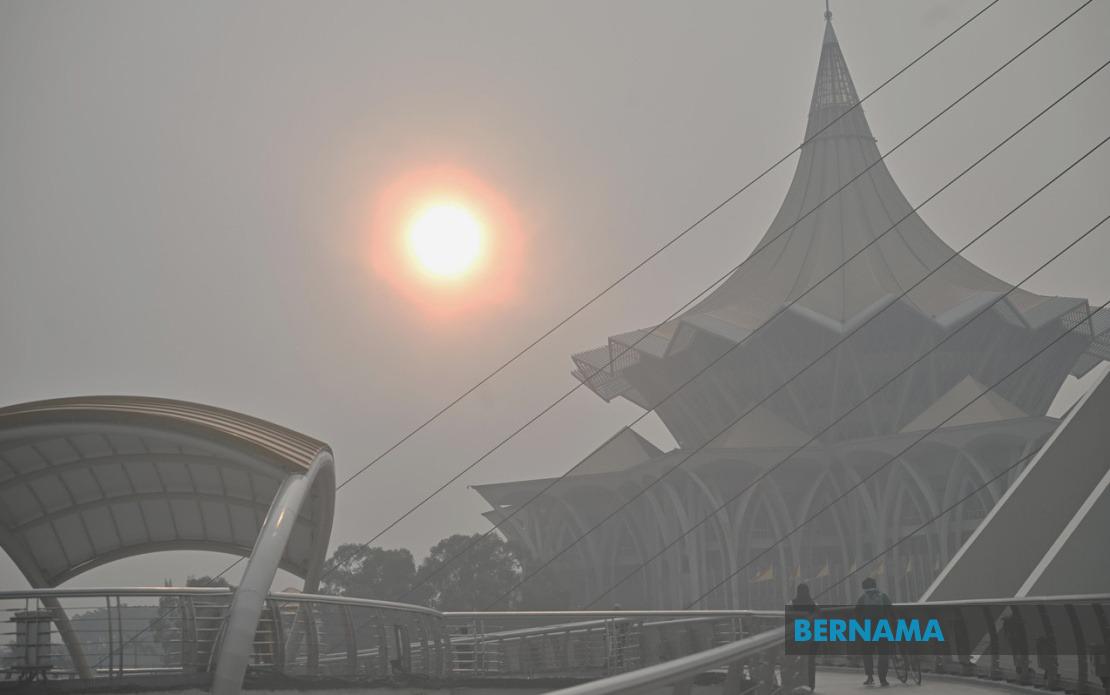
The air quality crisis materialized with particular intensity across nine monitored zones by early afternoon on August 20. Kuching registered 191 on the Air Pollutant Index, while Serian peaked at 195—readings classified as unhealthy and prompting respiratory health warnings for vulnerable populations including children and the elderly. Complementary unhealthy API measurements in Samarahan (175), Sri Aman (178), Lundu (180), Tebedu (169), Lubok Antu (191), Sarikei (154) and Sibu (108) painted a portrait of region-wide atmospheric degradation. Schools represent concentrated populations of precisely those age groups most susceptible to particulate matter and ozone-related respiratory injury, rendering the closure decision epidemiologically sound even as it imposed logistical strain on working parents and educational schedules.
The physiological stress imposed by prolonged drought on peatland ecosystems warrants particular attention for Malaysian and broader Southeast Asian audiences. Sarawak's extensive peat deposits—remnants of ancient tropical wetlands—constitute globally significant carbon reservoirs. When water tables plummet during dry spells, exposed peat becomes highly combustible, releasing colossal quantities of greenhouse gases and choking smoke across international boundaries. Unlike mineral soils that resist ignition, peat fires burn subsurface, proving extraordinarily difficult to extinguish and capable of smouldering for months if unchecked. The committee's explicit mention of peatland fire risk signals awareness that this particular climatic episode poses threats extending far beyond Sarawak's immediate geography.
Water supply pressures emerging during such episodes strike at another critical vulnerability. Sarawak depends substantially on reservoir and river systems fed by rainfall patterns increasingly characterized by extremes—intense concentrated downpours punctuating longer dry intervals. Extended drought periods lower water table elevations and reduce flow rates precisely when urban and agricultural demand peaks due to irrigation needs. Schools typically depend on municipal water systems; their closure during extreme heat paradoxically reduces immediate demand whilst symbolizing the systemic strain rippling through infrastructure networks. For Malaysian policymakers observing developments in Sarawak, these episodes provide cautionary signals about climate resilience requirements for peninsular systems facing identical meteorological pressures.
The scale of student displacement—197,323 young people—reflects demographic concentration within Sarawak's urban and semi-urban centres where these 10 District Education Offices operate. This concentration means weather-driven disruptions generate outsized economic and social impacts relative to affected landmass. Working parents requiring childcare alternatives, small businesses catering to school-dependent foot traffic, and transportation services all experience cascading complications. Educational continuity suffers alongside learning outcomes, particularly for examination candidates whose preparation schedules face disruption during critical study periods.
Sarawak's approach—deploying coordinated closure decisions across multiple administrative jurisdictions rather than ad-hoc school-by-school responses—demonstrates institutional maturation in climate adaptation. However, the underlying challenge remains structural. Temporary closures manage acute symptoms whilst authorities confront a chronic condition: the increasing frequency and intensity of weather extremes arising from anthropogenic climate change. States throughout Southeast Asia, including Malaysia, Brunei, and Indonesia, inhabit tropical and subtropical zones where atmospheric warming concentrates, amplifying both absolute temperature increases and drought severity relative to global averages.
The committee's commitment to enhanced monitoring and mitigation measures signals recognition that episodic responses require underpinning by sustained preparedness infrastructure. Fire-fighting readiness, air quality prediction capability, water rationing protocols, and inter-agency coordination mechanisms all demand investment during benign weather periods to function effectively when crises emerge. For regional observers, Sarawak's August 2024 response offers a template—though also a caution that even well-coordinated responses to individual extreme events cannot substitute for systemic climate adaptation strategies addressing underlying vulnerability patterns.
Looking forward, the sustainability of school operations, air quality, and water availability across Sarawak hinges increasingly on longer-term climate action and local adaptation investment. Reforestation programmes that rebuild water-retention capacity, peatland restoration that reduces combustibility and carbon emissions, urban water recycling infrastructure that reduces supply vulnerability, and building design standards that enhance heat resilience all merit prioritization. For Malaysian education and environmental officials, the Sarawak episode crystallizes mounting urgency: climate-driven disruptions are transitioning from occasional aberrations to recurring operational realities requiring fundamental reimagining of institutional design and resource allocation.

