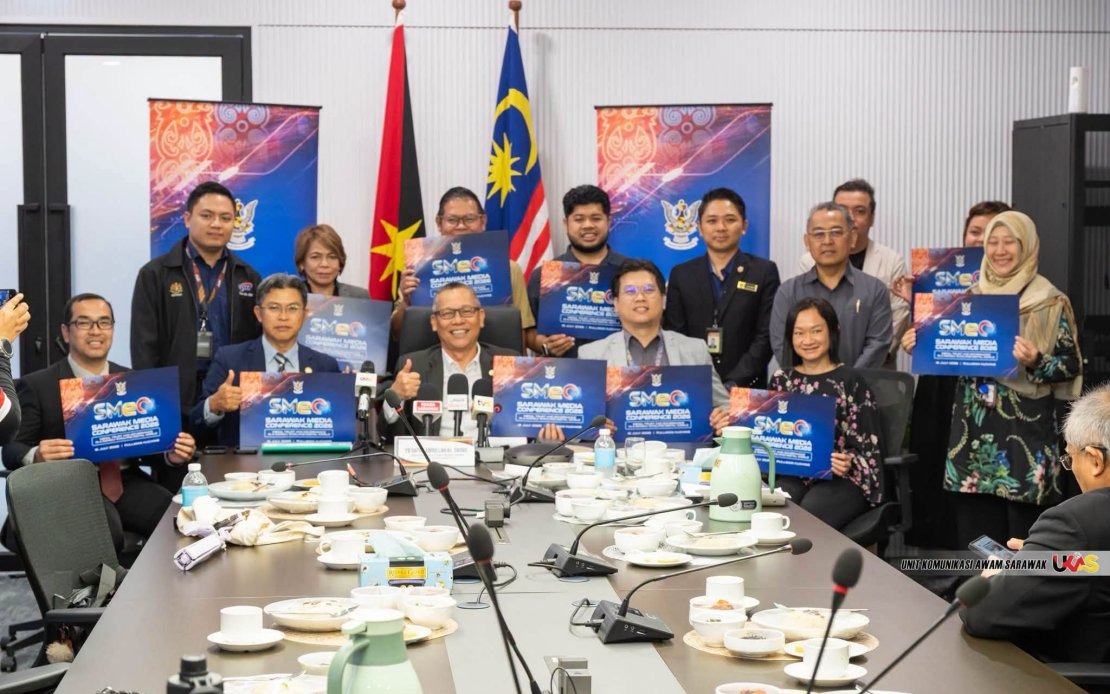
Sarawak's upcoming media conference will serve as a major gathering point for examining the state and future of journalism and communications across Malaysia and Southeast Asia. Scheduled for Thursday, the Sarawak Media Conference (SMeC) 2026 will draw roughly 800 participants representing a broad cross-section of the media landscape, from practising journalists and communications specialists to university academics, corporate leaders, and students eager to understand emerging industry trends. Organised by the Sarawak Government through its Public Communications Unit (UKAS), the event signals growing recognition that regional media sectors require dedicated forums to address shared challenges and opportunities.
The conference theme—"Media, Trust and Governance in a Rapidly Evolving Digital World"—encapsulates concerns occupying newsrooms, regulatory bodies, and civil society organisations throughout the region. According to Datuk Abdullah Saidol, Deputy Minister in the Sarawak Premier's Department, discussions will centre on rebuilding public confidence in journalistic institutions while simultaneously strengthening governance frameworks. These twin objectives reflect a broader anxiety across Asia about media credibility in an era when digital platforms have democratised content creation while simultaneously enabling the spread of misinformation at unprecedented scale. The conference thus positions itself at the intersection of professional journalism standards and public policy, addressing how traditional media institutions can adapt to digital realities without sacrificing editorial integrity or accountability.
Artificial intelligence represents a particular focus area, with organisers recognising that AI technologies are reshaping newsrooms, audience engagement, and content distribution mechanisms. Rather than adopting a purely cautionary stance, SMeC 2026 aims to explore both the opportunities and genuine challenges these tools present. For Malaysian newsrooms facing resource constraints and competition from digital-native outlets, understanding AI's potential for automating routine tasks, personalising reader experiences, and identifying emerging stories may prove strategically important. Simultaneously, conversations around algorithmic bias, labour displacement, and the automation of editorial decision-making require frank examination. By bringing together technologists, journalists, and policymakers in a single venue, the conference can facilitate the kind of cross-disciplinary dialogue often absent in isolated professional discussions.
The event will feature several prominent voices in Malaysian and regional media. Lunnie Gan, founder of SOL Digital, brings experience building digital-first media ventures, while Premesh Chandran, deputy chairman of the Malaysian Media Council, represents the sector's institutional perspective on standards and ethics. These speakers can provide concrete examples of how different organisational models navigate the tensions between commercial viability and editorial independence. For students and early-career professionals attending the conference, exposure to such practitioners offers invaluable insight into navigating contemporary media careers—a particularly crucial consideration as journalism faces ongoing economic pressure from advertising migration to technology platforms.
The conference carries additional significance as it coincides with Sarawak-level celebrations of National Journalists' Day (HAWANA) 2026. This pairing reinforces that media professionals warrant explicit recognition and celebration from government and civil society, acknowledging journalism's democratic function even as relationships between press and state remain complex throughout Malaysia. The inclusion of Deputy Prime Minister Datuk Seri Fadillah Yusof at the accompanying dinner signals high-level political engagement with media-related discussions, suggesting that federal government officials view these conversations as sufficiently important to warrant their direct participation.
Recognising excellence within the profession, SMeC 2026 will present the Sarawak Premier's Special Appreciation Awards across five categories: Editor/Journalist/Stringer, Photographer, Videographer, Radio News Presenter/Broadcaster, and Social Media Influencer. This categorical expansion acknowledges the fragmentation of contemporary media work, where traditional newspaper journalists coexist with visual journalists, broadcast professionals, and content creators operating on social platforms. Rather than hierarchically privileging certain forms of journalism over others, the awards structure reflects evolving media consumption patterns and the reality that information now flows through diverse channels. For Malaysian journalists and creators working across these domains, recognition from provincial government represents both professional validation and implicit acknowledgment that all these roles contribute meaningfully to public discourse.
For Sarawak specifically, the conference represents an opportunity to position the state as a regional media hub engaged in substantive conversations about industry futures. Kuching's hosting of such a significant gathering attracts media professionals from throughout Malaysia and potentially beyond, raising the state's profile within national communications circles. The event also creates a platform for Sarawak-based media practitioners to showcase their work and perspectives to peers operating in other Malaysian states, potentially fostering collaborative relationships and knowledge-sharing.
The underlying substance of SMeC 2026—examining trust, governance, and digital transformation—resonates acutely across Malaysia's media landscape. Trust in news media has declined significantly in recent years, with Malaysians increasingly reliant on social media platforms and messaging applications for information despite documented risks regarding misinformation. Professional journalism's capacity to rebuild credibility depends partly on demonstrating institutional commitment to ethical standards, transparency, and accountability. Conversations about governance frameworks—whether industry self-regulation, statutory oversight, or hybrid approaches—directly affect the operational freedom and professional autonomy journalists require to function effectively.
The conference also arrives at a moment when digital transformation pressures have intensified. Many Malaysian newsrooms have downsized significantly over the past decade, concentrating economic viability among a small number of large media corporations while marginalising independent voices. Understanding how emerging technologies might enable sustainable journalism models—perhaps through subscription-based approaches, audience memberships, or data-driven storytelling—occupies media strategists throughout the region. SMeC 2026's exploration of these questions can contribute substantively to ongoing industry conversations about viability and adaptation.
Ultimately, the gathering underscores that media challenges transcend individual newsrooms or states. The themes dominating SMeC 2026—trust, governance, and digital adaptation—represent shared concerns across Malaysia and Southeast Asia. By convening 800 practitioners, academics, and leaders for focused discussion, Sarawak creates space for collective learning and problem-solving. Whether the conference generates actionable recommendations, strengthened professional networks, or merely clarified thinking about complex challenges, it signals commitment to journalism's continued relevance and centrality to functioning democracies.

