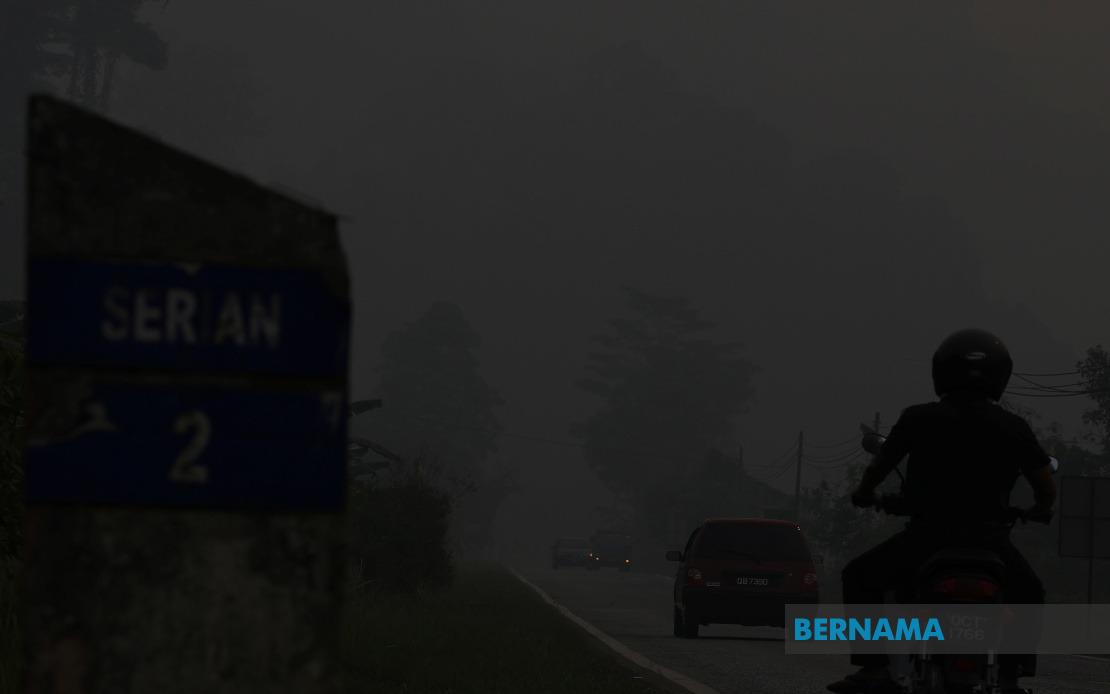
Sarawak is grappling with deteriorating air quality that has prompted the state's disaster management authority to issue fresh guidance for event organisers navigating decisions about whether to proceed with scheduled activities. The Sarawak Disaster Management Committee (SDMC) has advised planners of official, private, and community events to examine current haze conditions and Air Pollutant Index readings as the primary basis for determining whether programmes should continue, be deferred, or be cancelled altogether.
Datuk Amar Douglas Uggah Embas, who chairs the SDMC and serves as Sarawak Deputy Premier, emphasised that organisers retain discretion over their activities in the absence of formal directives from authorities, but stressed the need for decisions grounded in careful assessment of public health implications. His statement reflects the committee's approach of encouraging responsible self-regulation rather than imposing blanket restrictions at this stage, though the framework suggests escalating interventions as conditions worsen. The guidance recognises that event management requires flexibility to balance operational continuity with community welfare.
The committee has established an API threshold of 200 as a critical benchmark for reconsidering outdoor physical activities. When the index reaches this level, organisers are strongly urged to reconsider programmes involving strenuous exercise or outdoor participation, with particular concern for vulnerable populations including children, elderly persons, and those with pre-existing health conditions. This threshold-based approach allows organisers to calibrate responses proportionally to air quality degradation rather than requiring uniform action across all activity types.
Beyond postponement, SDMC has encouraged creative alternatives that preserve programme value while protecting participants. Event organisers are invited to explore relocating activities indoors, modifying outdoor elements to reduce physical exertion, or adjusting schedules to periods when air quality may be more favourable. Such flexibility acknowledges that cancellation represents only one option and that many organisations can adapt their plans to continue serving their communities and participants without incurring unnecessary health risks.
The regulatory framework envisioned by SDMC contemplates more severe intervention thresholds should atmospheric conditions continue deteriorating. Should the API exceed 500, existing guidelines provide authority for closure of both government and private sector offices and workplaces, though essential services would continue operating. Such dramatic interventions would require a formal Disaster Emergency declaration issued by the National Disaster Management Committee (NADMA), indicating the escalation from advisory measures to mandatory restrictions.
Sarawak experienced sharp air quality degradation during the period covered by the committee's statement, with multiple monitoring stations recording hazardous readings. The Serian District Police Headquarters station registered the highest reading at 412, indicating hazardous air quality that poses health risks to the general population. Samarahan district recorded 332, while Kuching city proper measured 304—all readings that exceed the 200 threshold where organisers should reconsider outdoor activities. These readings underscore that the SDMC's advisory was issued in response to actual, observable deterioration rather than precautionary speculation.
Across the broader state, air quality varied considerably by location, reflecting the uneven distribution of transboundary haze pollution. Unhealthy readings were recorded in Sarikei (197), Sibu (190), Bintulu (183), Mukah (176), Samalaju (175), Kapit (161), Miri (159), and at the Miri Industrial Training Institute (156). This geographic variation illustrates that organisers in different districts face materially different conditions and thus appropriately may reach different conclusions about the viability of their planned activities. The Department of Environment's Air Pollutant Index Management System (APIMS) portal provides the authoritative real-time data that should inform these decisions.
For Malaysian readers and regional observers, the Sarawak situation demonstrates the management challenges posed by transboundary haze pollution, which affects multiple Southeast Asian jurisdictions annually. The approach taken by SDMC reflects pragmatic governance that recognises both the need to protect public health and the legitimate interests of event organisers in proceeding when circumstances permit. The tiered framework—from advisory guidance at API 200 to potential workplace closures at API 500—provides clarity about escalating responses without prematurely imposing restrictions.
The SDMC's coordination with state and federal agencies underscores that haze management requires multi-level governance responses. Close monitoring by relevant authorities enables early detection of deteriorating conditions and allows for proportionate policy responses before situations reach emergency thresholds. This institutional coordination extends beyond Sarawak, as transboundary pollution affecting the state originates from sources across regional borders, necessitating broader diplomatic and policy coordination efforts that Malaysian authorities pursue through regional mechanisms.
Event organisers and institutional leaders across Sarawak should actively consult the APIMS portal rather than waiting for formal advisories, given the rapid fluctuations in air quality and the distributed nature of atmospheric conditions across the state. Proactive monitoring enables organisations to make timely decisions that protect participants while avoiding last-minute cancellations that create disruption. The SDMC's emphasis on organisers' responsibility for decision-making implicitly delegates significant authority to institutional leadership, making access to accurate, current air quality data essential for fulfilling that responsibility effectively.

