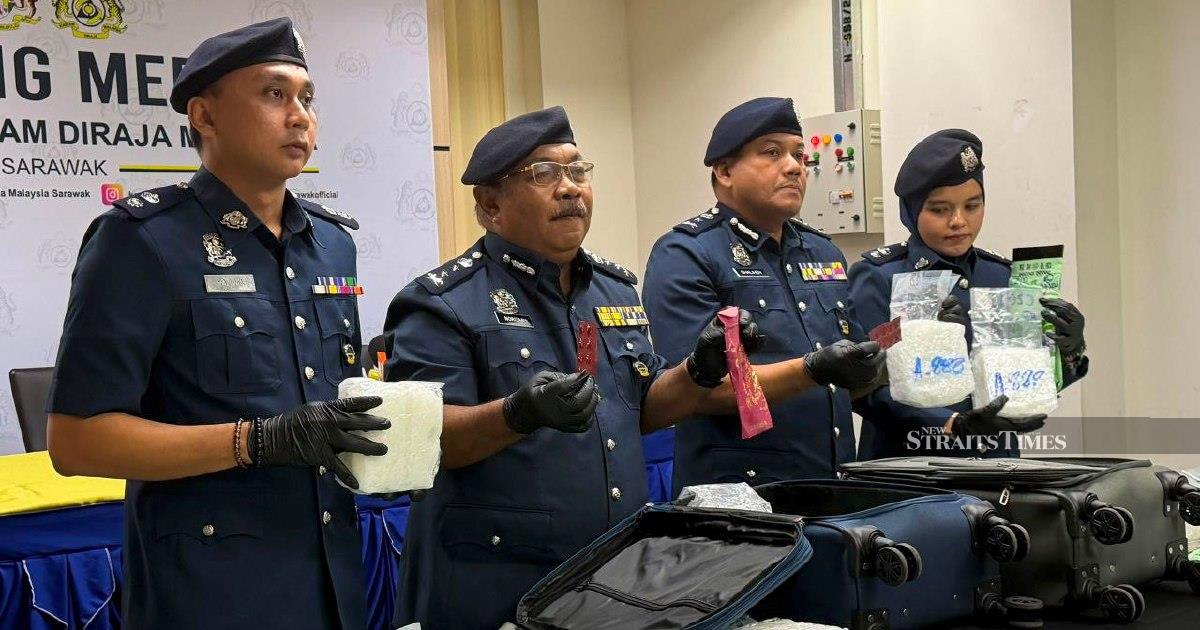
The Sarawak Customs Department has successfully disrupted a significant drug smuggling operation at Kuching International Airport, confiscating narcotics estimated to be worth RM1.32 million. Two men were apprehended during the enforcement action on July 9, marking another significant victory in the region's ongoing battle against organised drug trafficking networks.
The interception underscores the critical role that customs authorities play in protecting Malaysian borders and communities from the flow of illicit substances. With drug-related offences continuing to pose a serious threat to public health and national security, operations of this magnitude demonstrate the dedication of enforcement personnel to maintain rigorous screening protocols at international transit points.
Kuching International Airport serves as a major gateway for both domestic and international air traffic in Sarawak, processing thousands of passengers and cargo shipments daily. The scale of this particular seizure reflects the sophistication of smuggling networks that attempt to exploit busy transport hubs, where detection can be challenging amid high passenger volumes and time pressures associated with flight operations.
The arrest of two individuals provides authorities with crucial investigative leads to pursue further up the supply chain. Law enforcement agencies typically work collaboratively to identify connections between street-level operatives and higher-level distributors, with the aim of dismantling organised crime syndicates responsible for flooding Southeast Asian markets with controlled substances.
Drug trafficking through Malaysian airports has long been a concern for immigration and customs authorities. The accessibility of international air routes, combined with the region's geographic position between major drug-producing areas and consumer markets, has made Malaysian transit points attractive targets for smuggling operations. This latest seizure reflects the persistent vigilance required to counter these threats.
The confiscated substances represent a significant quantity that would have caused substantial harm if successfully distributed into local communities. Beyond the immediate public health implications, the disruption of this particular shipment removes a potentially lucrative source of funding for criminal organisations operating across Southeast Asia, where drug proceeds frequently finance other illegal activities.
For Malaysia, maintaining effective border controls and demonstrating commitment to international drug enforcement standards remains important for regional cooperation and trade relationships. Countries worldwide share intelligence and coordinate enforcement efforts through multilateral organisations, and successful operations like this contribute to Malaysia's standing as a responsible partner in global efforts against narcotics trafficking.
The Sarawak Customs Department's proficiency in identifying and apprehending trafficking attempts reflects ongoing training and investment in detection technologies and personnel expertise. Modern customs operations rely on intelligence analysis, risk assessment techniques, and canine units to identify suspicious patterns among the legitimate flow of goods and travellers passing through international airports.
As investigation into the July 9 incident continues, authorities will examine the detention of the two arrested men to determine their roles within the broader trafficking network. Such investigations often reveal distribution networks, source regions, and intended destinations, providing valuable intelligence for future enforcement operations.
The case also highlights the importance of international cooperation in addressing transnational drug trafficking. Sarawak, as a border state with direct connections to Brunei and Indonesia, occupies a strategic position in regional drug interdiction efforts. Enhanced sharing of intelligence and coordinated enforcement between neighbouring jurisdictions can significantly improve the effectiveness of anti-trafficking operations.
For Malaysian citizens and visitors, successful seizures at entry points offer reassurance that authorities remain committed to preventing the proliferation of dangerous substances. However, the continuous emergence of new smuggling methods and routes means that customs agencies must remain adaptive and well-resourced to maintain effective border security.
The RM1.32 million valuation underscores the substantial financial incentives driving trafficking operations, explaining why criminal syndicates continue attempting to move contraband through major airports despite heightened security measures. This economic motivation makes sustained enforcement pressure essential for disrupting market dynamics.
As the investigation progresses, the case serves as a reminder of both the threats facing Malaysia's communities and the dedication of customs and law enforcement personnel working to protect public safety at our borders.

