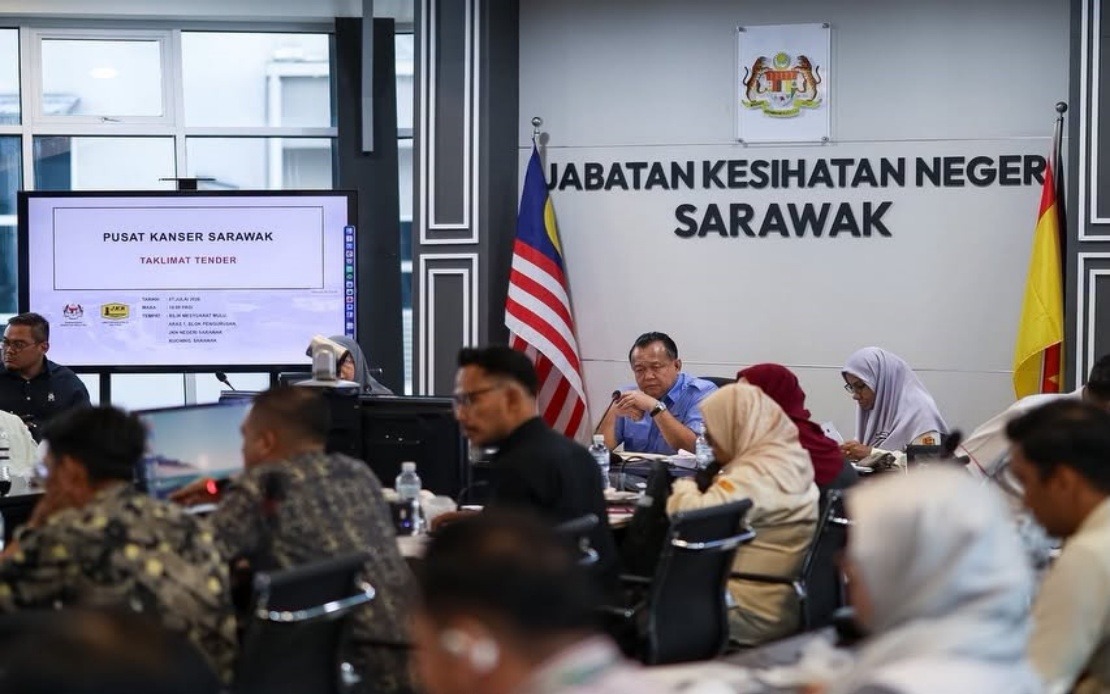
Works Minister Datuk Seri Alexander Nanta Linggi has announced that the anticipated Sarawak Cancer Centre project in Kota Samarahan is on track to commence construction during the first month of 2027. This timeline will become official once the designated contractor receives formal written acceptance from the state authorities, signalling the beginning of what is expected to be a transformative addition to Sarawak's healthcare landscape.
The project currently stands at a critical juncture in its procurement phase. Ten construction firms have successfully navigated the pre-qualification evaluation and participated in a comprehensive briefing session. During this gathering, prospective contractors gained detailed insight into the full scope of work required, encompassing both design and construction responsibilities. The industry now enters a three-month window during which these qualified bidders will develop and submit their formal proposals for consideration.
Once the tender evaluation process concludes—a stage that authorities hope to complete by early January 2027—the winning contractor will receive their Letter of Acceptance. This milestone will immediately trigger the commencement of design and construction activities. The successful bidder will then operate under a 60-month contract period to deliver both the architectural and constructional components. Following substantial completion, a two-year Defects Liability Period will ensure any deficiencies are rectified before full handover to health authorities.
The facility's design requirements are stringent, demanding full alignment with Health Ministry specifications whilst maintaining contemporary architectural standards. Sarawak officials have been deliberate in ensuring that the cancer centre will not merely function as a clinical facility but will embody modern healthcare infrastructure principles. This commitment to design excellence reflects the state's aspiration for a regional-class medical institution that can meet international treatment benchmarks.
The proposed cancer centre will occupy a 10.9-hectare plot adjacent to the existing Sarawak Heart Centre, a strategic co-location that will enable operational synergies between the two specialised facilities. The institution will be substantially scaled, housing 310 beds across both inpatient and outpatient departments. This capacity positions the centre as a major treatment hub capable of addressing the escalating oncology caseload across Sarawak and potentially serving patients from neighbouring regions within East Malaysia.
The financial commitment underlying this project underscores its importance to Sarawak's development agenda. Current cost projections indicate total expenditure will surpass RM1 billion, representing one of the state's largest healthcare infrastructure investments in recent years. The Sarawak government has already ringfenced RM1 billion for this initiative, establishing the financial foundation necessary to proceed. A reimbursement mechanism has been agreed upon, ensuring clarity regarding cost recovery timelines and procedures as the project advances.
From a regional healthcare perspective, this development carries implications extending beyond Sarawak's borders. East Malaysia has historically contended with capacity constraints in specialised oncology services, with patients often requiring travel to Peninsular Malaysia for complex cancer treatments. The Sarawak Cancer Centre will substantially reduce this dependency, keeping medical spending within the state whilst improving treatment accessibility for rural and remote populations who face considerable logistical barriers to seeking care elsewhere. The facility's strategic positioning adjacent to the Sarawak Heart Centre creates opportunities for integrated care pathways, particularly given the significant overlap between cardiovascular and oncological patient populations.
The timeline announced by Minister Nanta appears realistic based on the current procurement stage. The three-month tender period for contractor submissions aligns with standard Malaysian procurement practices for major infrastructure projects. The compressed evaluation timeline—aiming for decision by early January 2027—reflects administrative efficiency, though such acceleration requires prior completion of evaluation criteria development and committee establishment. The subsequent 60-month construction period extends to 2032, providing adequate time for a facility of this complexity and scale to be delivered to required quality standards.
Sarawak's commitment to this cancer centre reflects broader recognition across Malaysian states of inadequate oncology infrastructure relative to disease burden. The absence of comprehensive public cancer treatment facilities forces many Sarawakians into protracted decision-making regarding whether to pursue treatment that requires interstate travel or defer care entirely. By establishing world-class local capacity, the state government addresses not merely medical need but also the social and economic costs imposed on families navigating cancer diagnosis whilst managing geographic isolation.
The procurement process currently underway will determine not only the financial viability of the project but also its ultimate quality and operational efficiency. The involvement of ten pre-qualified contractors suggests competitive tension that should encourage innovation in design and cost management. However, the compressed timelines from contract award to commencement demand that winning bidders have capable design and construction teams immediately available, potentially favouring larger firms with established capacity over smaller operators.
Looking forward, successful completion of this facility by 2032 will reshape oncology care delivery across East Malaysia. The centre's impact will extend beyond its immediate patient population, potentially attracting medical specialists and research capacity that elevates Sarawak's overall healthcare profile. Educational partnerships with medical institutions may develop, transforming the cancer centre into a training platform for Malaysian oncologists and healthcare professionals. These secondary effects could position Sarawak as a healthcare destination within the region, creating economic benefits alongside health improvements.

