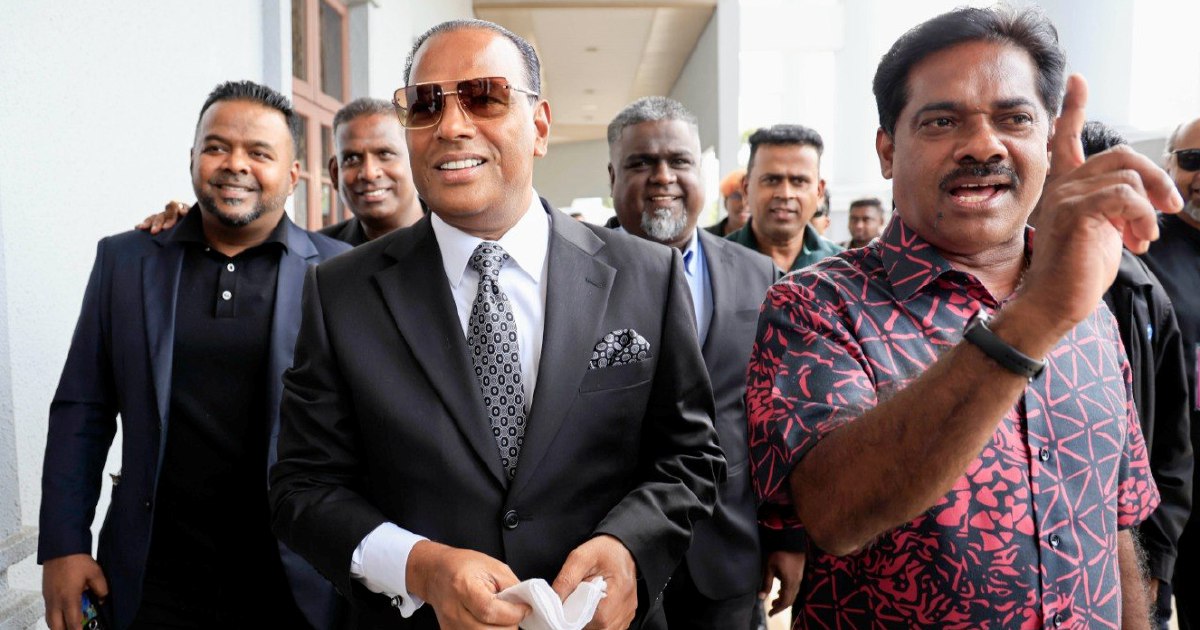
Former Human Resources minister Datuk Seri M. Saravanan has vehemently denied corruption charges, characterising the three allegations against him as groundless and unfounded. The charges, which relate to the acceptance of RM1.097 million in bribes, represent a significant moment in Malaysia's ongoing anti-corruption efforts and continue the trend of high-profile accountability proceedings involving government figures.
Saravanan's defence strategy focuses on challenging the veracity of the accusations rather than engaging substantively with the specific allegations. By labelling the charges a "wild accusation", he is signalling to the public and legal authorities that the claims lack merit and credibility. This rhetorical approach is common in corruption cases involving senior political figures, where defendants often emphasise the extraordinariness of the allegations to undermine their plausibility in the eyes of observers.
The case carries particular weight given Saravanan's previous position as Human Resources minister, a portfolio overseeing labour policy, industrial relations, and worker protections. The circumstances surrounding these charges may reflect broader concerns about governance and fiscal responsibility in how development funds and ministerial discretion have been exercised within government departments. The scale of the alleged bribery—over RM1 million—indicates significant sums rather than minor infractions.
Malaysia's Malaysian Anti-Corruption Commission (MACC) has intensified its focus on high-level corruption investigations in recent years, contributing to heightened scrutiny of ministerial conduct. This case exemplifies the country's determination to pursue accountability mechanisms regardless of a defendant's seniority or political standing. The public nature of such proceedings also underscores the government's messaging that no one is above the law.
For Malaysian readers, the case illustrates the continuing tensions between allegations of government malfeasance and the legal processes designed to adjudicate them. Public confidence in these institutions depends partly on their perceived impartiality and the due process afforded to all parties. Saravanan's assertion of innocence will ultimately be tested through the courts, where evidence and legal arguments will determine the outcome rather than public statements.
The broader context includes Malaysia's efforts to restore international credibility following corruption scandals involving the sovereign wealth fund 1Malaysia Development Bhd (1MDB) and other high-profile cases. Demonstrating robust enforcement against corruption at ministerial levels signals to domestic and international audiences that institutional safeguards are functioning. However, the presumption of innocence remains fundamental to any fair legal system, meaning Saravanan's denials must be weighed against presented evidence.
From a regional perspective, Malaysia's approach to prosecuting corruption at the highest levels influences perceptions of governance standards across Southeast Asia. Countries in the region often face similar challenges in balancing anti-corruption imperatives with concerns about political stability and institutional independence. How Malaysia handles such cases may set precedents for neighbouring nations grappling with similar accountability issues.
The timing and handling of corruption charges against high-profile figures also carry political implications. Public statements and media coverage shape how ordinary Malaysians perceive both the accusations and the accused, potentially influencing broader trust in government institutions. Saravanan's denial, framed as a rejection of wild accusations, invites scrutiny of whether the allegations represent substantive wrongdoing or politically motivated prosecution—a distinction that continues to occupy significant space in Malaysian political discourse.
Malaysian civil society organisations, transparency advocates, and opposition politicians are likely monitoring the case closely. Some will interpret vigorous prosecution as evidence of functioning checks on executive power, while others may question whether investigations target particular political factions disproportionately. These competing narratives underline how corruption allegations become entangled with broader questions about institutional impartiality and political balance.
The case also reflects Malaysia's statutory obligations under the United Nations Convention Against Corruption and other international frameworks committing the country to combating public sector graft. International observers, including governments and development organisations, often assess Malaysia's commitment to anti-corruption partly through the outcomes of high-profile prosecutions. Saravanan's case thus carries implications extending beyond domestic Malaysian politics.
As the legal process unfolds, the burden of proof rests with prosecutors to establish the charges beyond reasonable doubt. Saravanan's characterisation of allegations as wild accusations may resonate with some observers but must ultimately be adjudicated through evidence, witness testimony, and legal argument in court proceedings. The outcome will provide clarity on whether systematic evidence supports the bribery allegations or whether they prove unfounded.
This case underscores an ongoing challenge facing Malaysia: maintaining the credibility and actual independence of anti-corruption institutions while protecting the rights of the accused. Public confidence depends on demonstrating that investigations are thorough, impartial, and based on solid evidence rather than political calculation. Whether Saravanan's denials ultimately prove vindicated or the charges substantiated will significantly influence perceptions of Malaysia's anti-corruption trajectory.

