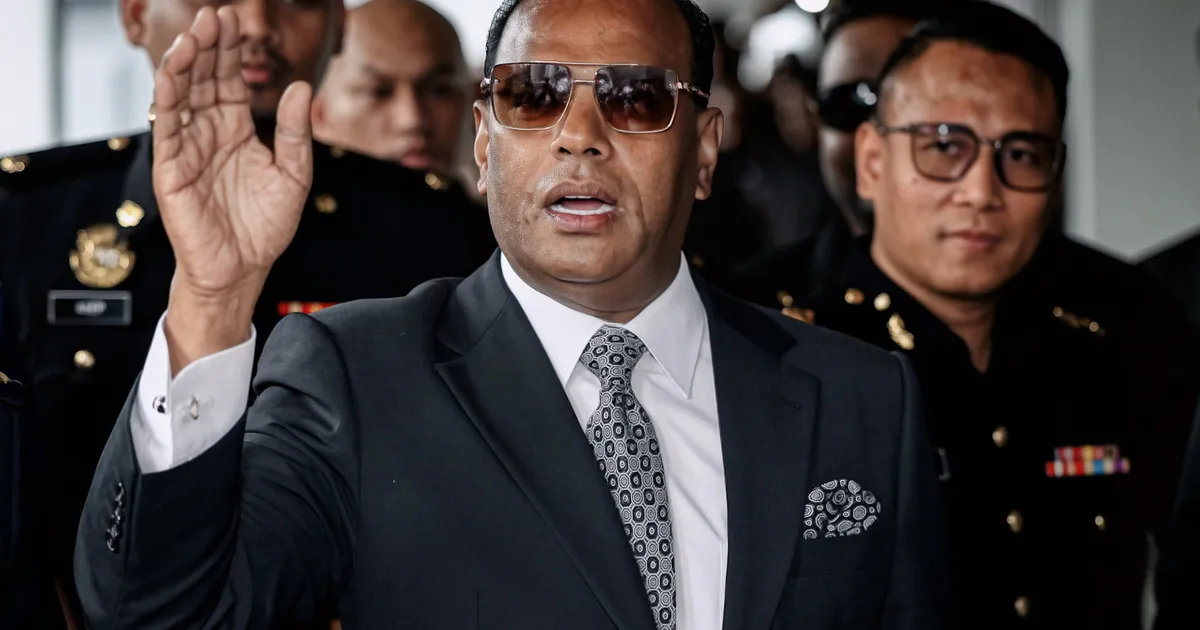
Former Human Resources Minister Saravanan has moved to distance himself from suggestions that his written communication to Prime Minister Anwar Ibrahim represented an attempt to conceal wrongdoing or shield himself from accountability. The ex-minister contended that his correspondence sought nothing more than a comprehensive reassessment of the circumstances surrounding the corruption allegations against him, framing the request as a standard appeal for procedural fairness rather than as interference in investigative processes.
Saravanan's clarification comes amid mounting scrutiny over the substance and intent behind his approach to the Prime Minister's office. Political observers and critics have questioned why a sitting or former government official would feel compelled to contact the nation's highest elected office regarding ongoing legal proceedings, raising questions about whether such interventions represent proper channels or constitute inappropriate pressure on the judicial and investigative systems. The former minister's public statement appears designed to preempt such interpretations by reframing his actions as legitimate and transparent.
The backdrop to this dispute involves charges of graft levelled against Saravanan, allegations that he has consistently rejected as baseless and politically motivated. His position stands in stark contrast to investigative findings and the formal accusations that have been brought against him through proper legal channels. This fundamental disagreement over the credibility of the charges themselves forms the cornerstone of his defence, suggesting that if the underlying allegations were thoroughly examined, they would crumble under scrutiny.
For Malaysian readers, the incident highlights the ongoing tension between political figures facing corruption charges and the institutional mechanisms designed to investigate and prosecute such cases. The relationship between government and enforcement agencies remains contentious, particularly when senior politicians find themselves on the receiving end of graft investigations. These situations test whether the rule of law operates independently or becomes subject to political pressure and interference, concerns that resonate throughout Southeast Asia's governance landscape.
Saravanan's insistence that his letter sought a comprehensive review rather than suppression of findings raises important questions about how such requests should be understood and handled. In democracies with functional separation of powers, communications from politicians to the Prime Minister concerning their own legal matters occupy an ambiguous space—they may be legitimate advocacy or inappropriate pressure depending on context and intent. The fact that Saravanan felt the need to publicly defend the nature of his communication suggests that initial interpretations had cast his actions in an unfavourable light.
The controversy also touches upon broader governance issues relevant to Malaysian politics. When former government ministers facing serious charges seek direct communication with the Prime Minister, it raises questions about whether such access reflects proper governmental hierarchy or inappropriate protection of elite figures. The public's confidence in anti-corruption efforts depends partly on the perception that all individuals, regardless of political standing, face equal scrutiny and investigation.
Political analysts have noted that Saravanan's defence strategy focuses on the merits of his case rather than on technical or procedural objections. By maintaining that the graft charges themselves lack credibility, he positions his letter as a reasonable request for justice rather than as an attempt to obstruct it. This approach implicitly acknowledges that if his allegations were truly baseless, a thorough review would vindicate him, whereas any genuine criminal conduct would emerge from such examination.
The Malaysian context makes this dispute particularly significant given the nation's history with high-profile corruption cases involving political figures. Public memory of previous scandals, investigations, and political manoeuvres around such proceedings remains fresh, creating an environment where any suggestion of political interference in graft cases attracts considerable attention and skepticism. Trust in enforcement institutions remains a critical concern for governance and public confidence in democratic systems.
Saravanan's clarification also reflects the broader challenge facing former government officials who transition from positions of power and influence. The loss of ministerial authority may incentivize alternative approaches to addressing legal difficulties, including cultivation of relationships at the highest political levels. Whether such conduct constitutes legitimate advocacy or inappropriate interference often depends on how sympathetically observers view the underlying allegations and the individual in question.
The letter itself and its contents appear to remain partially opaque to public scrutiny, which itself fuels speculation about its true purpose. Greater transparency regarding official communications between government figures and the Prime Minister's office, particularly those involving legal or investigative matters, might help clarify such situations and reinforce public confidence that the system operates without favour or fear.
Moving forward, this episode underscores the importance of clear institutional guidelines regarding how government officials should handle contacts from individuals facing corruption charges. Such protocols, if properly publicized and consistently applied, would reduce the perception of special treatment while protecting the integrity of investigative and prosecutorial processes. For Malaysia's evolving governance standards, establishing such norms represents an important step toward reinforcing institutional independence from political influence.

