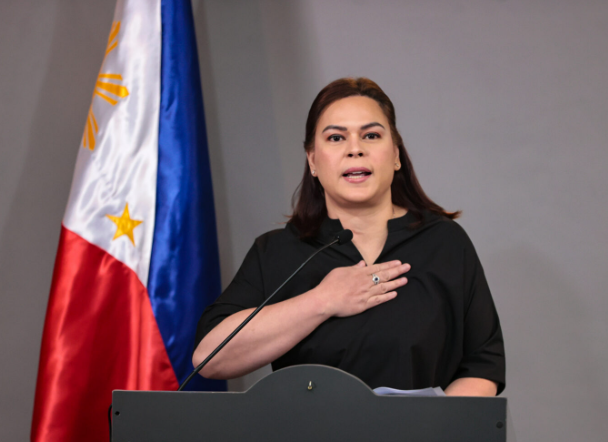
Vice President Sara Duterte has seized on the gathering of thousands along Epifanio de los Santos Avenue on Tuesday to articulate what she characterizes as deepening public frustration with the Marcos administration. Speaking on June 30, the vice president positioned the demonstration as evidence of what she terms a "growing sentiment" against the incumbent president, marking an escalation in her public dissent since 2024. Her remarks come amid mounting political tensions in Manila, as the Senate Impeachment Court prepares to begin her trial on July 6 on charges including alleged threats against the President and his wife, unexplained wealth accumulation, and misuse of confidential funds.
The Edsa rally, ostensibly organized by the Iglesia ni Cristo to protest what the religious organization characterized as "selective justice" and "distortion of law" in response to a plunder complaint against Senator Rodante Marcoleta, has become a focal point for broader political messaging. Rather than treating the demonstration as a singular event concerning a specific legal matter, Duterte has reframed it as a public indictment of the administration's overall competence. This strategic interpretation allows her to leverage the assembly's visibility to amplify her own political critique while distancing her commentary from the immediate INC grievances.
Duterte's central accusation targets what she frames as systemic governance failures, particularly regarding the nation's economic challenges. She argues that the Marcos administration has been "defined by poor governance" and has neglected to meaningfully address the most pressing concerns facing ordinary Filipinos. The critique resonates in a country grappling with persistent inflation, where food and energy costs have placed severe strain on household budgets, and where unemployment and underemployment remain stubborn challenges despite official optimism about economic growth.
The vice president has explicitly connected the administration's economic performance to what she describes as an atmosphere of political repression. She contends that rather than confronting economic hardship with substantive policy solutions, the government has opted to suppress critical voices by labeling dissent as disloyalty or corruption. This framing portrays the administration as choosing intimidation over transparent accountability, a characterization designed to resonate with democratic values and international observers concerned about press freedom and civil liberties in the Philippines.
Central to Duterte's argument is the assertion that ordinary Filipinos are experiencing real economic pain while facing government resistance when they attempt to voice concerns. She highlights rising prices, job insecurity, and the escalating cost of daily necessities as evidence that the administration has lost touch with popular hardship. This populist appeal attempts to position her as a champion of ordinary citizens against an out-of-touch elite, a narrative particularly potent in Philippine politics where inequality remains pronounced and economic frustration runs deep.
Duterte has framed the administration's response to criticism, particularly regarding allegations of corruption within the presidential office, as emblematic of broader democratic dysfunction. She argues that Marcos interprets questioning as personal attack rather than legitimate accountability, and that this defensive posture undermines democratic norms. Her emphasis on free expression and political dissent attempts to anchor her critique beyond partisan politics, presenting herself as defending constitutional principles rather than simply opposing the incumbent.
The vice president's rhetorical strategy positions the conflict as transcending conventional political rivalry. By insisting that the issue is "no longer a matter of politics" but rather concerns "the honor of the State and the future of a people," Duterte attempts to elevate her critique above mere partisan advantage. She suggests that the fundamental health of Philippine democratic institutions hangs in balance, and that suppressing dissent through government action represents an institutional threat rather than a policy disagreement.
Duterte's timing warrants careful consideration given her own legal jeopardy. With the Senate Impeachment Court trial commencing on July 6, her aggressive public statements serve multiple functions simultaneously. They maintain her political presence and mobilize her political base at a moment when her institutional power faces genuine threat. Her criticism of the administration's alleged suppression of dissent can be understood partly as a preemptive argument about her own trial, suggesting that any conviction would exemplify the very political persecution she denounces.
The broader context includes significant friction within the administration's broader political coalition. Duterte's break with Marcos, initiated during her 2024 campaign to remain as vice president and publicly deepened through recent months, reflects real divisions within the ruling establishment. Her willingness to endorse and amplify public demonstrations against the administration signals that these divisions have become open and irreconcilable, with profound implications for executive cohesion and policy implementation.
For Malaysian observers, the Philippine situation illustrates the fragility of political coalitions when leading personalities diverge fundamentally over governance direction and style. The case demonstrates how rapid deterioration between senior officials can paralyze governmental function and create space for broader institutional challenges. Additionally, the emphasis on economic hardship as a political liability suggests that Southeast Asian governments face common pressures around inflation and cost-of-living concerns that transcend national borders and generate comparable political consequences.
The intersection of Duterte's personal legal troubles and her political attacks on Marcos creates a complex dynamic unlikely to resolve through conventional political negotiation. As her trial proceeds and her criticisms intensify, the Philippines faces a period of heightened institutional stress with uncertain consequences for democratic stability and effective governance during a time when economic challenges demand coherent policy responses.

