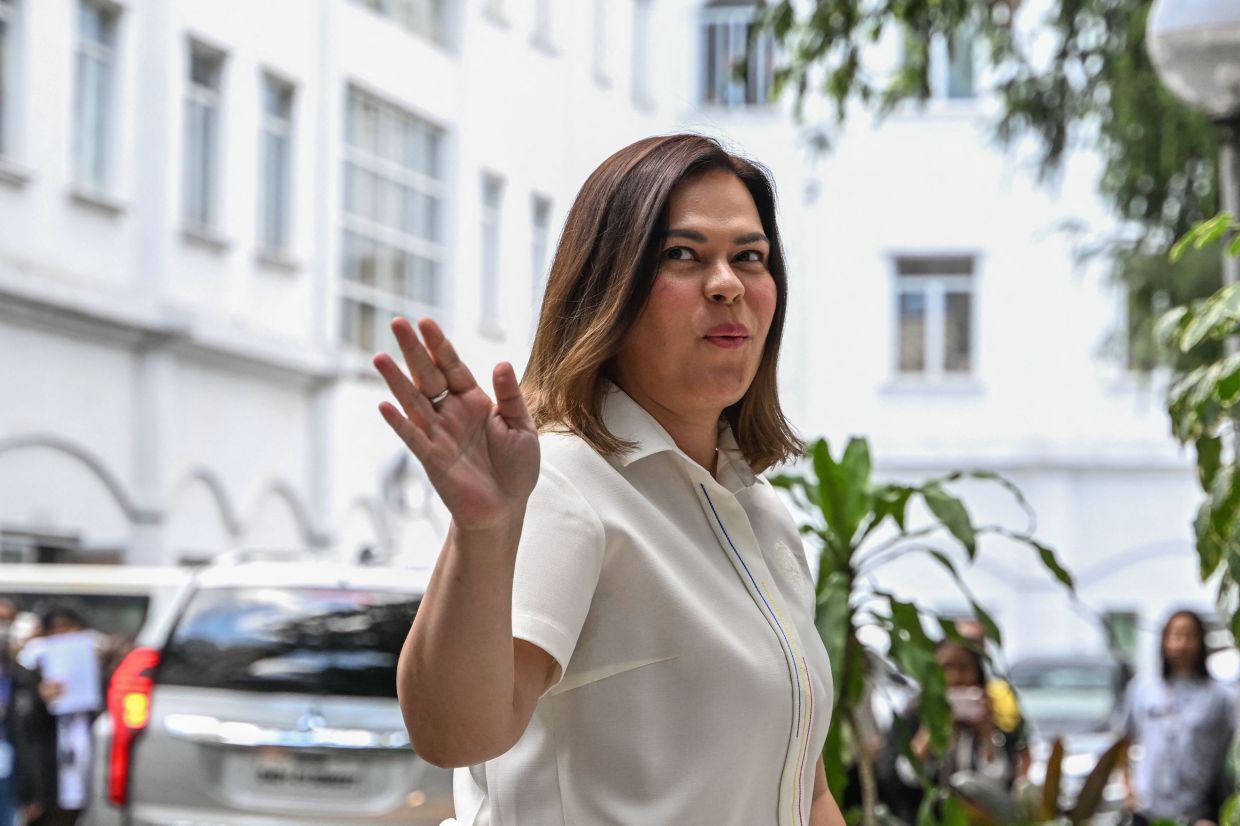
Philippine authorities have confirmed that Vice President Sara Duterte is currently outside the country on an officially sanctioned trip that extends through the end of July, even as political proceedings against her continue domestically. The Office of the Executive Secretary, acting through President Ferdinand Marcos Jr, granted approval for the Vice President's journey, which was announced by Palace press officer Claire Castro during a media briefing held on Tuesday. The vice president remains absent from the Philippines during active impeachment proceedings, a circumstance that underscores the complex political dynamics now playing out in Manila's highest echelons of power.
The Vice President's itinerary encompasses a notably wide geographical spread across Europe and the Middle East. Her approved journey began on July 16 and is scheduled to conclude on July 31, taking her through Qatar, Germany, the United Kingdom, Northern Ireland, and the Netherlands. Officials characterised the trip as a personal visit rather than an official diplomatic mission, though the presidential approval mechanism and her status as the country's second-highest elected official lend it considerable significance regardless of its formal classification.
Duterte's current location is The Hague in the Netherlands, where she is in proximity to her father, former President Rodrigo Duterte, who has been held in detention since March of the previous year. The elder Duterte is awaiting trial proceedings scheduled for late November before the International Criminal Court, which has levelled charges of crimes against humanity against him. The investigation and detention stem from his role in the violent anti-drug campaign that characterised his administrations both as Davao City mayor and later as Philippine president, spanning the period from 2011 through 2019. During those years, the drug war resulted in thousands of deaths that human rights organisations have characterised as extrajudicial killings, though the government has consistently disputed such characterisations.
The former president's arrest in March 2025 occurred following a Philippine court order that gave effect to an International Criminal Court warrant. This represented a significant moment in Philippine-ICC relations and domestic legal proceedings, marking the first time a sitting or former Philippine president faced such detention on international warrant grounds. The charges specifically identify him as an indirect co-perpetrator in the killings that occurred during the state-sponsored crackdowns on drug trafficking and criminal activity. The ICC investigation itself had been the subject of considerable political controversy both internationally and within the Philippines, with supporters of the former president viewing it as politically motivated persecution and critics viewing it as accountability for alleged state violence.
The timing of Vice President Duterte's departure and extended absence appears particularly sensitive given the ongoing impeachment proceedings against her. Her defence team, represented by lawyer Michael Poa, made public her whereabouts during a pre-trial press conference, with Poa confirming that the Vice President is indeed in The Hague while suggesting her imminent return. The fact that the Vice President maintains counsel specifically for impeachment defence proceedings indicates that the political pressure she faces domestically remains acute. The impeachment process represents a constitutional mechanism for removing her from office and reflects serious political opposition to her administration or specific policies.
For Malaysian and broader Southeast Asian observers, the situation illustrates the evolving regional dynamics around accountability for alleged state violence and the interplay between domestic politics and international legal mechanisms. The Philippines' engagement with the ICC represents one of the clearest instances in the region where an international court has asserted jurisdiction over a country's former leadership. Malaysia's own political leadership has observed these developments with interest, particularly given the country's different constitutional arrangements and international legal commitments. The case also reflects broader tensions within Southeast Asia regarding national sovereignty and international human rights oversight, issues that resonate across the region's diverse political systems.
The approval of Duterte's foreign travel by President Marcos Jr's office raises questions about executive discretion during periods of impeachment proceedings. Constitutional and procedural questions about whether a vice president under impeachment should be permitted extended foreign absences during trial remain matters of legitimate political and legal debate. The decision to grant approval suggests either the administration's confidence in the impeachment proceedings' trajectory or perhaps a desire to facilitate family access given the former president's detention abroad. The Palace's straightforward public confirmation of the trip, rather than any attempt at concealment, may indicate official comfort with the decision despite its apparent timing sensitivity.
Duterte's defence team has not publicly elaborated on her planned activities in Europe beyond her presence in The Hague. Observers have speculated about the extent to which her visit relates to visiting her detained father, attending ICC proceedings, or conducting other personal business. The breadth of her itinerary, encompassing multiple countries over a two-week period, suggests a schedule beyond simple family visitation. Her visits to Germany, the United Kingdom, and the Netherlands suggest possible engagement with European political figures, civil society organisations, or international bodies, though no official schedule has been released detailing such meetings.
The broader political context in Manila includes significant polarisation around the Duterte family's legacy and ongoing investigations. The Vice President herself has maintained a distinct political position from the current administration while serving in the vice presidency, a constitutional arrangement that has sometimes created tensions. Her impeachment represents an escalation of political conflict and reflects the deep divisions within Philippine politics regarding the Duterte era's policies, particularly the drug war. The ICC proceedings against her father meanwhile represent the international dimension of these accountability efforts.
For regional governance and rule-of-law discussions, the Philippine case study offers complex lessons. It demonstrates both the potential reach of international accountability mechanisms and the continued primacy of domestic political processes in shaping outcomes. The fact that Philippine authorities arrested the former president following an ICC warrant shows significant state commitment to international legal obligations, even against a powerful political figure. Simultaneously, the ongoing impeachment of his daughter and the political divisions surrounding these processes illustrate that international justice mechanisms operate within the context of ongoing domestic political struggles rather than in isolation from them.
The Vice President's scheduled return before the end of July means she will resume her participation in impeachment proceedings during August, marking a continuation of the trial process. Her defence strategy and the Philippine Senate's ultimate judgment on the impeachment charges will likely shape the political landscape for months ahead. Meanwhile, her father's ICC trial, scheduled for November, will proceed independently according to international court procedures. The convergence of these two accountability processes affecting the same family at different legal levels—one domestic, one international—represents an unprecedented situation for Philippine politics and offers instructive lessons for how Southeast Asian states navigate tensions between national sovereignty and international accountability.

