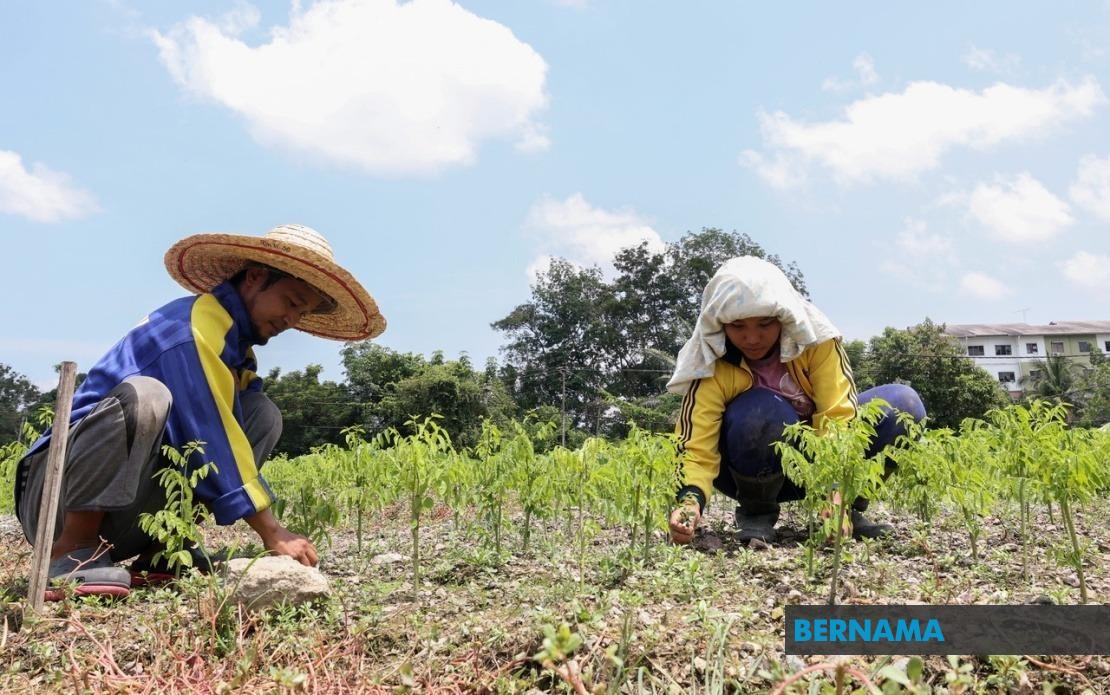
The intense heat affecting 17 regions across Malaysia has dealt a significant blow to the country's agricultural sector, with Sandakan among the hardest-hit zones where farmers are struggling to maintain viable crop production. The extended period of elevated temperatures has created acute challenges for growers, forcing them to fundamentally alter their cultivation practices just to prevent complete crop failure.
Vegetable farmer Firyanus Salamba, who operates a farm in Batu 7 here, represents the mounting frustration experienced by producers across the affected regions. The 33-year-old agriculturalist has been forced to abandon conventional irrigation schedules, now watering moisture-sensitive vegetables including okra, sweet shoots and mustard greens three times daily—a dramatic increase from the single daily watering cycle that typically suffices under normal climatic conditions. This escalation in labour-intensive maintenance has strained both operational resources and profitability margins.
Despite his intensified watering regimen, Salamba's farm has experienced measurable declines in overall yield, a pattern indicating that irrigation alone cannot fully compensate for the physiological stress imposed by extreme temperatures. Chilli plants have proven particularly vulnerable under these conditions, with many simply unable to survive the relentless heat. This vulnerability in chilli production carries particular significance for Malaysia's agricultural economy, given the crop's importance to both domestic consumption and the spice export market that generates valuable foreign exchange.
The Malaysian Meteorological Department (MetMalaysia) formally acknowledged the severity of conditions by issuing a Level 1 hot weather alert across the 17 affected areas on August 25. This cautionary classification is triggered when daily maximum temperatures consistently reach the 35 to 37 degrees Celsius threshold for at least three consecutive days—a relatively narrow range that still creates profound stress on temperature-sensitive crops and livestock systems.
Peninsula Malaysia bears the brunt of the alert system, with eleven affected areas distributed across several states. In Perak, the alert covers Larut and Matang, Kuala Kangsar, Kampar and Batang Padang. Kelantan's Kuala Krai region is similarly affected, as are three zones in Pahang: Kuantan, Raub, Temerloh and Pekan. Selangor contributes Hulu Selangor and Gombak to the broader warning. This geographical spread suggests a systematic weather pattern rather than isolated localized phenomena, complicating response strategies across multiple state administrations.
Sabah's participation in this alerts system underscores how the heat wave has transcended the peninsula to reach East Malaysia. Five Sabahan districts—Telupid, Tenom, Sandakan, Pitas and Beluran—are experiencing the same elevated temperatures that plague their western counterparts. Sarawak, meanwhile, reports a single affected area in Marudi, suggesting that the heat pattern may be moving progressively eastward or that certain regions of Sarawak have thus far escaped the most intense conditions.
A Bernama field survey revealed that the agricultural impact extends beyond vegetable cultivation into the horticultural sector, where flower nursery operators face analogous pressures. Nursery managers report requiring at minimum twice-daily irrigation cycles to prevent flowering plants from succumbing to wilting and death induced by the extreme heat. This dual-sector vulnerability—affecting both food production staples and commercial horticultural exports—threatens multiple revenue streams within Malaysia's primary sector.
The practical implications of this heat wave extend considerably beyond farmers' immediate operational challenges. Increased irrigation demand places mounting pressure on water supplies during what is characteristically a dry season, potentially straining municipal and agricultural water infrastructure already stretched thin by competing demands across urban and rural zones. In regions where water management has historically been contentious, this escalation could exacerbate resource allocation disputes between farming communities and growing urban populations.
The economic ramifications warrant serious consideration for policymakers and agricultural planners. Reduced yields translate directly into higher production costs per unit of output, compressing farmer margins at precisely the moment when input expenses are rising. If the heat pattern persists, subsequent market disruptions could emerge—vegetable and flower price volatility, reduced export competitiveness, and potential import dependency for normally domestically-produced items. For Malaysian consumers, eventual price increases at retail points may reflect this upstream production stress.
This weather event also illuminates broader vulnerabilities within Malaysia's agricultural framework as climate patterns increasingly diverge from historical norms. The sector's dependency on traditional irrigation methodologies and cultivation timing suggests that adaptation to more frequent or intense heat episodes requires deliberate investment in modern irrigation infrastructure, heat-tolerant crop varieties, and revised planting calendars. Without proactive policy responses, Southeast Asian agricultural competitiveness could suffer as climate variability becomes a recurring operational constraint.
The immediate priority for affected farmers involves damage mitigation and yield salvage, but the longer-term challenge demands systematic sector-wide adjustment. Agricultural extension services, research institutions, and government support programs must collectively develop and disseminate practical coping strategies that help producers navigate these altered environmental conditions while maintaining economic viability. The Sandakan experience reflects a problem now affecting multiple Malaysian communities simultaneously, demanding coordinated rather than fragmented responses.

