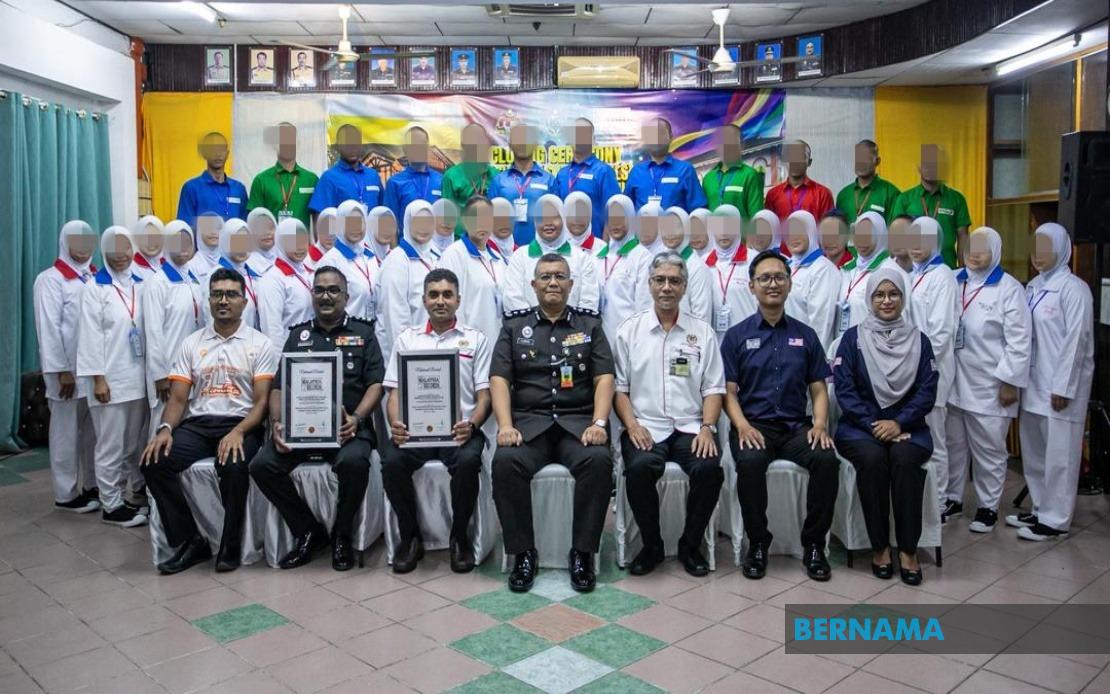
Home Minister Datuk Seri Saifuddin Nasution Ismail has highlighted the Malaysian Prisons Department's accomplishment in securing recognition from the Malaysia Book of Records after the Batu Gajah Correctional Centre successfully conducted a Basic Life Support and Automated External Defibrillator training course for 42 inmates. The achievement marks a significant milestone in the department's ongoing efforts to demonstrate that correctional facilities serve purposes beyond detention and punishment, functioning instead as venues for meaningful personal transformation and skill development.
The minister's acknowledgement underscores a broader philosophical shift in how Malaysia's penal system approaches inmate management. Rather than focusing exclusively on confinement, the initiative reflects an institutional commitment to equipping individuals within the system with practical competencies that enhance their utility and value to society upon release. The life-saving skills imparted through the BLS and AED training represent tangible qualifications that prisoners can leverage during reintegration into their communities, potentially opening pathways to legitimate employment and social contribution.
Saifuddin emphasised that such programmes extend beyond the mere transmission of technical knowledge. By participating in structured, recognised training courses, inmates simultaneously absorb foundational values including discipline, personal responsibility, and civic consciousness. These intangible but crucial character elements form the psychological bedrock necessary for successful rehabilitation, encouraging individuals to reconceptualise their identities and futures beyond their criminal histories. The recognition from Malaysia Book of Records validates not only the quantity of training delivered but implicitly endorses the quality and rigour of the Batu Gajah centre's instructional approach.
The minister framed this achievement as emblematic of the Malaysian Prisons Department's core operational philosophy, which positions rehabilitation and reintegration at the institutional heart rather than as peripheral concerns. This philosophy acknowledges that individuals who have served sentences will eventually return to their families and communities, and their successful integration directly affects social stability and economic productivity. By investing in prisoner development during incarceration, the department recognises that it is investing simultaneously in public welfare and crime prevention downstream.
The implications of this approach resonate across Malaysia's criminal justice ecosystem. When correctional facilities actively prepare inmates for lawful participation in society, they reduce recidivism rates, lower the burden on courts and police by preventing repeat offences, and ultimately decrease incarceration costs over extended periods. The life-saving skills programme therefore functions as preventive infrastructure, operating within the penal system to reduce future demands on that very system.
Saifuddin's public endorsement also signals governmental commitment to modernising Malaysia's prison system in alignment with international best practices and rehabilitation frameworks. Many developed nations and regional peers have similarly moved toward programmes that enhance prisoner capabilities, recognising that custody alone fails to address the underlying factors driving criminal behaviour. By celebrating the Batu Gajah centre's initiative, the Home Ministry demonstrates receptiveness to evidence-based correctional reform and positions Malaysia as a jurisdiction taking its rehabilitation obligations seriously.
The selection of basic life support and defibrillator training as the focus carries symbolic weight. These competencies represent the capacity to preserve human life—a powerful inversion of the stereotype that prisoners represent threats to social safety. When inmates successfully master these skills, they tangibly refute negative stereotypes and reconstruct their self-perception as individuals capable of serving others and contributing positively. The psychological benefits of this reframing should not be underestimated in facilitating genuine behavioural change.
The minister expressed optimism that the Batu Gajah centre's success would catalyse replication across other correctional facilities within Malaysia. Scaling such programmes would require coordination between the Prisons Department, training organisations, and external partners willing to deliver certification-level instruction within prison settings. The logistical and financial constraints of expanding programmes merit attention, yet the documented benefits and governmental endorsement create momentum for implementation.
For Malaysian communities and families of individuals currently incarcerated, this initiative offers concrete reassurance that the correctional system is actively preparing their relatives for reintegration. The presence of recognised qualifications obtained during imprisonment can substantially improve post-release employment prospects, reducing the economic desperation that sometimes drives repeat offences. Enhanced employment outcomes translate into stronger family units and reduced welfare dependency.
Regionally, Malaysia's emphasis on prisoner rehabilitation through skills development positions it as a thoughtful actor within Southeast Asia's criminal justice landscape. As neighbouring countries grapple with overcrowded prisons and rising crime rates, Malaysia's deliberate investment in inmate transformation provides a potential model worthy of examination and adaptation. The Malaysia Book of Records recognition elevates the initiative's profile, potentially inspiring comparable efforts across the region and demonstrating that correctional excellence is achievable within the constraints typical of developing nations.
Looking forward, Saifuddin's call for expanded implementation suggests the government views prisoner rehabilitation as a priority deserving sustained resource allocation and institutional attention. Whether this translates into concrete funding increases and systemic expansion remains to be seen, yet the public commitment signals directional intent. The success of future programmes will depend on securing adequate training personnel, maintaining certification standards, and tracking post-release outcomes to measure genuine impact on inmate reintegration success rates.
The Batu Gajah Correctional Centre's achievement ultimately reflects a maturing understanding within Malaysia's law enforcement and corrections sectors that long-term public safety depends not on increasingly punitive approaches but on systematic human development. The 42 inmates who completed the basic life support training carry forward not only technical competency but also enhanced dignity and expanded identity as individuals worthy of second chances—a foundational principle that, if successfully operationalised system-wide, could meaningfully improve Malaysia's social fabric.

