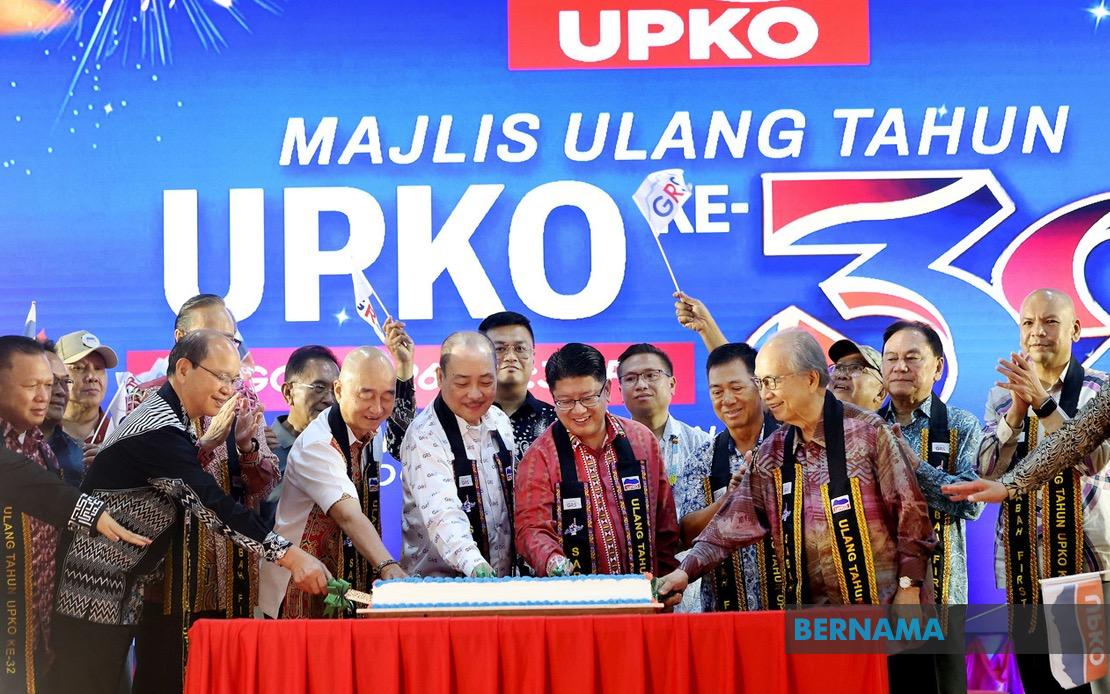
Sabah's Chief Minister Datuk Seri Hajiji Noor has pledged that every ringgit received from the Federal Government will be reinvested in the welfare and development of the state's residents. Speaking at the 32nd anniversary celebration of the United Progressive Kinabalu Organisation (UPKO) and the opening of the 17th UPKO Triennial Delegates Conference in Kota Kinabalu, Hajiji outlined how the state intends to deploy fresh federal allocations to tangible projects that will improve living standards across Sabah.
The announcement comes following Prime Minister Datuk Seri Anwar Ibrahim's decision to increase the interim special grant payment to RM1.5 billion, marking a significant boost to the state's financial capacity. Sabah had previously received RM600 million of this allocation in June, setting the foundation for an expanded development agenda. The Chief Minister's commitment reflects the state government's determination to translate federal support into concrete improvements that directly benefit ordinary Sabahans, rather than allowing funds to remain in government coffers.
Road and bridge infrastructure emerges as a priority area under the new funding arrangement. Hajiji indicated that a substantial portion of the RM1.5 billion interim grant will be dedicated to constructing additional paved roads and concrete bridges throughout the state. For a region where connectivity remains a critical challenge, particularly in rural and semi-urban areas, this investment addresses a long-standing developmental need. Improved road networks not only facilitate commerce and economic activity but also enhance access to essential services such as healthcare and education for communities in Sabah's more remote districts.
Beyond roads, the state government has identified utilities and basic services as equally important beneficiaries of the federal injection. Water supply and electricity infrastructure improvements feature prominently in the announced spending priorities. These foundational services are essential for attracting investment, supporting agricultural productivity, and improving quality of life. For a state competing within Southeast Asia's economic landscape, reliable utilities signal stability and readiness to investors considering regional opportunities.
The Rumah Mesra Sabah Maju Jaya (SMJ) housing initiative represents the social welfare dimension of the spending plan. This programme, aimed at providing affordable housing solutions, addresses a pressing need across various income segments in Sabah. By expanding SMJ units, the state government signals commitment to housing affordability and social stability, issues that resonate across Malaysian states as urban populations grow and affordable housing becomes increasingly scarce. The programme's expansion demonstrates the state's understanding that sustainable development requires attention to citizens' basic needs.
Complementing the housing initiative is the Sentuhan Kasih Rakyat (SYUKUR) programme, which channels assistance directly to residents. The precise mechanisms of SYUKUR reflect the state government's multi-pronged approach to welfare delivery. By combining infrastructure investment with direct assistance programmes, Sabah's strategy acknowledges that development is not solely about large capital projects but also includes targeted support for vulnerable populations. This balanced approach mirrors best practices in inclusive governance seen across successful regional economies.
Hajiji's emphasis on returning federal funds to the people underscores a broader governance philosophy centring accountability and fiscal transparency. In Malaysia's federal system, where revenue-sharing between Kuala Lumpur and state governments frequently generates political tension, the Chief Minister's explicit commitment to deploying federal grants for public benefit represents an attempt to demonstrate responsible stewardship. This messaging holds particular weight in Sabah, where historical grievances over federal resource allocation have shaped state politics.
The state government's own revenue generation capacity provides additional context for understanding Sabah's fiscal position. Annual collections have been maintained at RM7 billion since 2022, with projections suggesting growth to RM8 billion in the current year. This internal revenue performance indicates that Sabah is strengthening its financial independence while simultaneously welcoming federal support. The dual focus on improving internal revenue while prudently deploying federal transfers reflects mature fiscal management.
Hajiji characterised Sabah's economic resilience as robust despite domestic and international headwinds. By highlighting the state's ability to maintain substantial annual revenue collections while navigating global economic volatility, the Chief Minister positioned Sabah as an attractive investment destination within Southeast Asia. This framing has implications beyond state politics; it suggests Sabah views itself as competing for regional capital and talent, requiring demonstration of sound governance and strategic vision. The state's emphasis on infrastructure and utilities aligns with investor expectations for developing economies.
The timing of these announcements, delivered during an UPKO party gathering, carries political significance. UPKO remains influential in Sabah's coalition politics, and public commitment to deploying federal funds toward state development serves to reinforce government credibility within party structures and among constituents. The visibility of such commitments at party forums ensures that citizens and party members perceive tangible benefits flowing from their political representatives' participation in federal governance.
For Malaysian analysts monitoring inter-state fiscal dynamics, Sabah's approach offers instructive lessons. The state's strategy of combining federal grants with internal revenue generation and targeted spending programmes suggests a template for resource-constrained states seeking to maximise development impact. By prioritising connectivity, utilities, and social housing alongside direct assistance, Sabah addresses multiple development dimensions simultaneously rather than concentrating resources in isolated sectors.
Looking forward, the success of these initiatives will depend on implementation efficiency and project selection rigour. Infrastructure projects in particular require careful planning and execution to deliver anticipated benefits. The state government's track record in deploying previous allocations will provide context for assessing whether the RM1.5 billion increase translates into visible improvements for residents or faces implementation delays common to infrastructure-heavy spending programmes across Malaysian states.

