The Sabah government is moving quickly to secure the remaining RM900 million from the Federal Government's RM1.5 billion interim Special Grant, having already received RM600 million in June. State officials are emphasizing that this partial payment should not be viewed as a final settlement, but rather a stepping stone toward what Sabah believes it is rightfully owed under the Malaysian Constitution.
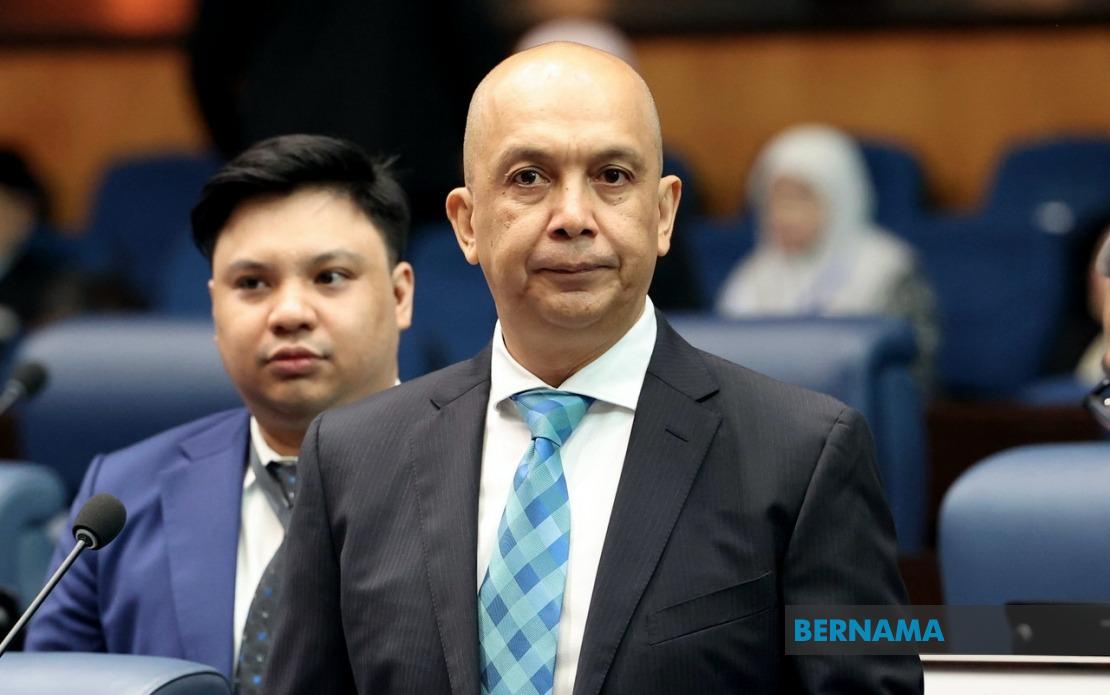
Datuk Mohd Ishak Ayub, Sabah's Assistant Finance Minister II, made clear in a state assembly session that the interim payment carries no strings and does not diminish the state's legal position. Sabah accepted the RM600 million tranche disbursed on June 12 entirely without prejudice to its constitutional rights, he explained, signalling that the state's fight for fuller compensation remains unresolved. This distinction matters significantly for Sabah's longer-term bargaining power with Putrajaya, as accepting money conditionally allows the state to continue pursuing its claim.
The constitutional foundation of Sabah's case rests on Articles 112C and 112D of the Federal Constitution, which mandate a specific revenue-sharing formula between the federal and state governments. Sabah has consistently argued that it should receive 40 per cent of revenues from petroleum and other resources extracted within its territorial waters and borders, a formula that federal authorities have historically disputed or delayed implementing. This ongoing tension reflects decades of friction between Kota Kinabalu and Kuala Lumpur over how much wealth should remain in the state versus flowing to the federal treasury.
Prime Minister Datuk Seri Anwar Ibrahim had announced the increased interim payment during Kaamatan Festival celebrations on May 30, signalling federal willingness to address Sabah's grievances ahead of potential electoral challenges. The boost from an earlier interim figure to RM1.5 billion suggests responsiveness to state pressure, though the staged disbursement—with RM600 million in June and the remainder ostensibly due by year-end—indicates the federal government is controlling the pace and timing of relief. For Malaysian federalism, this approach balances acknowledging state rights while maintaining central government leverage over implementation.
The correspondence trail between federal and state authorities, documented on June 9, 19, and 26, illustrates the bureaucratic negotiations underpinning what appears to be a straightforward grant transfer. Multiple exchange of letters suggest that technical and political complications surrounded finalizing even this interim payment, raising questions about what obstacles might delay the second tranche. State officials will be watching federal budget calendars and cash flow closely to ensure the RM900 million materializes before fiscal year-end.
For Sabah's development priorities, the timing of the full grant matters considerably. The state faces pressure to fund education, healthcare, and infrastructure across one of Malaysia's geographically largest but economically challenged regions. Delayed disbursement could force difficult budget choices, potentially squeezing capital expenditure or forcing reliance on more expensive borrowing. The interim arrangement, while better than nothing, leaves Sabah operating with financial uncertainty that larger, wealthier states do not experience.
The grant dispute also reflects broader anxieties about resource federalism in Malaysia. Sabah and Sarawak, as oil and gas-producing states, have long contended that they subsidize federal revenues while receiving disproportionately small returns for local development. The RM1.5 billion interim package, substantial as it sounds, must be measured against the scale of petroleum revenues at stake and against comparable payments in other federal systems where resource-rich provinces retain larger shares. For Southeast Asia's broader federal democracies, the Malaysian experience offers lessons in managing resource-sharing tensions.
In parallel legislative business, Sabah's welfare policy reveals another dimension of state finances under pressure. Assistant Minister Datuk Rina Jainal confirmed that the state would maintain welfare assistance within the RM200 to RM350 monthly range, contingent on the state's financial capacity improving. The expansion of eligibility criteria, with the household income ceiling rising from RM1,198 to RM1,236, actually broadens the beneficiary pool despite flat benefit amounts. This suggests state authorities are prioritizing expanded coverage over deeper per-recipient support, a pragmatic choice when resources are constrained.
The linkage between the special grant and welfare spending underscores how federal fiscal transfers directly determine Sabah's ability to provide social safety nets. Without the interim payment and anticipated full disbursement, state welfare programs would face compression precisely when economic pressures on low-income Sabahans are mounting. This interplay between constitutional revenue rights and practical social policy illustrates why the grant dispute matters beyond abstract constitutional principle—it has immediate consequences for ordinary citizens' welfare.
Looking ahead, Sabah's strategy appears to involve maintaining firm constitutional claims while pragmatically accepting interim payments and pushing for timely completion of the RM1.5 billion package. State leadership understands that federal cooperation on intermediate payments may eventually translate into more lasting revenue arrangements, even if the 40 per cent formula remains formally unresolved. This negotiating approach acknowledges political reality: Sabah cannot unilaterally enforce constitutional interpretation, but it can build cases through accepted payments and documented claims.
For observers in other Malaysian states and throughout Southeast Asia, Sabah's experience illuminates the complexities of sub-national fiscal autonomy. Even constitutionally enshrined revenue rights require persistent advocacy, favorable political conditions, and leverage to implement fully. Sabah's relative remoteness and smaller population base mean its voice carries less political weight than Selangor or Johor might command, yet the state has maintained its claim across multiple federal administrations. The outcome of this particular grant negotiation may set precedents affecting how future federal-state fiscal disputes are resolved in Malaysia.

