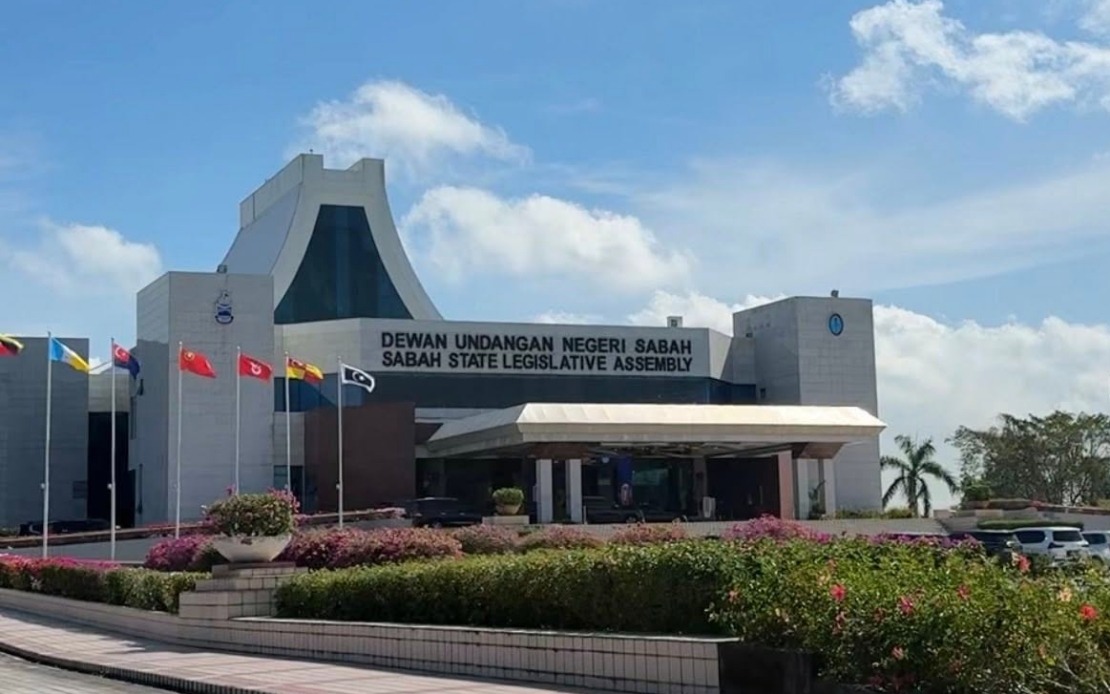
The Sabah Legislative Assembly has given final approval to two consequential bills that will reshape how the state manages Muslim estates and administers justice through indigenous customary courts. The Muslim Succession Bill 2026 and the Native Courts Bill 2026 both cleared the legislative chamber on July 22 after separate rounds of debate, with the first measure attracting five speakers and the second drawing twelve. Datuk Dr Mohd Arifin Arif, the state minister responsible for local government, housing, and Islamic affairs, steered both bills through the chamber, highlighting their significance as foundational reforms in areas that touch millions of lives across Sabah.
The Muslim Succession Bill 2026 represents a watershed moment in Malaysian jurisprudence, as it becomes the first legislation anywhere in the country designed specifically to govern how Muslim estates are administered within the remit of the Syariah Courts. Sabah's government has crafted this framework around four substantive pillars, each addressing longstanding gaps in the inheritance system. The overarching goal is to introduce systematic procedures that dispel ambiguity and prevent disputes, a perennial source of family conflict and litigation. By establishing clear protocols for how assets pass to heirs according to Islamic principles, the legislation aims to protect vulnerable beneficiaries and prevent unscrupulous relatives from manipulating or concealing estate property before formal distribution occurs.
Dr Arifin explained that the bill serves multiple protective functions beyond mere inheritance sequencing. It is designed to ensure that the rights and interests of all entitled parties—whether direct heirs, creditors, or other stakeholders—are properly recognized and safeguarded throughout the administration process. The legislation also emphasizes compliance and enforcement mechanisms to guard against the misappropriation of deceased assets, a challenge that has plagued Islamic estate administration across Malaysia. By subjecting estate management to tighter oversight and requiring proper authorization before assets are transferred or disposed of, the state seeks to reduce opportunities for fraud and embezzlement during what is often a period of family vulnerability.
The Native Courts Bill 2026 similarly signals Sabah's determination to modernize a parallel justice system that has remained substantially unchanged for three decades. The existing Native Courts enactment has governed customary disputes since 1992, but subsequent social, economic, and legal developments have rendered it increasingly inadequate. Sabah's native populations—comprising various Kadazan-Dusun, Bajau, and other indigenous groups—continue to rely on customary courts to resolve matters ranging from property disputes to family conflicts that arise from traditional customs. The new bill acknowledges both the enduring validity of these traditions and the need to equip the courts with modern administrative and procedural tools.
A central innovation in the Native Courts Bill is the establishment of a clearer three-tier judicial hierarchy. Under the reformed system, cases will flow through a Native District Court at the lower level, move to a Native High Court for appeals and complex matters, and ultimately reach a Native Court of Appeal. This structured progression aims to reduce inconsistency in rulings and provide litigants with genuine avenues for challenging unfavorable decisions. Previously, the absence of such clear hierarchies meant that customary justice sometimes felt arbitrary or conclusive without meaningful review.
Equally important is the bill's reshaping of how judicial appointments are made within the native court system. The legislation establishes a Native Judicial Appointments Advisory Committee tasked with evaluating candidates and recommending appointments on the basis of transparency, merit, qualifications, experience, knowledge of customary law, and personal integrity. This represents a deliberate shift away from a system in which judges were often selected primarily because they held particular administrative positions. Under the reformed model, individuals with genuine expertise in customary jurisprudence and demonstrated capability to adjudicate fairly will be prioritized, regardless of whether they hold traditional bureaucratic rank.
For Malaysian readers, particularly those in Sabah and Sarawak where native customary courts operate, these reforms carry practical significance. Disputes involving land ownership, inheritance, marriage arrangements, and resource sharing—matters frequently governed by indigenous customary law—have sometimes languished in inadequate forums or suffered from unclear procedures. The Native Courts Bill promises to enhance the legitimacy and efficiency of these institutions by modernizing their structure while maintaining their cultural foundation. This balance is crucial in a state where native populations represent a substantial portion of the citizenry and where customary practices retain profound cultural weight.
The Muslim Succession Bill, meanwhile, addresses a nationwide gap that affects not only Sabah but Muslims across Malaysia more broadly. Islamic inheritance law is governed by Syariah, yet procedural oversight and administrative coordination of Muslim estates have historically been fragmented and inconsistent. By creating a dedicated statutory framework, Sabah positions itself as a model for other states grappling with similar challenges. The legislation should reduce the frequency of inheritance disputes that consume judicial resources and create lasting family rifts. It may also encourage Muslim estate holders to plan more deliberately, knowing that their wills and asset distributions will be administered according to clear, predictable rules.
The timing of these bills also reflects broader developments in Malaysia's legal federalism. States possess significant autonomy over matters including Islamic affairs, native courts, and local governance, yet they sometimes struggle to modernize inherited legal frameworks. Sabah's passage of these two bills demonstrates proactive governance and a willingness to invest in updating systems that touch everyday life. The bills also carry implications for how other states—particularly Sarawak, which faces similar issues around native customary justice—approach comparable reforms.
Looking ahead, successful implementation will depend on the competence of administrative bodies tasked with applying the new laws. For the Muslim Succession Bill, the Syariah Courts will require adequate resources, training, and coordination to manage the increased volume and complexity of estate administration. For the Native Courts Bill, the new Appointments Advisory Committee must genuinely prioritize merit and customary legal expertise, resisting political pressure to favor particular individuals or groups. If implementation succeeds, both measures could serve as templates for legislative reform elsewhere in Southeast Asia, where similar issues—unclear inheritance procedures in plural legal systems and inadequate customary court infrastructure—remain unresolved.

