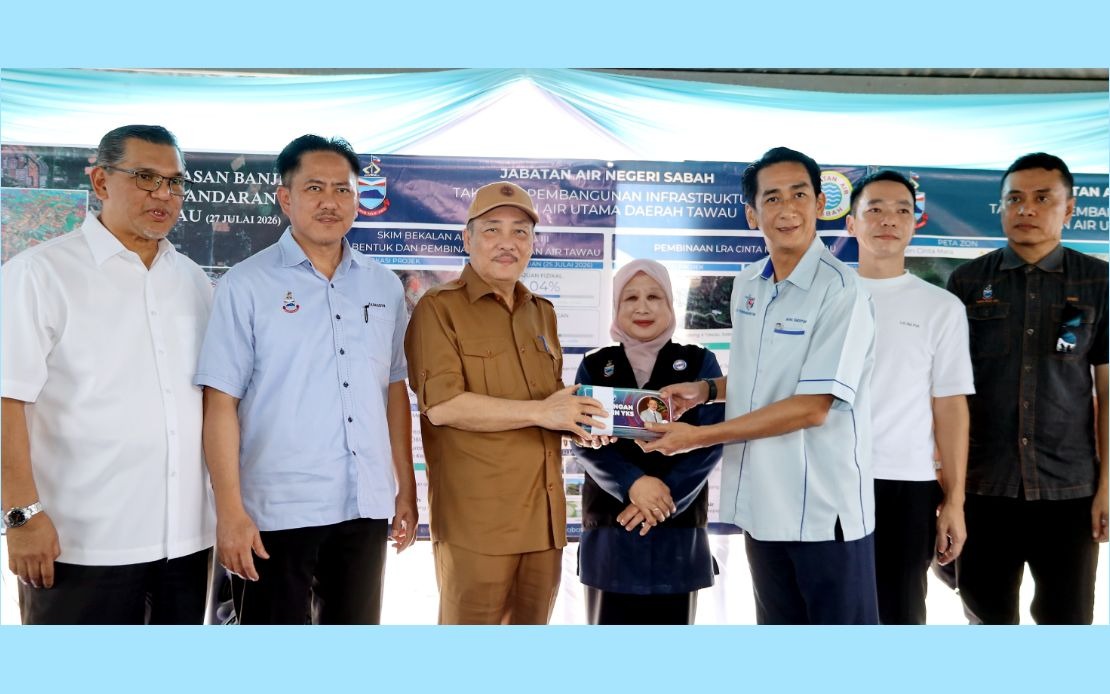
Sabah Chief Minister Datuk Seri Hajiji oversaw the delivery of RM30,600 in emergency assistance to families devastated by recent flooding in Tawau, channelling funds through Yayasan Kebajikan Sabah to the local municipal authority. Tawau Municipal Council president Mohd Shoffian Mohd Said received the donation, which was allocated directly to 102 heads of household affected by the calamity. Each family received RM300 as immediate financial relief to help offset losses and emergency expenses incurred during the disaster.
The flooding event struck Tawau on July 25, forcing authorities to evacuate 362 residents to emergency shelter at Dewan Serbaguna Kompleks Sukan Tawau. The scale of the evacuation underscored the severity of the inundation and the disruption inflicted on the community. Families lost homes, possessions, and livelihoods as floodwaters swept through residential areas, creating acute humanitarian needs that extended far beyond the immediate emergency response phase.
Hajiji emphasised that the relief fund was designed to reduce the ongoing financial strain experienced by households still recovering from the disaster. For many families in Tawau, the immediate aftermath of flooding brings cascading financial pressures—from temporary accommodation costs to replacement of damaged goods and furniture, from medical expenses for those injured or affected by waterborne illness, to lost income for workers unable to return to employment. The RM300 per household, while modest, represents an acknowledgment of these multifaceted burdens and provides critical breathing room during the critical early recovery phase.
Beyond the monetary assistance, Hajiji used the occasion to publicly commend the extensive network of agencies and personnel who mobilised during the emergency response. The Civil Defence Force, Royal Malaysia Police, Fire and Rescue Department, and Health Ministry personnel worked alongside local disaster management committees and other supporting organisations to protect lives and minimise casualties. Hajiji characterised their coordinated efforts as essential to ensuring the welfare and safety of affected residents throughout the flooding event.
The acknowledgment of inter-agency cooperation reflects a broader truth about disaster management in Malaysia—that effective response depends fundamentally on seamless collaboration across multiple government branches and departments. In Tawau's case, rescuers from different services operated in parallel, each bringing specialised skills and resources. Police and civil defence personnel conducted evacuations, firefighters addressed immediate safety hazards, health workers screened evacuees for injuries and disease, and local disaster committees coordinated logistics and shelter operations. This layered approach, while demanding careful orchestration, significantly improved outcomes for affected communities.
For Malaysian readers in other states, Tawau's experience carries important lessons about climate vulnerability and preparedness. Tawau sits in Sabah's southeastern region, an area historically susceptible to flooding due to geographical and meteorological factors. As climate patterns shift across Southeast Asia, flooding events are becoming more frequent and occasionally more severe across multiple Malaysian states including Johor, Selangor, and Pahang. The quick mobilisation of state-level charitable foundations like Yayasan Kebajikan Sabah demonstrates how institutional frameworks can complement federal and state government resources during emergencies.
The distribution mechanism also illustrates evolving approaches to disaster relief in Malaysia. Rather than centralised federal disbursement, state-level foundations increasingly serve as conduits for rapid, locally-calibrated assistance. These foundations can operate with greater agility than sprawling bureaucracies, translating donations into tangible community benefit within days rather than weeks. Yayasan Kebajikan Sabah's direct engagement with Tawau Municipal Council ensured that resources reached households quickly and transparently, minimising administrative overhead.
From a broader Malaysian perspective, the RM300 per household figure invites reflection on the adequacy of disaster relief mechanisms. While state initiatives like this demonstration are commendable, they typically address only the most immediate needs—emergency food, temporary shelter supplies, medical attention. Longer-term recovery—rebuilding homes, restoring livelihoods, restocking businesses—requires sustained support from multiple sources over months. Many flood-affected families across Malaysia struggle to fully recover within government support timeframes, forcing them into debt or prolonged displacement.
The Tawau relief distribution also underscores the importance of accurate, timely information during and after disasters. The evacuation of 362 residents to a designated relief centre reflects planning based on capacity and accessibility assessments. Communicating clearly about donation processes, eligibility criteria, and distribution timelines helps prevent confusion and ensures that aid reaches intended beneficiaries efficiently. Transparent announcement of such initiatives, as reflected in today's statement, also encourages public confidence in government and charitable institutions.
Looking forward, the incident highlights the need for continuous investment in disaster preparedness and mitigation infrastructure in flood-prone regions. While emergency response and relief distribution remain essential, reducing the frequency and intensity of flooding through improved drainage systems, river management, and urban planning would ultimately prove more cost-effective and less disruptive to communities. Sabah, like other Malaysian states, must balance immediate humanitarian response with longer-term structural interventions that reduce vulnerability to future disasters.
The collaboration acknowledged by Hajiji—between government agencies, charitable foundations, and local councils—represents a model of disaster governance that has proven effective across Malaysia. Building on this foundation requires sustained commitment to inter-agency protocols, adequate funding for preparedness, and regular training to keep response personnel ready. For Tawau residents now beginning the recovery journey, the RM30,600 distribution provides meaningful short-term relief, while the broader commitment to coordinated disaster management signals longer-term institutional support for community resilience.

