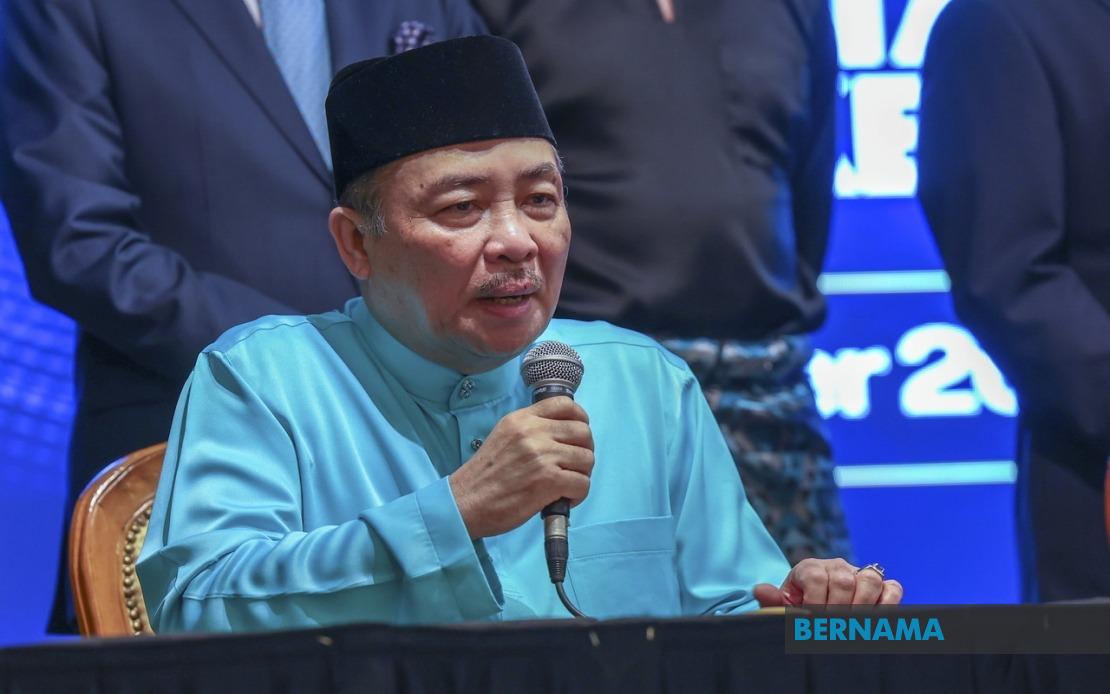
Sabah's government has unveiled a substantial education investment, dedicating more than RM100 million to its state scholarship programme in a move that underscores the East Malaysian state's growing emphasis on human capital development. The allocation will serve dual purposes: sustaining support for existing scholarship holders whilst simultaneously opening opportunities for 2,182 additional students seeking higher education, reflecting an expanding commitment to accessible quality learning across the state.
Chief Minister Datuk Seri Hajiji Noor articulated the policy's significance as part of a broader strategy to cultivate a skilled and knowledge-driven workforce capable of competing regionally and globally. The initiative demonstrates particular attention to science, technology, engineering and mathematics disciplines, recognising that STEM competencies form the backbone of economic advancement in an increasingly digitalised world. This strategic prioritisation aligns with broader Malaysian and Southeast Asian trends toward bolstering technical expertise across the region.
The scholarship programme, officially known as the Sabah State Government Scholarship (BKNS), has already accumulated an impressive track record, with 13,389 students currently receiving sponsorship through its mechanisms. This substantial cohort represents years of accumulated investment in Sabah's youth, signalling that education support has evolved from a peripheral initiative into a cornerstone of state policy. The cumulative beneficiary numbers demonstrate sustained political will and budgetary commitment across multiple government cycles, suggesting institutional entrenchment of scholarship provision.
Beyond the headline scholarship allocation, Sabah has constructed a multi-layered support ecosystem comprising fourteen distinct assistance programmes introduced since 2021. These complementary initiatives address various pressure points students face throughout their educational journeys. The one-off Higher Education Institution Registration Cash Assistance (BUDI) tackles enrolment barriers, whilst the Special Examination Cash Assistance (BAKTI) reduces financial stress during critical assessment periods. Such granular programme design acknowledges that scholarship gaps extend beyond tuition fees to encompass registration costs, examination fees, technology access and transport logistics.
The Ihsan Computer Assistance (BAIK) programme reflects contemporary recognition that digital access constitutes an educational prerequisite in the modern learning environment. Meanwhile, the Sabah Student Flight Ticket Assistance (GRS-SUBFLY) addresses a particular geographic challenge facing Sabahan scholars who must travel to peninsular Malaysia for tertiary education. This transport-focused intervention directly tackles one of East Malaysia's most pronounced educational barriers—the substantial costs associated with interstate mobility for studies. The State Higher Education Student Contribution (SENTOSA) further rounds out the support framework, demonstrating comprehensive rather than superficial policy engagement.
Hajiji framed these initiatives explicitly within the context of escalating living standards and educational expenses, recognising that governmental support must scale proportionately with rising costs if it is to maintain meaningful impact. This cost-of-living rationale resonates particularly strongly across Southeast Asian contexts where inflation pressures disproportionately affect lower and middle-income households most dependent on government assistance. By tethering scholarship expansion to economic realities, Sabah positions its programme as responsive to tangible, measurable hardship rather than merely aspirational.
The state government articulates a deliberate emphasis on strategic sectoral alignment, explicitly encouraging scholars to concentrate on fields deemed critical for future development. The oil, gas and energy sectors feature prominently in this calculus, reflecting Sabah's resource economy positioning and the continued relevance of hydrocarbon industries to state revenues. Technical and Vocational Education and Training (TVET) pathways have received elevated policy attention, acknowledging the skills gap in manual and technical professions where Malaysia faces persistent shortages. Artificial Intelligence represents the emerging frontier, positioning Sabah as forward-looking despite its traditional resource dependence.
This tripartite focus—traditional resource sectors, vocational capacity-building, and emerging technologies—reveals sophisticated understanding of economic transition requirements. Rather than abandoning hydrocarbon dependency, Sabah seeks to complement it with diversification into knowledge-intensive fields whilst simultaneously strengthening vocational pathways that serve intermediate skill levels. Such strategic breadth differs from narrower approaches that might concentrate exclusively on high-end technology or exclusively on legacy industries, instead attempting to build capacity across multiple economic tiers.
The programme's emphasis on human capital development reflects a state-level interpretation of broader Malaysian education policy that has long prioritised human resource development as foundational to competitive advantage. Within Sabah's specific context, this emphasis assumes particular importance given demographic patterns, geographic constraints, and historical educational attainment levels that have trailed peninsular averages. By substantially increasing scholarship allocations and structuring support comprehensively, Sabah attempts to address these comparative disadvantages through direct intervention in educational access and completion.
The implications of this commitment extend beyond individual scholar benefit to encompass state-level competitiveness and nation-building more broadly. Sabah's effort to produce graduates deemed "knowledgeable, highly skilled, competitive and possess creative minds"—in Hajiji's formulation—responds to recognition that state development trajectories depend fundamentally on workforce capabilities. Within Malaysia's federal structure, where states increasingly compete for economic investment and talent retention, education investment functions as both immediate poverty alleviation and long-term regional positioning strategy.
For Malaysian educators and policymakers elsewhere observing Sabah's approach, the expansion suggests viable pathways for state-level education interventions operating within federal parameters. The multi-programme structure offers modularity permitting other states to adapt components addressing their specific bottlenecks, whether geographic (transport assistance), technological (device provision), or financial (examination costs). The explicit cost-of-living justification provides political language potentially useful elsewhere in Malaysia where education affordability remains contested.
Looking forward, sustained execution of this expanded commitment will require consistent budgetary provision across election cycles and economic fluctuations. The 2,182 new scholarships represent ambitious targets that demand reliable funding mechanisms and effective implementation infrastructure. Success will ultimately be measured not merely in allocation amounts but in completion rates, graduate employment outcomes, and whether scholarship recipients remain in Sabah to contribute to state development or migrate to peninsular Malaysia's established job markets—a critical consideration for Sabah's economic sustainability.

