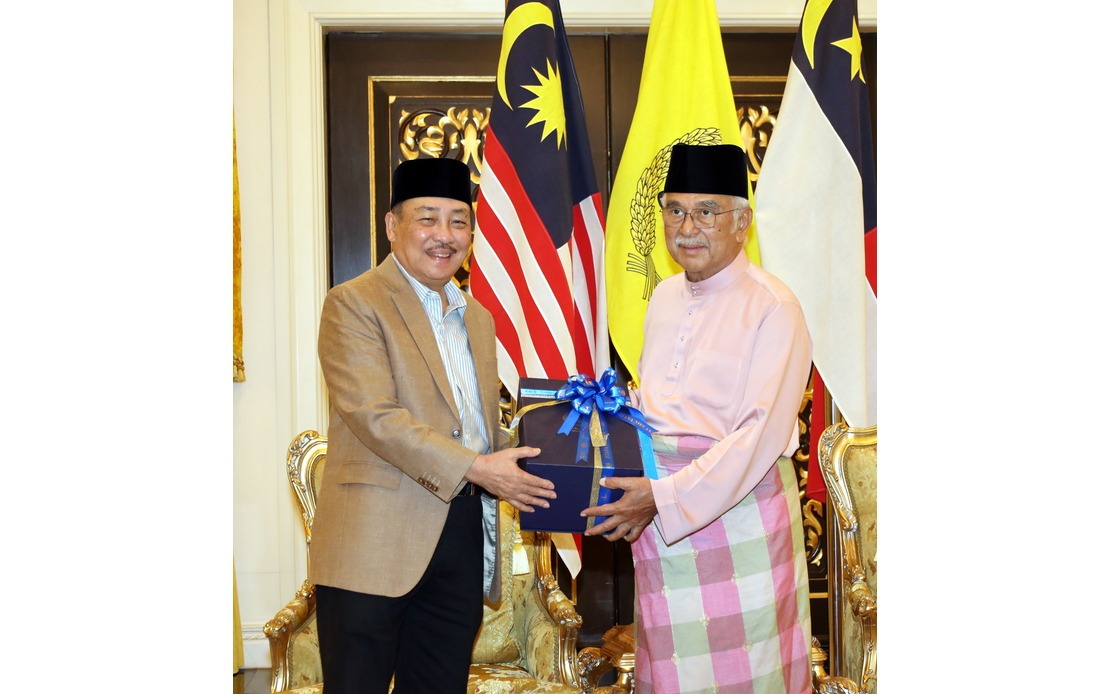
Sabah Chief Minister Datuk Seri Hajiji Noor journeyed to Melaka on August 14 to meet with Yang Dipertua Negeri Tun Dr Mohd Ali Mohd Rustam, marking another step in the ongoing effort to deepen bonds between Malaysia's eastern and peninsular states. The engagement, held at the official residence Istana Melaka in Bukit Beruang, underscores the importance both regional leaders place on maintaining productive dialogue and fostering collaborative relationships across state boundaries.
The timing of such courtesy visits carries particular significance in Malaysia's federal structure, where chief ministers and constitutional rulers regularly undertake diplomatic missions to reinforce unity and coordinate on issues affecting their respective populations. By arriving at approximately 3.35 pm with a substantial delegation, Hajiji signalled the importance his administration attached to the engagement. Tun Mohd Ali's personal reception of the visiting party demonstrated reciprocal commitment to nurturing these ties, a gesture that establishes the proper protocol for senior state leadership encounters.
During their discussions, both leaders explored a range of topics bearing on the interests of Sabah and Melaka. While the statement from Hajiji's office remained characteristically non-specific about the substance of conversations—a common practice in diplomatic communiqués—such meetings typically encompass economic cooperation, infrastructure development, tourism initiatives, and coordination on national policies affecting state-level implementation. The breadth of discussion points suggests these were not perfunctory exchanges but substantive deliberations between experienced administrators.
The composition of Hajiji's entourage reflected the multi-sectoral nature of contemporary state governance. Accompanying the chief minister were Sabah Rural Development Minister Datuk Rubin Balang, whose portfolio addresses infrastructure and community development in less urbanised areas; Agriculture, Fisheries and Food Industry Minister Datuk Jamawi Jaafar, overseeing sectors critical to Sabah's economy; and Nominated Member of the State Legislative Assembly Datuk Mohd Razali Mohd Razi. This diverse delegation allowed for technical discussions spanning development priorities, agricultural synergies, and legislative matters of mutual concern.
For Sabah, such engagements serve multiple strategic purposes. Located in Malaysian Borneo, Sabah often emphasises its distinct regional identity and development challenges, making it incumbent upon its leadership to maintain strong connections with peninsular power centres. Melaka, as a historically significant state and seat of considerable federal influence, represents a natural focal point for such diplomatic overtures. Regular contact between senior administrators helps ensure that Sabah's priorities receive adequate consideration in national forums and resource allocation discussions.
Melaka's positioning in Malaysia's political hierarchy has evolved considerably in recent years, with shifts in state-level governance influencing the state's role in broader national calculations. For Tun Mohd Ali, receiving visiting chief ministers reinforces Melaka's standing as a consequential player in Malaysian federalism. Such courtesy calls allow the Yang Dipertua Negeri to engage directly with peers from other states on matters of national import and to explore areas where bilateral cooperation might yield mutual benefits.
The practice of concluding formal meetings with informal hospitality—in this instance, afternoon tea—reflects longstanding diplomatic tradition. These less formal moments often prove as valuable as the structured discussions themselves, providing space for leaders to build personal rapport and establish channels for future communication. Such relationships frequently translate into practical cooperation when challenges or opportunities requiring interstate coordination subsequently arise.
Interstate relations among Malaysia's thirteen states and three federal territories constitute an often-overlooked dimension of the country's political architecture. While federal-state relationships command greater public attention, horizontal networks between state administrations increasingly shape policy outcomes and resource flows. Sabah's engagement with Melaka exemplifies this reality, as chief ministers cultivate relationships that facilitate information exchange, best-practice sharing, and coordinated advocacy before the federal government.
For Malaysian observers, these routine diplomatic exercises demonstrate how senior political figures maintain the institutional relationships necessary for effective governance across a geographically dispersed federation. They signal stability and continuity in leadership and establish forums where contentious issues can be addressed through dialogue rather than acrimony. In an era marked by considerable political fluidity at both national and state levels, such consistent engagement helps anchor the interstate relationships upon which Malaysia's constitutional system ultimately depends.
The visit also reflects Sabah's broader engagement strategy within the federation. As an East Malaysian state with distinct historical experiences and development trajectories, Sabah must continuously articulate its interests to peninsular-dominated national processes. Chief ministerial visits to prominent peninsular figures serve this function, allowing Sabah's leadership to advance their agenda through personal persuasion and relationship-building rather than relying solely on formal bureaucratic channels.

