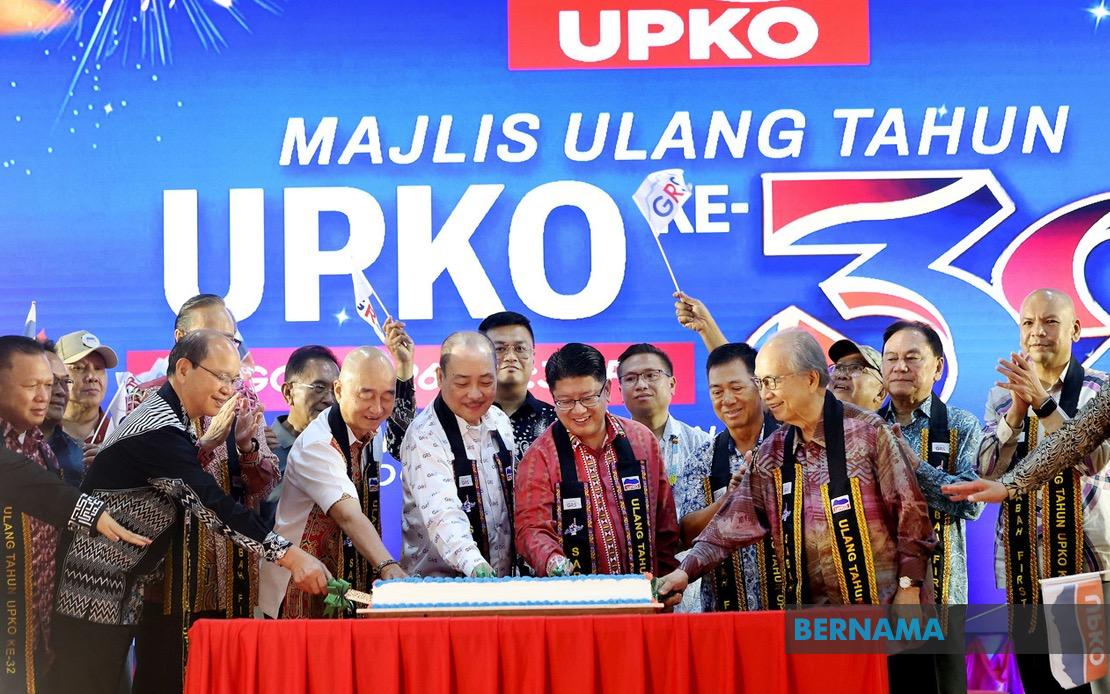
Sabah Chief Minister Datuk Seri Hajiji Noor has stressed that maintaining political stability remains crucial for the state government to concentrate its resources and attention on development initiatives, economic expansion and infrastructure projects that benefit all Sabahans. Speaking at the 32nd United Progressive Kinabalu Organisation (UPKO) anniversary celebration and the opening of the party's 17th Triennial Delegates Conference in Kota Kinabalu, Hajiji underscored how constant political turbulence diverts leadership attention away from the substantive work of governing and delivering services to citizens.
The stability argument carries particular weight in Sabah's context, where the state has experienced significant political upheaval over recent years. The Gabungan Rakyat Sabah (GRS) coalition itself represents an attempt to consolidate diverse political interests into a unified governing framework capable of addressing the state's considerable developmental needs. For a state with infrastructure challenges, economic diversification imperatives and growing expectations from an increasingly sophisticated electorate, the ability to maintain consistent policy direction without constant internal friction becomes a competitive advantage in attracting investment and implementing long-term strategic plans.
Hajiji emphasised that despite the distinct backgrounds and political histories of the six component parties within GRS, coalition members must prioritise their shared commitment to Sabah's advancement. His metaphor of parties standing "under the same roof" and sharing "the same sky" was designed to transcend narrow partisan interests and appeal to a broader conception of collective purpose. This rhetorical framing acknowledges the reality that many component parties brought their own constituencies, ideologies and organisational structures into the coalition, yet the political arithmetic of modern Sabah governance necessitates such diverse partnerships to maintain working majorities in the state assembly.
The inclusion of UPKO as a new member of the GRS coalition in June represents a significant consolidation moment for the ruling arrangement. UPKO brings its own electoral base and organisational capacity, having long been established as one of Sabah's regionally significant parties with particular strength in certain constituencies. The party's entry expanded GRS from five to six component organisations, which now also include Parti Gagasan Rakyat Sabah, Parti Bersatu Sabah, Liberal Democratic Party, Parti Harapan Rakyat Sabah and Parti Cinta Sabah. This expansion ostensibly broadens the coalition's representational reach but also potentially increases the complexity of managing competing interests and resource distribution within the governing structure.
UPKO President Datuk Ewon Benedick, who holds the position of Sabah Deputy Chief Minister III and serves as Minister of Industrial Development, Entrepreneurship and Transportation, was present at the event, symbolising the integration of UPKO leadership into the state administration's upper echelon. His ministerial portfolio suggests that UPKO has been granted substantive portfolios within the government, a typical mechanism for maintaining coalition cohesion by distributing executive power and responsibility across member parties. The holding of three separate deputy chief minister positions indicates how the state government has expanded its executive tier to accommodate coalition partners, an arrangement that has implications for administrative efficiency and decision-making processes.
The emphasis on party unity and cooperation carries particular significance for Southeast Asia observers tracking political stability in Malaysian states. Sabah, as one of Malaysia's two states on Borneo island, has historically experienced more volatile political transitions than many Peninsular states, with power shifting between coalitions more frequently. The current GRS arrangement represents an attempt to create a more durable governing coalition by incorporating multiple local parties with deep roots in Sabah society. Whether such arrangements can genuinely transcend the factional interests that initially drive their formation remains an open question that will test the commitment of coalition leaders to the "Sabah First, Sabah United, Sabah Forward and Sabah Prosper" vision articulated by Hajiji.
The broader developmental agenda that Hajiji identified—encompassing economic prosperity, infrastructure advancement, and the institutional capacity to plan and execute complex projects—requires not merely the absence of political crisis but the active cooperation of coalition partners in supporting government initiatives. This necessity creates an interdependence where individual parties benefit from the coalition's success in delivering tangible improvements to constituents' lives, whether through improved roads, expanded economic opportunities, or enhanced public services. Conversely, visible policy failures or development stagnation would create pressure on coalition partners to explore alternative arrangements, as voters in competitive electoral systems tend to punish governing coalitions perceived as underperforming.
For Malaysian observers, the Sabah case illustrates both the potential and the fragility of multi-party coalition governance in the country's federal structure. States with more diverse political landscapes and more fragmented electoral competitions often find themselves dependent on such arrangements, yet the maintenance of these coalitions requires continuous attention to the distribution of political benefits and recognition of member parties' contributions. The success of GRS in maintaining cohesion while delivering development outcomes will influence how other Malaysian states and the federal government approach coalition management and inter-party cooperation.
The challenge facing Hajiji and his coalition partners is demonstrating that political unity translates into tangible benefits for ordinary Sabahans. Infrastructure projects completed, businesses attracted, employment opportunities created, and public services improved represent the ultimate validation of the stability argument. Without such concrete outcomes, appeals to solidarity and shared purpose risk appearing hollow, particularly to voters experiencing economic pressures or confronting deteriorating public amenities. The GRS coalition's trajectory over coming years will therefore depend on its ability to convert political stability into measurable developmental gains that justify the complex arrangements required to maintain that stability.

