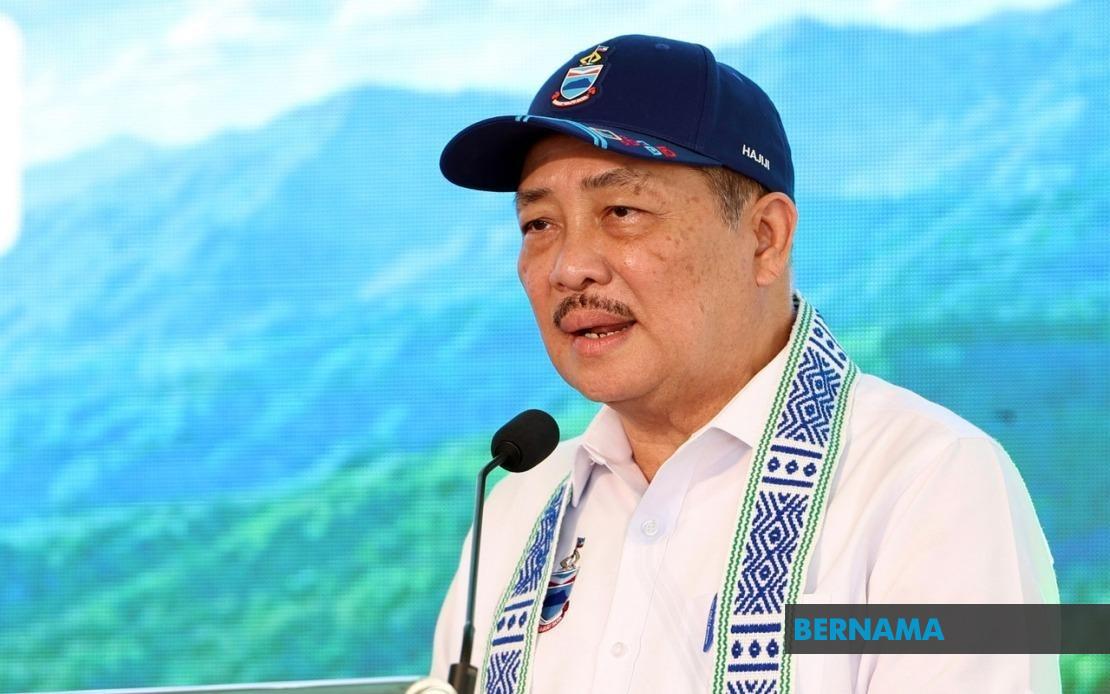
The Sabah state government is pressing ahead with its Sentuhan Kasih Rakyat (SYUKUR) poverty-relief initiative, committing RM339.16 million to the scheme in 2024 as part of a concerted push to address financial hardship across the state. Chief Minister Datuk Seri Hajiji Noor announced the funding allocation during an outreach event in Tuaran, signalling the state's continued emphasis on direct cash assistance for vulnerable populations even as the cost of living remains a persistent challenge for ordinary Sabahans.
The revamped SYUKUR programme represents a strategic recalibration of the original scheme's structure and reach. Rather than maintaining the previous payment model, the government has restructured monthly disbursements to RM200 per recipient, a move designed to maximise the programme's reach by bringing additional beneficiaries into the fold. This adjustment reflects a deliberate policy choice to prioritise breadth of coverage over individual payment amounts, recognising that spreading resources across a larger base of recipients may deliver greater aggregate welfare impact across Sabah's lower-income communities.
Most significantly, the restructuring has enabled a substantial expansion in beneficiary numbers. The programme is projected to serve 140,000 recipients this year, up sharply from the 100,000 households that received assistance previously. This 40 per cent jump in coverage represents one of the state government's most tangible responses to poverty concerns, bringing thousands of additional families within the safety net that the SYUKUR scheme provides. For many Sabahans already grappling with rising housing, food, and utility costs, this expansion offers meaningful albeit modest financial relief.
The disbursement mechanism has been engineered for flexibility and accessibility. Rather than monthly individual payments, SYUKUR funds are distributed in three-monthly tranches of RM600 per recipient, paid either through direct bank transfers or in cash at designated distribution points. This approach accommodates both digitally-connected beneficiaries and those in more remote areas without reliable banking infrastructure, a consideration particularly relevant in Sabah where geographical dispersion remains a challenge for service delivery. The phased rollout began in March, with online banking transfers commencing in May, and cash distributions now proceeding in earnest.
The timing of cash distribution is noteworthy. The second phase of the programme, covering the April-to-June period, opened for cash collection on June 18 and will continue through June 23, with approximately 17,848 recipients eligible to collect their lump-sum assistance during this window. This staggered approach helps prevent logistical bottlenecks and allows the state administration to process large numbers of transactions across multiple collection points simultaneously. For recipients, the window provides a defined timeframe within which to claim their entitlements, though questions inevitably arise about accessibility for those with mobility constraints or competing time commitments.
Crucially, the SYUKUR programme operates within a broader ecosystem of federal and state poverty-reduction initiatives. The state government has explicitly positioned SYUKUR as complementary to the Federal government's own cash transfer schemes, namely Sumbangan Tunai Rahmah and Sumbangan Asas Rahmah. This layering of assistance from multiple tiers of government suggests a fragmented but potentially more comprehensive approach to poverty relief, though it also raises coordination questions about means-testing, overlapping eligibility criteria, and the possibility of certain vulnerable groups falling between the cracks of administrative categorisations.
Chief Minister Hajiji's rhetoric around the programme emphasises both compassion and pragmatism. He acknowledged that household expenses have become "increasingly challenging" and urged recipients to deploy assistance towards essentials including food security, children's education, and other immediate family needs. This framing positions cash transfer programmes not as welfare handouts but as legitimate governmental support for maintaining household consumption and investing in human capital. It reflects a recognition that poverty in contemporary Malaysia is not a binary condition but a spectrum of vulnerability, affecting employed workers whose earnings simply fail to keep pace with rising living costs.
The outreach programme component of SYUKUR merits particular attention. Hajiji stressed the importance of grassroots engagement, understanding community-level challenges, and ensuring that available assistance actually reaches intended beneficiaries. This emphasis on face-to-face interaction and direct feedback collection suggests the government acknowledges that programme design, however well-intentioned, risks failing if divorced from on-the-ground realities. Outreach activities serve not merely as publicity exercises but as feedback mechanisms that can inform programme adjustments and identify barriers to uptake among eligible but unregistered households.
For Malaysian policymakers, the Sabah experience offers instructive lessons. Conditional cash transfer programmes of this scale require substantial budgetary commitment, administrative capacity, and political will. At RM339.16 million annually, SYUKUR represents a material allocation of state resources, yet it must be assessed against broader state fiscal constraints, debt levels, and competing demands for infrastructure, healthcare, and education spending. The question of programme sustainability becomes pressing: can Sabah maintain this expenditure trajectory indefinitely, or does current generous allocation presage eventual scaling back if economic conditions deteriorate or federal transfers prove insufficient?
Regionally, the SYUKUR expansion occurs against a backdrop of rising inflation and economic uncertainty across Southeast Asia. Malaysia's own poverty reduction has stalled in recent years, and cash transfers remain a controversial policy instrument, with critics questioning whether unconditional payments represent efficient poverty relief or merely temporary palliatives that fail to address structural barriers to upward mobility. Yet supporters argue that in an environment of rising living costs, providing disposable income to lower-income households generates multiplier effects through increased local spending, consumption of necessities, and modest household accumulation.
Looking forward, the sustainability and evolution of SYUKUR warrants monitoring. Will the programme eventually transition towards conditionality—requiring recipients to engage in skills training, school attendance verification, or health check-ups—or will it remain unconditional? Will coverage expand further in subsequent years, or has the 140,000 figure represent a ceiling constrained by fiscal realities? These questions will shape not only Sabah's poverty trajectory but also influence policy thinking elsewhere in Malaysia regarding the appropriate role and scope of state-level cash assistance programmes.